






 Portuguese
  Spanish


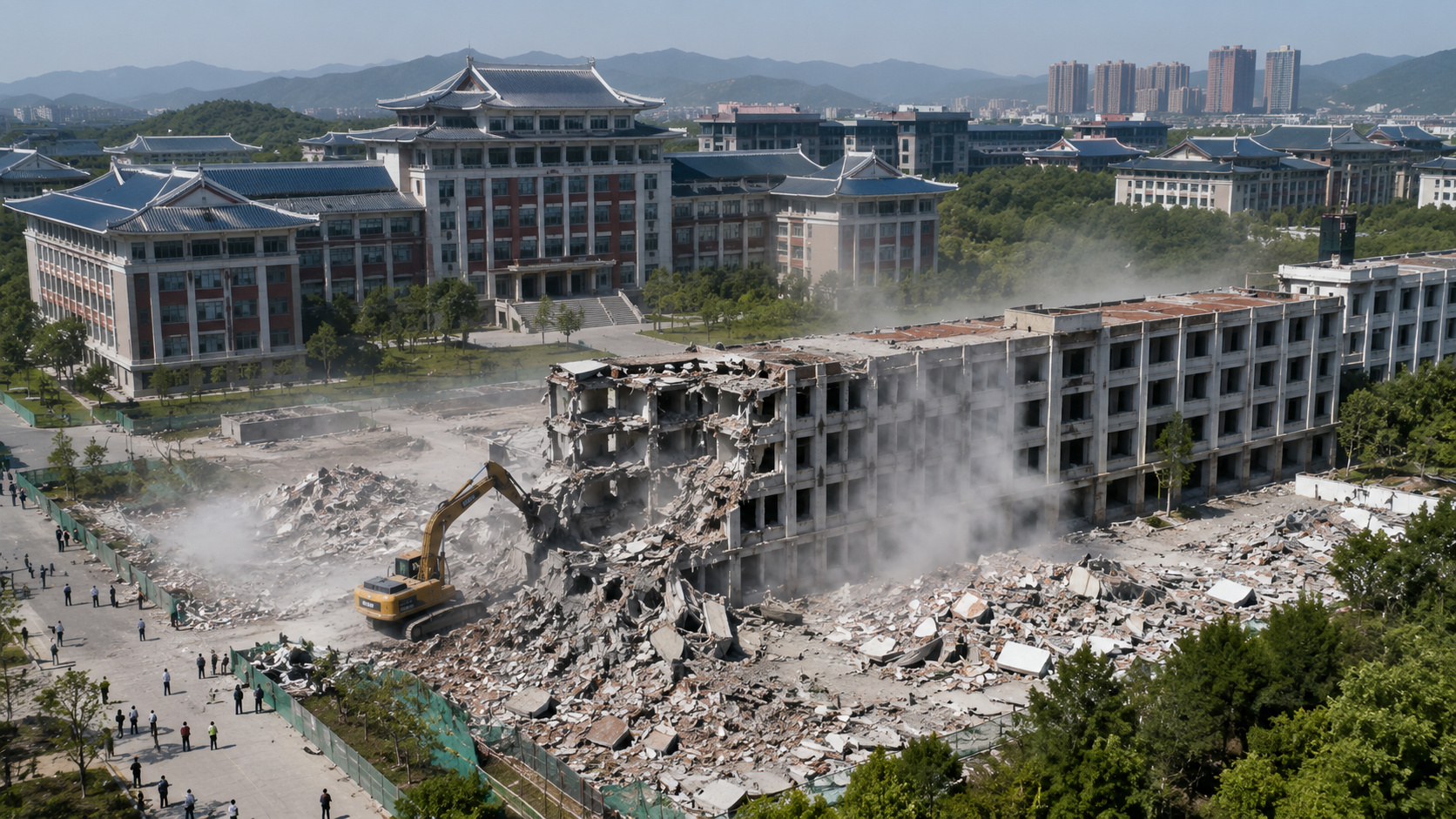

China eliminated 12,200 university courses in four years, opened 10,200 new programs, and bets on AI, robotics, and semiconductors.
China has initiated one of the largest university overhauls in the contemporary world. In just four years, thousands of courses have disappeared from academic curricula while new degrees related to artificial intelligence, robotics, semiconductors, and advanced manufacturing have started to occupy space in the country’s universities. According to data from the Ministry of Education of China released by the South China Morning Post, between 2021 and 2025, 12,200 undergraduate programs were revoked or suspended, while 10,200 new courses were created, altering more than 30% of the Chinese university offerings.
The change comes amid a pressured job market, which is expected to receive 12.7 million new graduates in 2026, the largest contingent ever recorded in the country.
China cuts thousands of degrees after identifying courses with low employability
The Chinese educational reform was not only motivated by technological advancement. The main factor is the growing difficulty of professional insertion for millions of newly graduated young people.
-
Goodbye Wireless Earbuds: Gen Z Brings Back Wired Headphones as a Trend in 2026

-
Living Robots Made from Human Cells Crawl on Their Own in Lab, Help Heal Neuron “Wounds” and Turn Human Tissue into Microscopic Biological Machines

-
Xlinks Project to Lay 3,800 Kilometers of Cable Across the Atlantic to Export Solar Energy from Morocco Directly to UK Outlets Without Using a Single Turbine
-
Floating Solar Panels Aim for Rougher Seas with Norwegian Rope Mesh Technology, Following DNV Review, Opening New Clean Energy Opportunities in Coastal Areas




According to the South China Morning Post, the cuts mainly affected programs in arts, humanities, management, and foreign languages, areas considered saturated or unable to keep up with the pace of economic changes.
The central idea is simple: if the diploma does not find space in the job market, the university needs to adapt. Instead of maintaining traditional academic structures, the Chinese government seeks to direct resources to sectors seen as essential for the next stage of economic growth.
More than 16% of young people are unemployed and 12.7 million graduates enter the market in 2026
The scale of the challenge helps explain the speed of the changes. According to Reuters, the unemployment rate among Chinese aged 16 to 24 remained above 16%, while the country is expected to place 12.7 million graduates in the market in 2026, surpassing the previous record of 12.2 million recorded in 2025.


Experts point out that the combination of economic slowdown, advancement of automation, and an excess of professionals in certain areas has led Beijing to treat higher education as a direct instrument of industrial policy.
The concern is to prevent millions of young people from obtaining degrees without prospects of insertion in strategic sectors.
AI, semiconductors, and robotics replace courses considered outdated
While thousands of traditional degrees lose ground, Chinese universities are accelerating the creation of programs linked to the so-called “industries of the future.”
According to the South China Morning Post, new courses are emerging in areas such as embodied intelligence, advanced robotics, integrated circuits, semiconductors, smart agriculture, digital manufacturing, and systems based on artificial intelligence.
The French newspaper Le Monde reports that the overhaul is part of the objectives of the 15th Five-Year Plan of China (2026–2030), whose priority is to expand the application of AI in virtually all productive sectors of the Chinese economy.
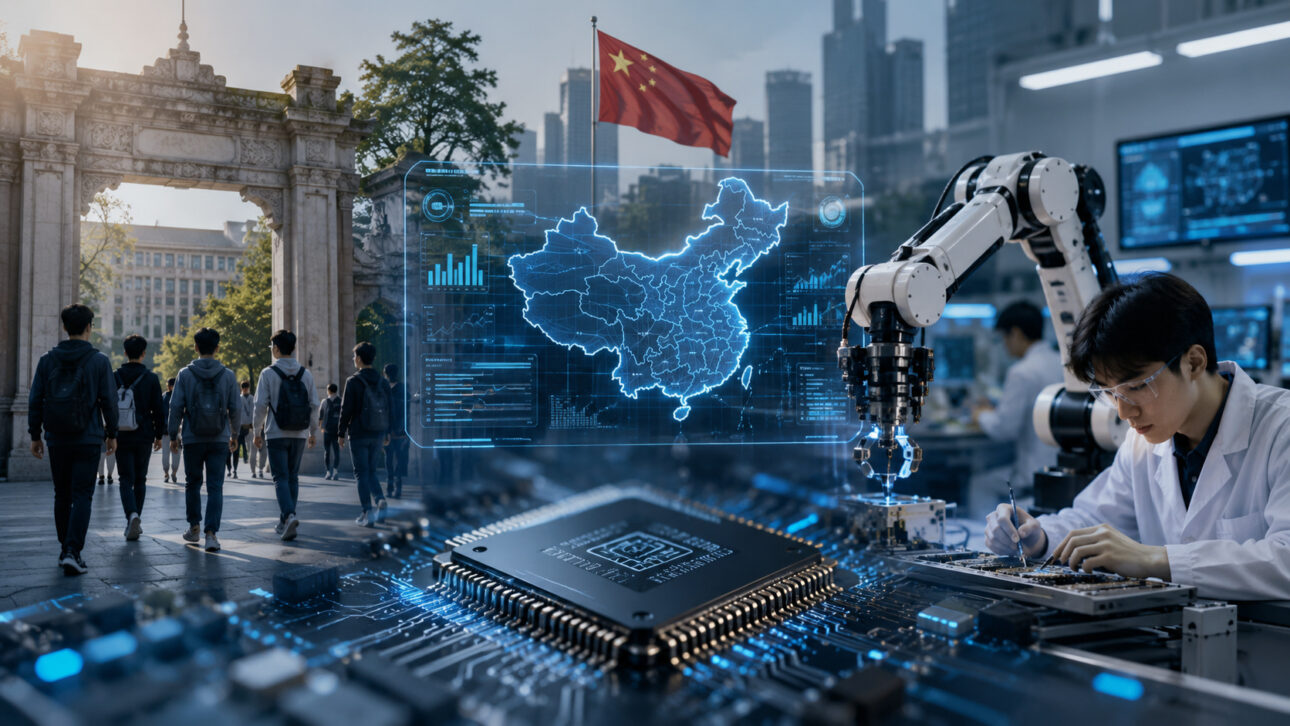
The change is also already affecting traditional institutions. According to Le Monde, the Communication University of China, one of the country’s most prestigious universities in the fields of communication and arts, has closed degrees in photography, visual design, translation, and other specializations considered vulnerable to the advancement of artificial intelligence.
The Chinese university is being redesigned to meet Beijing’s industrial goals
The transformation of higher education reflects a larger strategy. China aims to consolidate global leadership in artificial intelligence, robotics, chip production, industrial automation, and advanced technologies. To achieve this, it seeks to align university education with the future demands of the national industry.
According to the South China Morning Post, universities have started receiving incentives to expand courses linked to the economic goals defined by Beijing, while areas seen as less connected to the new productive reality lose positions and investments.
In practice, the university ceases to function solely as a space for traditional academic education and begins to act as a direct supplier of specialized labor for sectors considered priorities by the Chinese government.
The largest educational experiment of the artificial intelligence era has already begun
China is not just debating the impacts of artificial intelligence on the future of work. The country is altering its university structure on a national scale, cutting thousands of courses, opening new degree programs, and trying to anticipate which professions will continue to exist in the next decade.
It is still early to know if the strategy will solve youth unemployment or if new saturations will emerge in the technology sectors. What is already clear is that Beijing has decided to act before the problem becomes even bigger.
While many countries discuss how to adapt universities to artificial intelligence, China has already begun erasing old curricula to write a new generation of diplomas.


