






 Portuguese
  Spanish


Floating solar panels gained momentum after DNV completed review of BRIZO, a floating solar energy system that uses rope mesh and tensioning to operate in inland, coastal, and nearshore waters, where waves, scarce land, and electrical infrastructure define the new technical phase of the sector.
Floating solar panels entered a new technical stage after DNV completed, on July 1, 2026, an independent review of the BRIZO concept, developed by Fred. Olsen 1848 to operate in more agitated and exposed wave conditions than conventional floating photovoltaic systems.
The advancement involves Norwegian floating solar energy technology with a rope mesh, aimed at inland waters, coastal areas, and regions near the coast, where land competition, pressure on electrical infrastructure, and the limits of traditional solutions make generation over water an increasingly strategic alternative.
DNV review marks a phase change
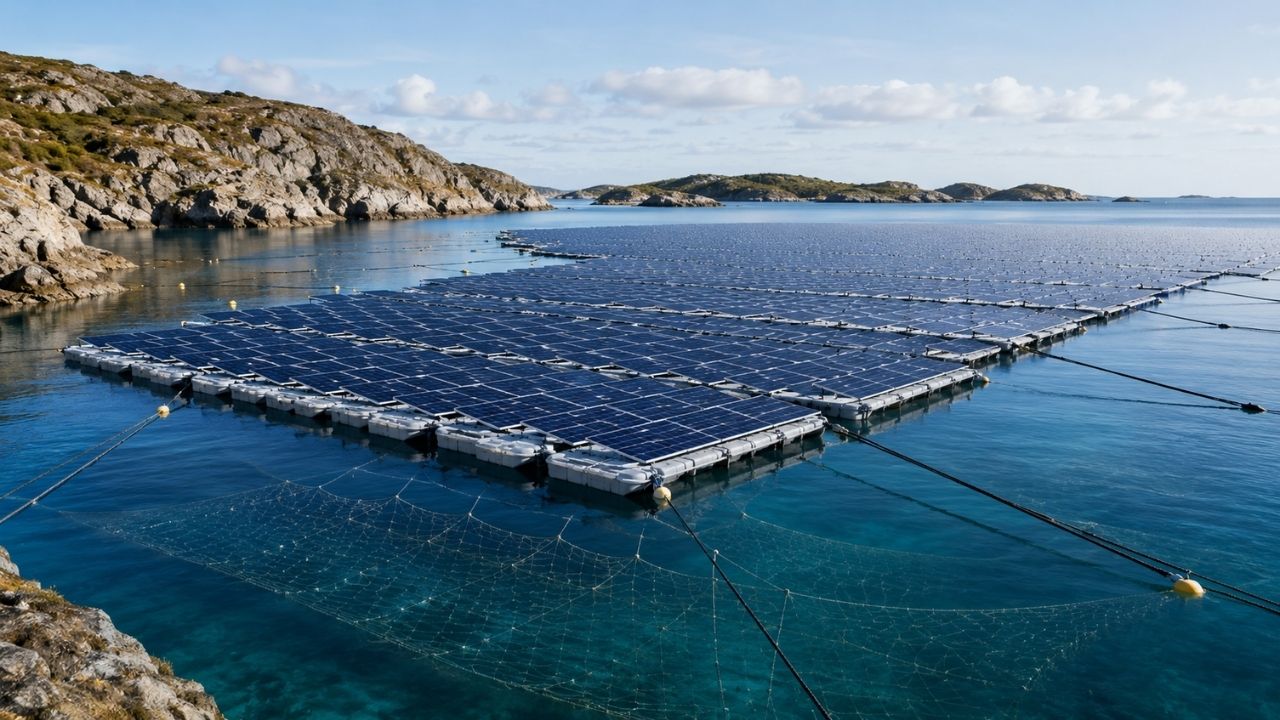
The technical review by DNV does not automatically turn BRIZO into a large-scale commercial solution. What it does is more specific: it provides an independent basis to evaluate design methodologies, hydrodynamic loads, structural behavior, and testing procedures of the floating solar system.
-
Olympus Mons: The Solar System’s Tallest Volcano, Over Three Times the Height of Mount Everest, Puzzles Scientists with Its Prolonged Volcanic Activity

-
Alaska’s 1,287 km Pipeline Built on 78,000 Metal Supports to Prevent Thawing, Survives Earthquakes and Remote Forests, Highlighting the Challenge of Hot Oil in a Harsh Environment
-
Brazilian Student Innovates Sustainable Ceramic Tableware Using Rice Husks and Recycled Glass, Achieving Up to 60% Waste Composition and Comparable Performance to Conventional Materials
-
AI-generated fake doctors deceive elderly in Brazil, health videos go viral with nearly 300,000 views, turning disease fear into a global audience and money machine.



This type of evaluation is significant because floating solar energy is starting to move out of a more predictable environment. The challenge now is not just to place panels over water, but to prove that they can withstand waves, structural tension, and more demanding environmental conditions throughout their lifespan.
Technology uses rope mesh instead of absolute rigidity
The BRIZO system uses a flexible mesh of ropes combined with a tensioning system. The proposal is to allow the structure to better respond to the movement of water, instead of relying solely on a rigid platform that tries to directly resist the waves.
This technical choice changes the logic of floating solar panels. In more exposed environments, very rigid structures may suffer more from repeated stresses. The rope mesh suggests a more adaptable approach, where flexibility and tension control become part of the project’s safety.
Sheltered waters are no longer enough to gain scale
So far, many floating solar energy solutions have found space in reservoirs, lakes, inland areas, and calmer waters. These environments reduce some operational risks but also limit expansion when the goal is to achieve scale in regions with little available space.
According to the presented evaluation, BRIZO was designed precisely to go beyond this scenario. The system targets coastal and nearshore waters, where waves can be stronger and operation more complex. The new frontier of floating solar panels is to leave the comfort of protected waters without losing technical safety.
Scarce land increases interest in energy over water
The expansion of clean energy faces a practical limitation in several regions: available land has become contested. Areas near consumer centers may be occupied by cities, agriculture, industry, infrastructure, or sensitive environmental zones, reducing space for large solar plants on land.
In this context, floating solar energy gains relevance by occupying water surfaces. The logic does not eliminate environmental, technical, or regulatory challenges, but creates an alternative when installing projects on land becomes difficult. The sea and coastal areas are seen not just as landscapes, but as spaces for energy infrastructure.
Tougher waves demand more rigorous engineering
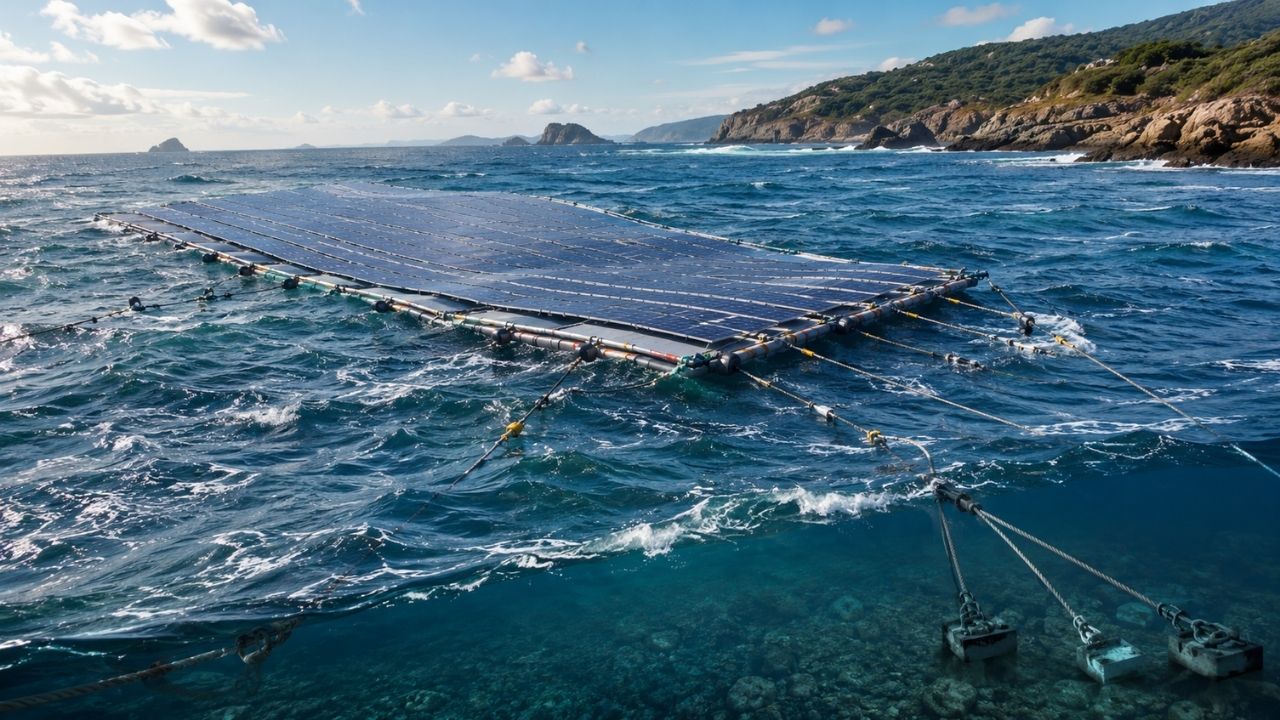
The DNV analysis considered design methodologies, hydrodynamic load assessment from physical tests, structural behavior, and testing procedures. These points show that the discussion is not limited to the efficiency of the panels, but to the survival of the entire system.
When a structure is placed over water, it must deal with forces that change all the time. Waves, tension, displacement, and prolonged exposure can compromise components if the design is not well-dimensioned. Therefore, technical validation is a central part of the attempt to bring floating solar panels to more aggressive environments.
Fred. Olsen 1848 aims for future commercial viability
Fred. Olsen 1848 treats the Declaration of Conformity as a milestone in the development of BRIZO. The assessment helps demonstrate that the technical approach has enough robustness to advance in project discussions, financial feasibility, and future commercial deployment.
Still, the main point is that the sector needs to reduce uncertainties before attracting scale. Investors, developers, and operators tend to demand evidence that a technology can withstand demanding conditions. In offshore energy, technical confidence is not a detail; it is a condition to transform a concept into a financeable project.
DNV sees market entering maturity
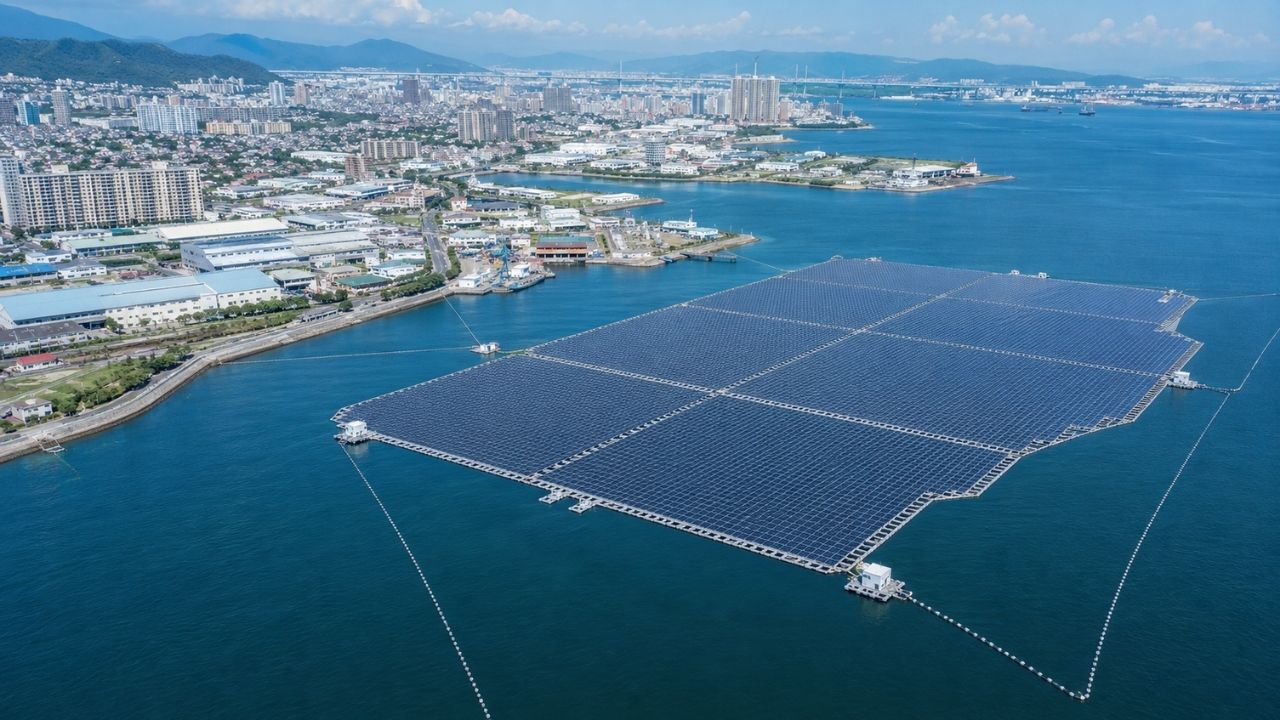
The assessment also points to a broader reading of the sector. For DNV, floating solar energy is entering a phase where it needs to go beyond sheltered waters to achieve significant scale. This transition requires technologies capable of operating in more exposed environments.
This movement can expand the potential market for floating solar panels, especially in regions with space restrictions, competition for land use, or increasing pressure on electrical grids. The promise is not to replace all sources, but to open new areas for solar generation where land has become an expensive or contested resource.
Clean energy also depends on resilient infrastructure
The agenda shows that clean energy does not depend only on panels, cables, and good solar radiation. It also depends on support engineering, testing, technical assurance, and adaptation to the environment. Without this, expansion into harsher areas can lead to failures, costs, and delays.
The case of BRIZO reinforces an important rule: the more challenging the location, the greater the project’s rigor needs to be. Bringing floating solar panels to coastal and nearshore areas requires more than enthusiasm for renewables. It requires proving that the structure can withstand the environment where it will be installed.
A new race for coastal energy space


The search for clean energy in coastal areas is likely to grow as land, electrical connection, and licensing become critical points for new projects. In this scenario, floating solutions may compete for space with other forms of water use, from navigation to fishing, from environmental conservation to port infrastructure.
Therefore, the expansion of floating solar panels will also need to deal with public decisions, territorial planning, and impact assessment. The technical review by DNV is a step within this chain, but it does not end the debate. It helps reduce engineering doubts, while other questions about coastal space use remain open.
What changes if floating solar leaves calm waters?
The independent review by BRIZO shows that floating solar energy is trying to cross an important boundary: to stop relying solely on protected waters and seek more exposed conditions. If this path progresses, coastal regions with little available land may gain new renewable generation options.
At the same time, the bet requires caution. Waves, costs, operation, and infrastructure need to be treated with the same weight as the energy promise. Do you think floating solar panels in coastal areas are an inevitable solution to expand clean energy or do they still represent a technical risk that is too high? Leave your opinion in the comments.


