






 Portuguese
  Spanish


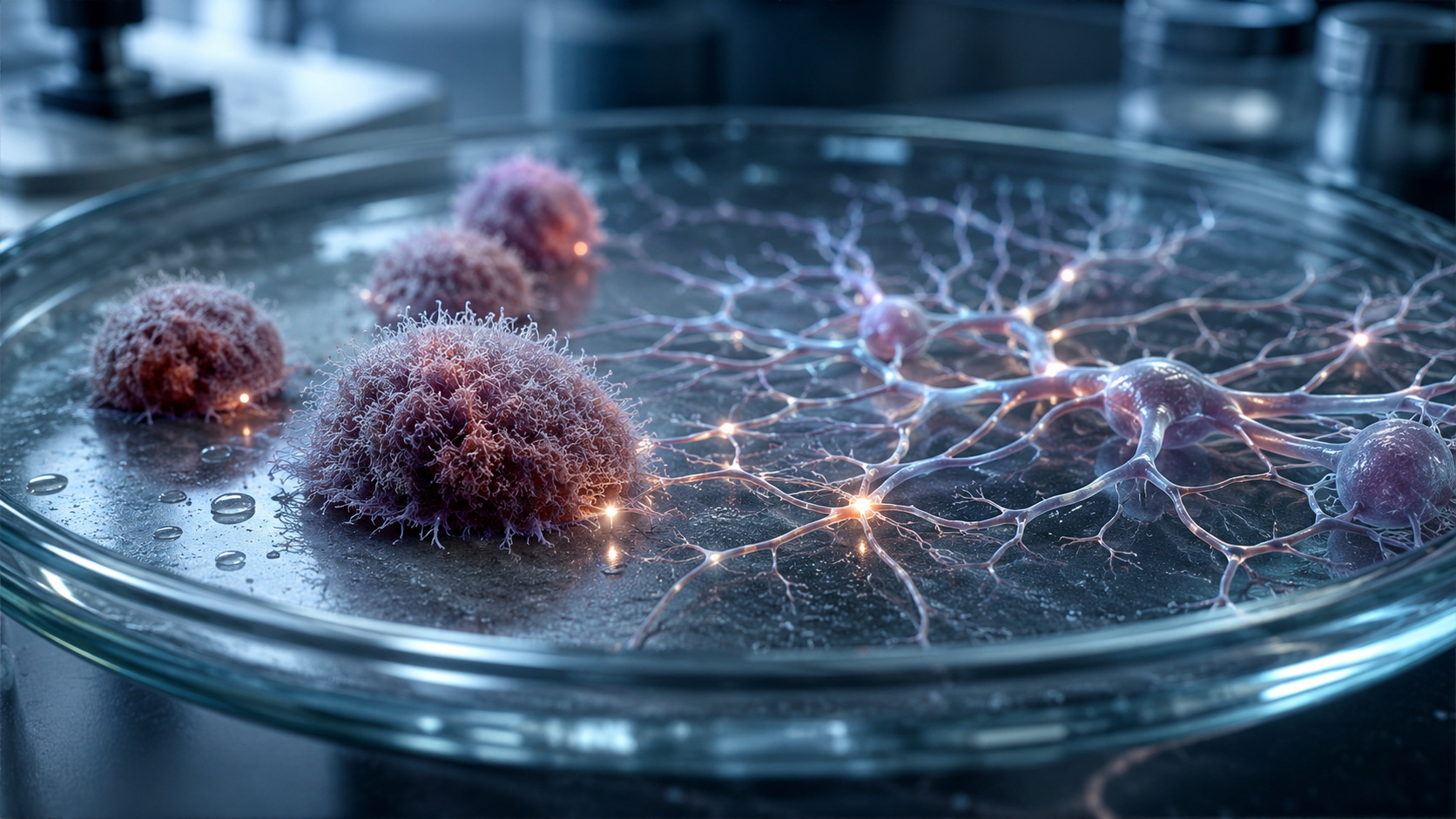

Anthrobots made with human cells move on their own and stimulate neurons in the laboratory, highlighting the advancement of bioengineering.
What seemed restricted to science fiction has already taken shape in the laboratory. Researchers from Tufts University and the Wyss Institute for Biologically Inspired Engineering at Harvard have developed small living robots made with human cells capable of moving autonomously and stimulating neuron growth in injured areas of a cell culture. Named Anthrobots, these biological microsystems were created from cells on the surface of the human trachea. The study, published in the journal Advanced Science, indicates that adult cells can be reorganized to take on new functions, without genetic editing, in a field that combines bioengineering, biological robotics, and regenerative medicine.
Anthrobots made with human cells show how bioengineering transformed trachea cells into microscopic living robots
The research showed that the Anthrobots are produced from adult cells taken from the trachea. In the laboratory, these cells self-organize into small mobile multicellular structures, instead of remaining in the typical arrangement of the respiratory system.
The scientists explain that the movement is generated by cilia, microscopic hair-like projections that, in the human body, help remove particles from the airways.
-
Xlinks Project to Lay 3,800 Kilometers of Cable Across the Atlantic to Export Solar Energy from Morocco Directly to UK Outlets Without Using a Single Turbine

-
Floating Solar Panels Aim for Rougher Seas with Norwegian Rope Mesh Technology, Following DNV Review, Opening New Clean Energy Opportunities in Coastal Areas
-
Olympus Mons: The Solar System’s Tallest Volcano, Over Three Times the Height of Mount Everest, Puzzles Scientists with Its Prolonged Volcanic Activity
-
Alaska’s 1,287 km Pipeline Built on 78,000 Metal Supports to Prevent Thawing, Survives Earthquakes and Remote Forests, Highlighting the Challenge of Hot Oil in a Harsh Environment


When cultured under specific conditions, these cells began to form organoids with outward-facing cilia, which allowed locomotion.
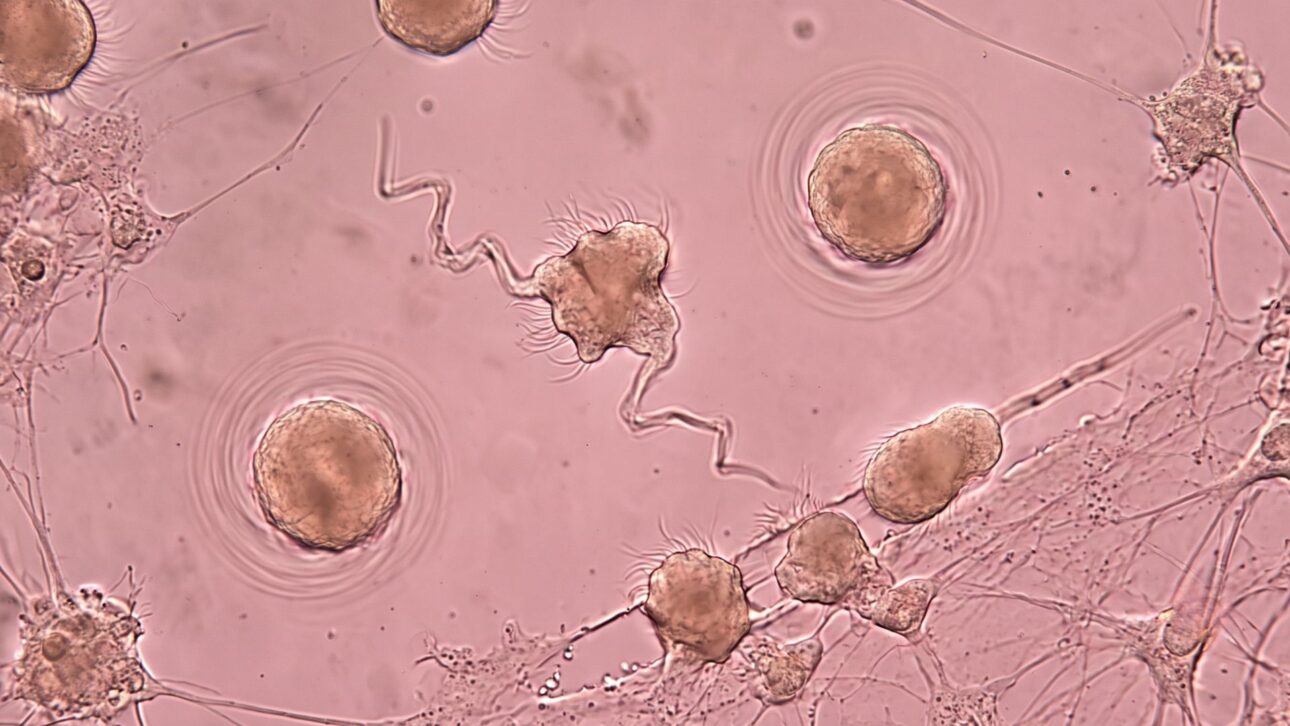
According to the study, the Anthrobots range from 30 to 500 micrometers, a range from something close to the thickness of a hair to dimensions comparable to the tip of a sharpened pencil. The team also recorded different movement patterns, including straight trajectories, long curves, and circular displacements.
Living robots Anthrobots stimulated the regeneration of human neurons in injured cultures in the laboratory
The most important result appeared when the Anthrobots were placed on layers of human neurons cultivated in the laboratory. In these plates, researchers created linear lesions in the cell cultures and observed the behavior of the biological clusters over the damaged area.
According to the researchers, clustered sets of Anthrobots, called superbots, stimulated neuron growth precisely in the injured regions.
The institutional material from Tufts and Wyss states that the neurons grew under the area covered by the clusters, forming a cellular bridge in a simplified laboratory scenario.


The team emphasizes that the exact mechanism of this effect is still not fully understood. Even so, the study confirmed that there was rapid repair of the injured areas in sheets of human neural cells grown in vitro, which made the Anthrobots one of the most talked-about discoveries in recent biological robotics.
Study with Michael Levin and Gizem Gumuskaya reveals biological robots without genetic editing and with adult human cells
One of the most relevant points of the discovery is that the Anthrobots were created without any genetic modification.
Michael Levin, from Tufts University and associated with the Wyss Institute, highlighted that it was unexpected to see normal human trachea cells move on their own and stimulate neural growth outside the original context of the body.
The work was conducted by Michael Levin and researcher Gizem Gumuskaya. According to the study description in Advanced Science, the Anthrobots build themselves from a single initial cell and develop locomotor capabilities driven by cilia, without the need for artificial circuits, motors, or conventional digital programming.
In the case of Anthrobots, it is not a metal or plastic machine, but a living structure made of human tissue, capable of executing organized behaviors and interacting with other tissues in the laboratory.
Difference between Anthrobots and Xenobots expands the potential of personalized regenerative medicine
The Anthrobots succeed the research line of Xenobots, previously developed by the same laboratories. The Xenobots were made with frog embryonic cells, while the Anthrobots take an important step forward by being produced with adult human cells.
This difference is central to potential medical applications. According to Tufts and the Wyss Institute, using human cells opens up the possibility of building biobots from the patient’s own cells, which in theory can reduce the risk of immune rejection and eliminate the need for immunosuppressants in future therapeutic strategies.
Moreover, the researchers state that the Anthrobots have a lifespan of only a few weeks and then degrade. Outside of very specific laboratory conditions, they also do not survive, do not reproduce, and have not received genetic additions or deletions, which was highlighted as a relevant layer of biological safety.
Future applications of Anthrobots include neural repair, drug delivery, and new bioengineering therapies
Although the work is still in the experimental phase, researchers point to possible future uses for the Anthrobots.
Among the hypotheses cited by institutional materials are repair of spinal cord or retina damage, removal of plaques associated with atherosclerosis, recognition of bacteria or cancer cells, and targeted drug delivery.

These possibilities do not yet represent proven clinical applications. At the current stage, what has been safely demonstrated is the ability for autonomous movement and stimulation of wound closure in human neuron cultures in the laboratory.
Even so, the study opens an important front in regenerative medicine. By showing that adult cells carry much more plastic biological capabilities than previously imagined, the Anthrobots reinforce the idea that the boundary between biology, robotics, and tissue engineering is becoming increasingly smaller.


