Portuguese
  Spanish


Against the tide of artificial intelligence, the resurgence of wired headphones reveals the desire of young people for privacy and disconnection.
The hyperconnected daily life of young people in classrooms, social networks, and subway cars has gained an unexpected visual contour in recent months. The white wires hanging around the neck have once again been prominently displayed by Generation Z, who have decided to retrieve the old analog headphones from forgotten drawers and backpacks.
After five consecutive years of decline, the wired headphone market has shown signs of recovery in the United States. In 2025, the category registered a 3% increase in revenue, representing approximately $15 million in additional revenue, according to data from Circana.
The growth rate intensified in the second half of the year: between July and December, sales advanced by 10%. The trend remained strong at the beginning of 2026, when the first six weeks of the year accumulated a 20% increase. The commercial phenomenon signals a conscious search for simplicity and autonomy in a world saturated with notifications.
-
Living Robots Made from Human Cells Crawl on Their Own in Lab, Help Heal Neuron “Wounds” and Turn Human Tissue into Microscopic Biological Machines

-
Xlinks Project to Lay 3,800 Kilometers of Cable Across the Atlantic to Export Solar Energy from Morocco Directly to UK Outlets Without Using a Single Turbine

-
Floating Solar Panels Aim for Rougher Seas with Norwegian Rope Mesh Technology, Following DNV Review, Opening New Clean Energy Opportunities in Coastal Areas
-
Olympus Mons: The Solar System’s Tallest Volcano, Over Three Times the Height of Mount Everest, Puzzles Scientists with Its Prolonged Volcanic Activity



Audio consumption as an emotional refuge
The reasons for this return begin with the way the new generation consumes content.
Music is part of the routine of millions of young people. Research from the IFPI indicates that the 16 to 24-year-old audience is the most engaged with music consumption, and the average listening time worldwide already exceeds 20 hours per week, driven mainly by streaming services.
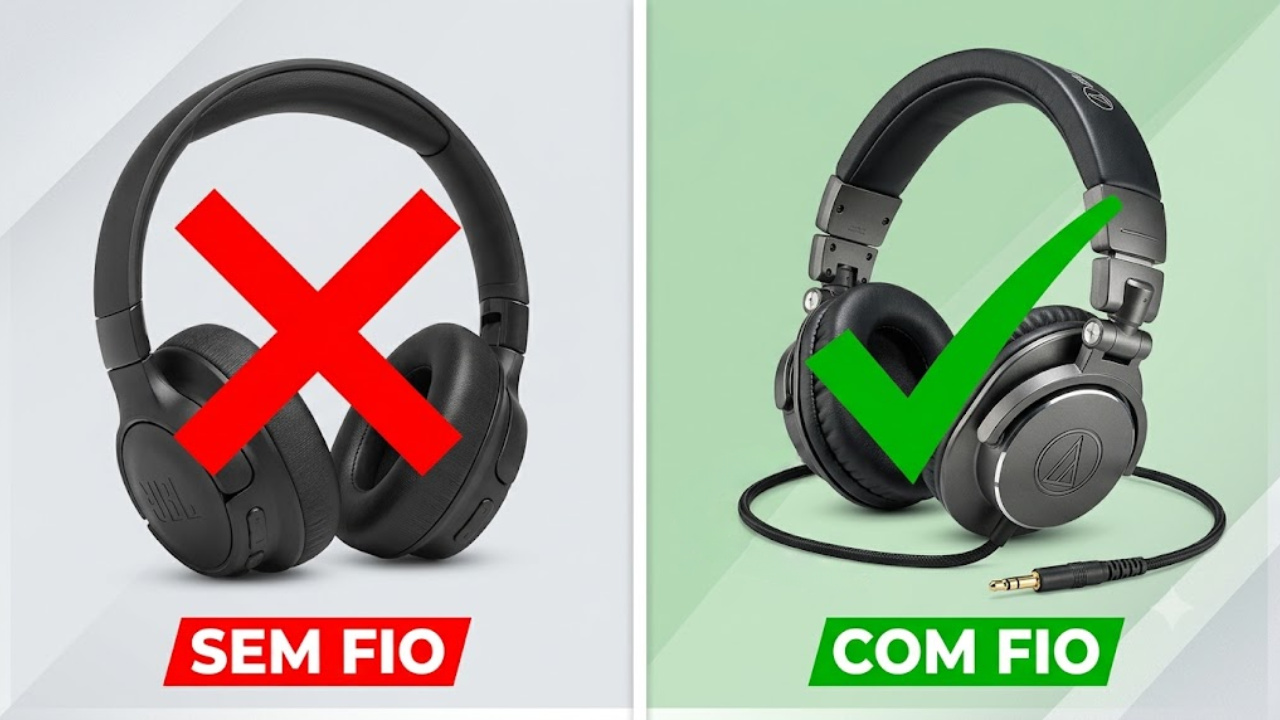
In this scenario of intense consumption, the cable accessory has assumed a new psychological function in daily life:
- Portable boundary: Serves as a visible boundary between personal space and the outside world.
- Planned isolation: Creates moments of pause and privacy amidst constant connectivity.
- Focus without distractions: Allows for a pure audio experience without the interference of app alerts.
Wired headphones: Nostalgia and the aesthetics of the 2000s
Beyond the search for a digital refuge, the preference for the physical connector is deeply linked to the cultural revival of the 1990s and 2000s.
According to Gazeta de SP, market research reveals that Generation Z has developed a strong nostalgia for media and products that were not even part of their childhood, seeing in them an authenticity that the virtual environment does not offer.
This retro wave has brought various old items back into circulation:
- CD players and iPods;
- Compact digital cameras and analog cameras;
- Audio cords exposed as a symbol of style and identity.
What was once seen as a nuisance or a sign of technological obsolescence has now gained the status of a visual manifesto.
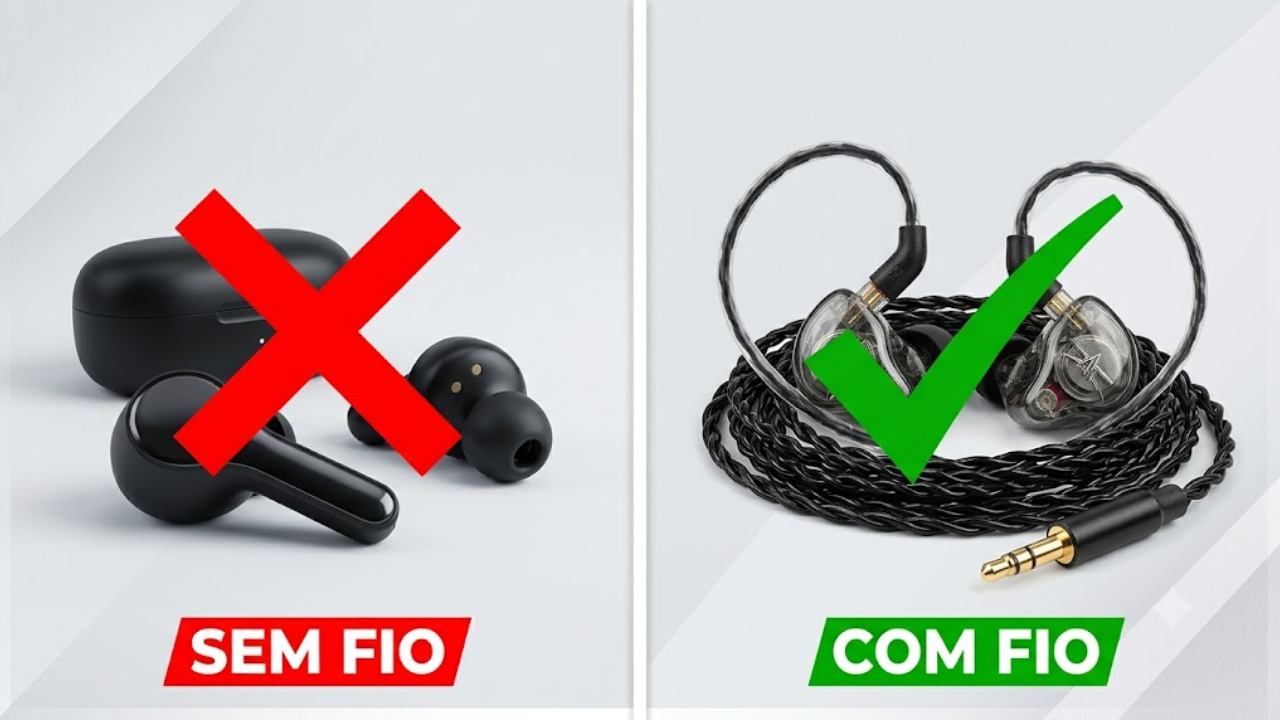
Using the cable has become a way to differentiate and assert one’s personality in a market saturated with smart and identical devices.
Price and practicality contrary to Bluetooth
Behind the behavioral appeal and fashion, there are very clear economic and technical advantages that weigh on young people’s purchasing decisions.
The Bluetooth model, which for years dominated the market and seemed to have won the battle, began to lose ground to the convenience of the cable due to essential logistical factors.
The operational simplicity of the traditional system became a competitive advantage in a routine marked by an excess of screens and settings.
One of the main factors behind this movement is the price. Data from Circana shows that, in 2025, the American consumer paid, on average, about $13 for a wired headphone.
On the other hand, wireless models had a much higher average cost, around $99, making the wired option significantly more affordable for those looking to save money.
The financial cost is one of the biggest drivers of this comeback. While wireless models usually require high investments, traditional versions remain extremely cheap and accessible alternatives.
Moreover, the simple engineering of the analog accessory eliminates common everyday problems: the cables work instantly when connected to the phone, require no pairing, do not demand system updates, and completely eliminate the dependence on chargers and batteries.
With information from Gazeta de SP