






 Portuguese
  Spanish


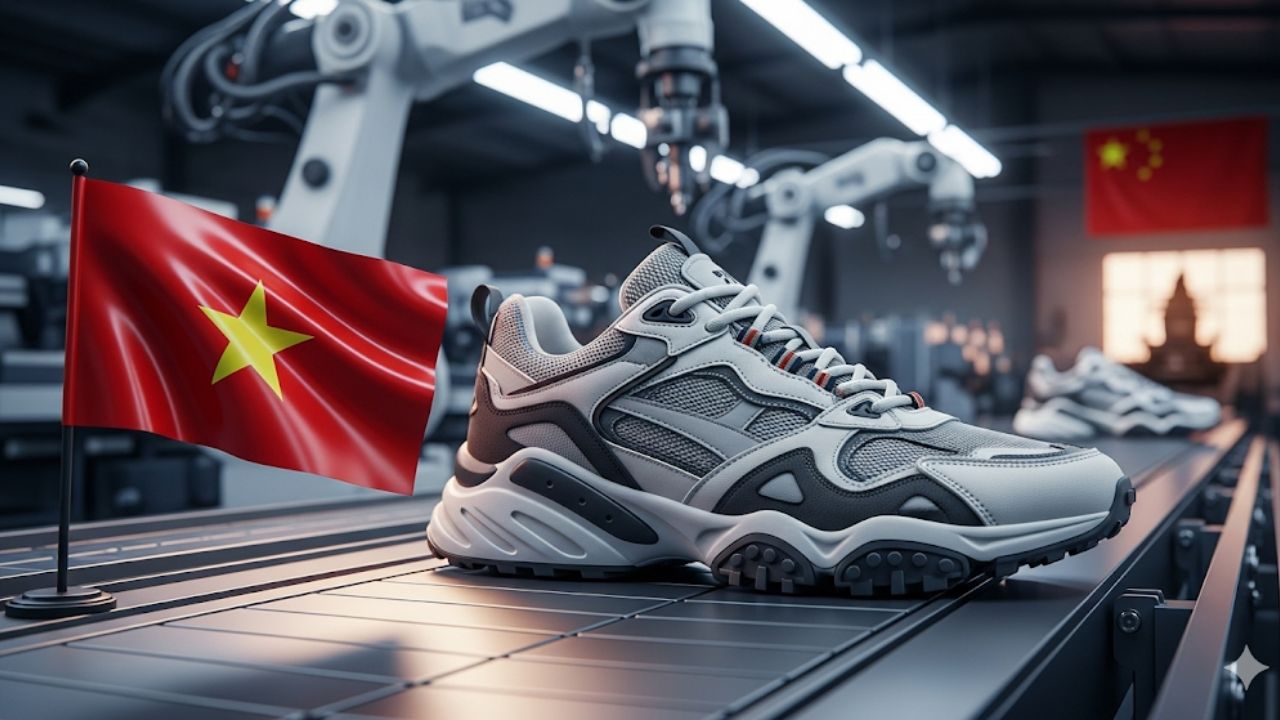


Giants Like Nike and Adidas Lead Production Migration, Consolidating the Asian Country and Taking Beijing’s Title as the World’s Sneaker Factory.
China is no longer the world’s sneaker factory. This title now belongs to Vietnam, which has quietly surpassed Beijing as the main supplier of footwear for global giants like Nike, Adidas, and Brooks Sports. According to InfoMoney, this change is not just symbolic; it represents a deep reconfiguration of global supply chains, driven by costs, trade tensions, and the search for diversification.
For the footwear industry, which moves billions of dollars, this transition from Ho Chi Minh City and its surroundings to the epicenter of production is the result of decades of planning. Factors such as the trade war initiated by former President Donald Trump and the COVID-19 lockdowns in China only accelerated a movement that was already underway, forcing brands to reassess their extreme dependence on Beijing.
The Difficult but Necessary Exit from China
Leaving China has never been a simple option for multinationals. The country offers an unmatched manufacturing infrastructure and a dominance over raw materials that have ensured high profits and satisfied consumers for years. However, the sneaker industry is proving that this migration is possible and increasingly necessary.
-
France Revamps 530 Social Housing Units with Large Balconies and Glass Facades Without Demolishing Existing Buildings

-
10-Year-Old Max Makes History with Paris Fashion Show, Launches Own Brand, Hires Staff, and Sets World Record as Youngest Runway Designer

-
Bolivian Female Construction Workers Form Association to Combat Discrimination and 38% Pay Gap in the Industry
-
Near Amsterdam, residents buy land and discover they must also build streets, manage drainage, handle waste, and grow food on half their plot.




According to InfoMoney, major brands like Nike still maintain significant factories on Chinese territory. However, the production of these units is now primarily geared toward the domestic consumption of the Chinese market, which is vast. Production intended for global export, on the other hand, has massively migrated to Vietnam.
Why Vietnam? Costs, Tensions, and Demography
The search for lower costs in Asia is nothing new. In the 1970s, emerging brands like Nike used factories in South Korea and Taiwan. With the economic opening of China in the 1980s, these same factories (many of them Taiwanese, like Pou Chen) migrated to the continent, drawn by cheap and abundant labor, creating true “little industrial cities.”
Vietnam, however, quietly began its own economic reforms. By the early 2000s, the country was already on the radar. Tony Le, an executive at Brooks who previously worked for Nike and Adidas, described this period to InfoMoney as “the Opening of Vietnam,” comparing it to the Chinese opening decades earlier.
In the 2010s, winds changed in China: wages began to rise and issues regarding intellectual property intensified. Vietnam, in contrast, offered a government receptive to foreign investment and, crucially, a young and growing population seeking work.
The Impact of Tariffs and the Pandemic
The definitive turn was accelerated by geopolitical events. When former President Trump initiated the trade war with China in 2018, the footwear industry, which was already moving, saw its counterparts in other sectors follow the same path to Vietnam. Tariffs on Chinese products made production there unsustainable for export to the U.S., forcing a reevaluation.
The final blow, as highlighted by InfoMoney, came in 2020. When China closed its borders due to the COVID-19 pandemic, factories halted. Executives realized the extreme risk of relying on a single country. For the sneaker industry, the decision to shift resources to Vietnam was facilitated because many long-term partners had already begun investing in the local supply chain.
A Localized Supply Chain and Its Human Impact
Unlike other industries, Vietnam has managed to develop a much more localized supply chain. Today, factories around Ho Chi Minh City produce not only the final assembly but also the components: foam soles, soft insoles, cotton laces, and mesh fabric.
These components are transported to assembly warehouses, and then the finished sneakers are loaded into containers at nearby ports. From there, they navigate down the Dong Nai River toward the global market, consolidating Vietnam as the new world’s sneaker factory.
This transformation has changed the lives of the local population. Pham Kieu Diem, 47, reported to InfoMoney that she started working at one of the first footwear factories in 1995, at age 17, when the area was just rice fields. “I didn’t know how to make sneakers, and I had never worn sneakers before,” she said. Working at the factory allowed her and her sisters to buy land and build a house, changing their lives “for the better.”
The rise of Vietnam and the fall of China as the manufacturing hub for footwear is one of the most significant moves in the recent global economy.
Do you agree with this shift? Do you think it impacts the market or the prices we pay here in Brazil? Leave your opinion in the comments; we want to hear from those who live this in practice.


