Portuguese
  Spanish


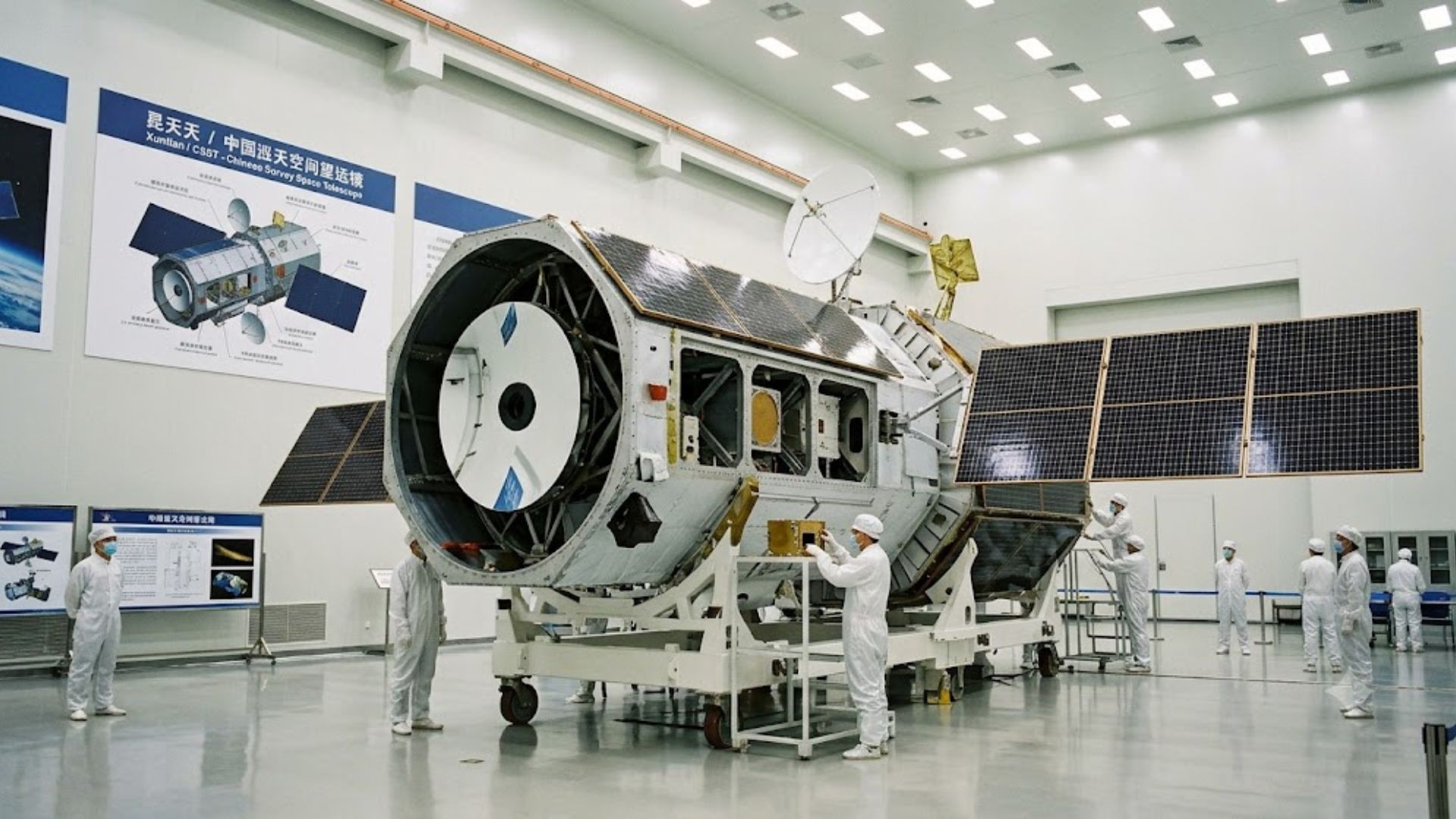

Xuntian, the new space telescope from China, will have 2.5 billion pixels, a field of view 300 times larger than Hubble, and will be able to dock at Tiangong.
While the Hubble Space Telescope revolutionized astronomy by revealing some of the most iconic images of the Universe, China is preparing an observatory that aims to tackle a different problem: seeing a much larger portion of the cosmos at once without sacrificing high resolution. Named Xuntian, or Chinese Space Station Telescope (CSST), the project is expected to operate in orbit near the Chinese space station Tiangong and promises to combine a 2-meter mirror, a 2.5 billion pixel camera, and a field of view about 300 times larger than Hubble’s. The goal is ambitious: to map approximately 40% of the sky over a planned ten-year mission.
Xuntian was designed to observe an area of the sky that Hubble could never cover alone
Hubble became famous for its ability to produce extremely detailed images of galaxies, nebulae, and star clusters. The problem is that its field of view is relatively small when compared to new sky survey telescopes.
Xuntian follows a different philosophy. Although it uses a 2-meter primary mirror, slightly smaller than Hubble’s 2.4 meters, it was developed to capture gigantic areas of the sky in each observation.
-
The Trap of Modern Technology: How Screen Overload and Digital Connections Can Impact Your Mental Health and Well-being

-
Wyoming Couple Grows Tropical Fruits Year-Round in -40°C Using Geothermal Greenhouse, Demonstrating Earth’s Heat Can Produce Oranges and Lemons in Snow Without Traditional Heating

-
Ship Returns from Brazilian Coast with Thirty Newly Discovered Life Forms
-
Nigerian Professor Invents Electricity-Free Refrigerator Using Clay Pots and Wet Sand, Extending Shelf Life of Vegetables to 27 Days; 7,000 Units Distributed in Energy-Deprived Villages





According to information released by Chinese researchers and recent technical analyses, its field of view will be approximately 300 times larger, maintaining comparable spatial resolution for large-scale astronomical studies.
This combination will allow for the production of cosmic surveys at a speed impossible for previous space observatories.
2.5 billion pixel camera will be able to record billions of galaxies during the mission
One of the most impressive features of the project is its main camera. The instrument was developed with approximately 2.5 billion pixels, making it one of the most advanced imaging systems ever planned for a space telescope.
The expectation is that the observatory will record billions of astronomical objects during its lifetime, including distant galaxies, star clusters, stars of the Milky Way, and potential exoplanet candidates.
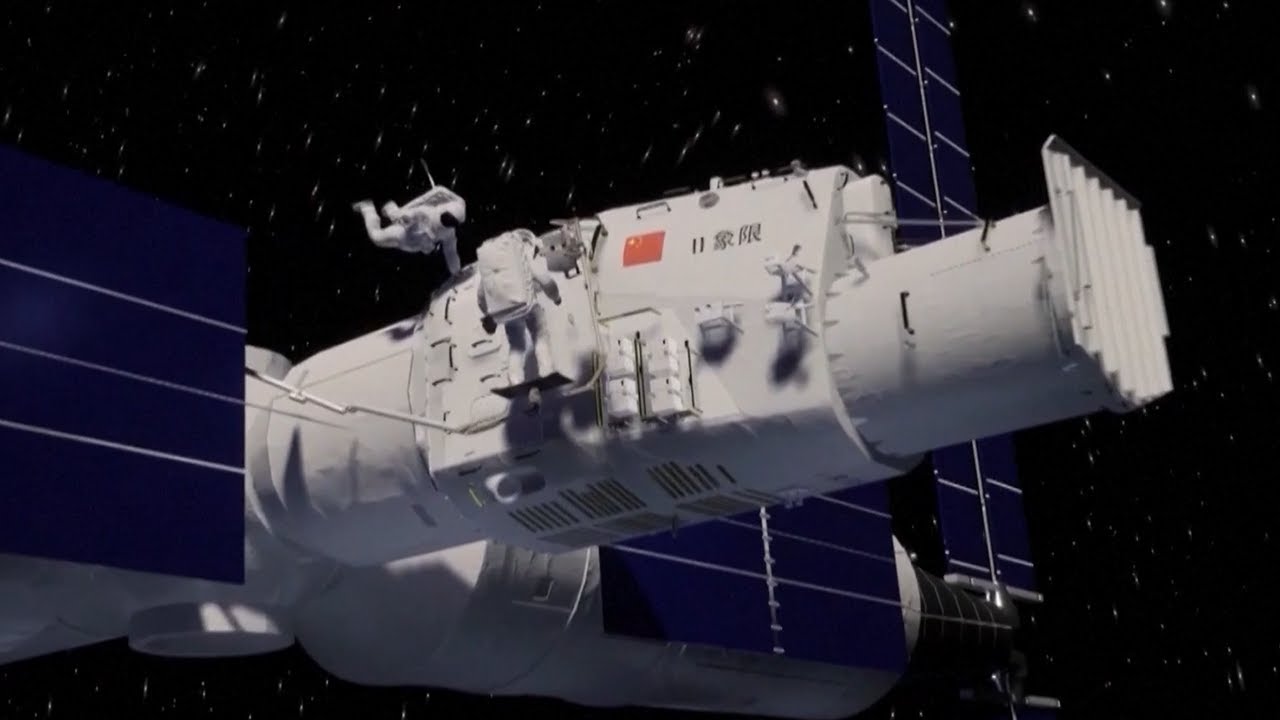
In addition to visible light observations, the telescope will work in wavelengths covering near ultraviolet and near infrared, allowing detailed studies on the evolution of galaxies and the structure of the Universe.
The telescope can dock at the Tiangong space station for maintenance in orbit
Perhaps the most unusual aspect of Xuntian is neither its size nor its camera, but its operational strategy. Unlike Hubble, which required several space shuttle missions for repairs throughout its history, Xuntian was designed to operate in an orbit similar to that of the Chinese space station Tiangong.
The observatory will fly independently but can perform periodic dockings with the station for maintenance, refueling, and possible instrument upgrades.

This capability can significantly extend its operational life and reduce the risks associated with the premature loss of expensive and complex scientific instruments.
Mission was created to investigate dark matter, dark energy, and the evolution of the cosmos
The science behind Xuntian goes far beyond producing beautiful images. The observatory was conceived to study some of the greatest mysteries of modern cosmology, including the distribution of dark matter, the influence of dark energy on the expansion of the Universe, and the formation of large cosmic structures.
Researchers believe that the enormous observed area will allow for the measurement of extremely subtle gravitational distortions in distant galaxies, helping to test cosmological models with unprecedented precision.
The telescope is also expected to contribute to research on stars, exoplanets, black holes, gravitational lenses, and galactic evolution.
China enters the race for a new generation of space observatories
The launch of Xuntian comes at a time of intense international scientific competition. In recent years, projects like the James Webb Space Telescope, Euclid, the future Nancy Grace Roman Space Telescope, and the ground-based Vera C. Rubin Observatory have begun to compete for prominence in strategic areas of modern astronomy.
The Chinese differential lies precisely in the combination of high resolution, enormous sky coverage, and the ability to maintain in orbit, something that few projects can simultaneously achieve.
An observatory capable of seeing almost half of the sky could change the astronomy of the next decade
If it meets the planned goals, Xuntian could become one of the most productive scientific machines ever placed in orbit.
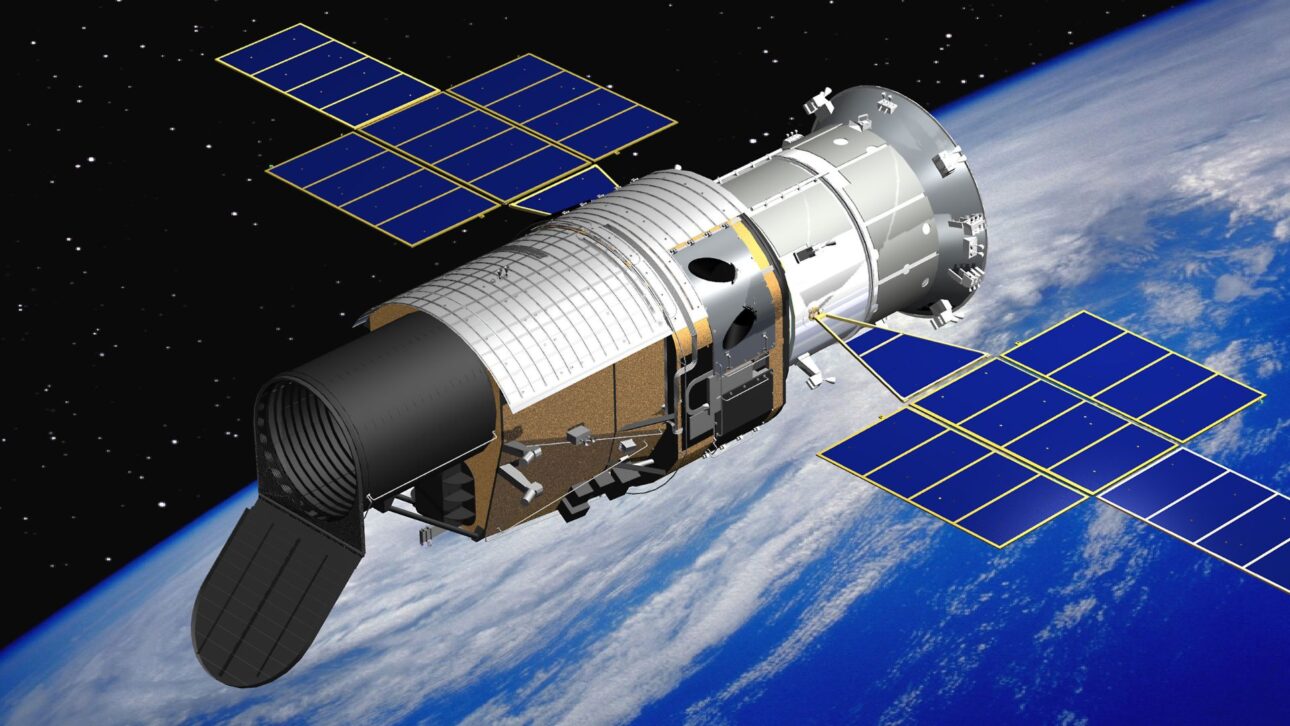
With a 2.5 billion pixel camera, a field of view about 300 times larger than Hubble’s, and the ability to map approximately 40% of the sky during a decade of operations, the Chinese telescope was designed to answer fundamental questions about the origin, structure, and future of the Universe.
The question now is whether this gigantic “panoramic Hubble” will be able to deliver discoveries worthy of its specifications and place China at the center of the next great era of space astronomy.