Portuguese
  Spanish


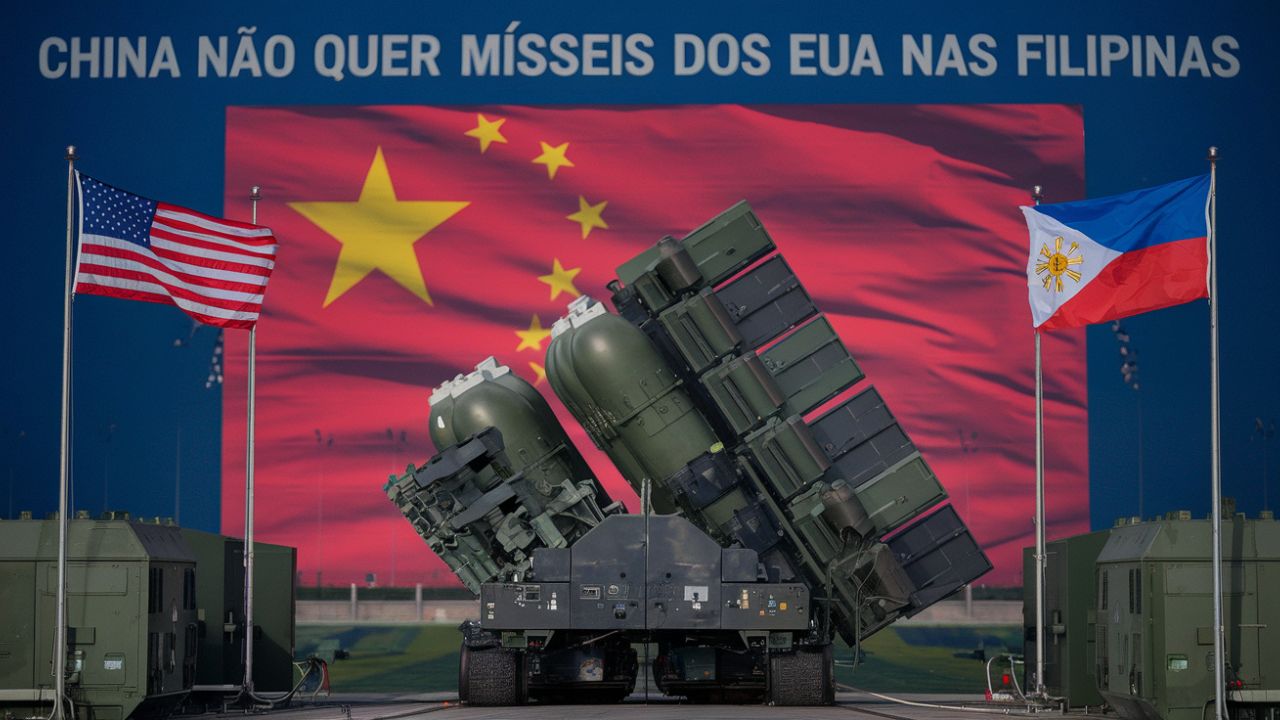


China Accuses Philippines of Fomenting Tensions by Planning Acquisition of Typhon Missiles, U.S. Strategic System, and Demands Immediate Withdrawal to Preserve Peace in Southeast Asia.
The growing tension between China and the Philippines has taken a new turn with Beijing’s explicit request for Manila to withdraw the Typhon missile system, which has been publicly promised. The conflict is not just about weapons but about who will shape the future of Southeast Asia: peace or militarization?
What Is the Typhon Missile System?
The Typhon missile system is a medium-range weapon manufactured by the United States, designed to protect strategic areas from external threats. For the Philippines, it represents a shield against potential maritime disputes, especially in the contested South China Sea. However, this defense is viewed by China as a double-edged sword, capable of destabilizing the entire region.
China believes that the Typhon is not just a defensive tool. Beijing argues that the presence of American offensive weapons in the Philippines is a geopolitical move that fuels tensions, increases the risk of conflicts, and instigates an arms race. For them, it is like lighting a match in a room full of gas: the danger is everywhere.
-
European Parliament Approves Digital Euro, Aiming to Challenge Visa and Mastercard’s Dominance and Transform Payments Across Europe by 2029

-
Israel finds Hezbollah militarized tunnel over 200 meters long under village, with 4 missile launch shafts, 12 chambers, anti-tank missiles, drones, and weapons depots at a depth of 25 meters.

-
Ukraine launches largest drone attack on Moscow since 2022, Russia claims to have intercepted nearly 200 aircraft near the capital, Kapotnya refinery targeted again, and offensive reignites alert about war reaching the Russian energy heart just a few kilometers from the Kremlin.

-
Truck drivers, freight, and fines from 2022 take center stage in politics: Chamber approves MP with amnesty, mandatory tracking by CIOT, million-dollar penalties, and new minimum wage for those who spend more than 24 hours on the road.


The Philippines’ Promise on Withdrawal
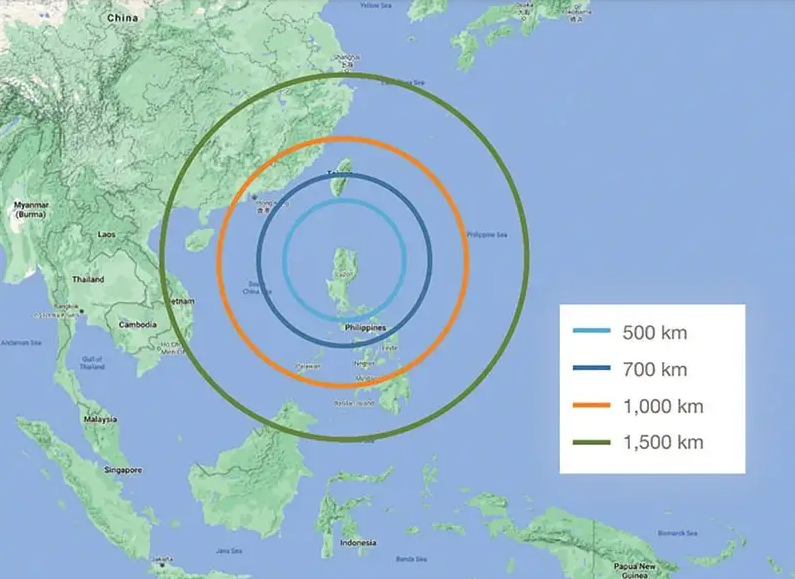
When the Philippines publicly committed to withdrawing the Typhon, the expectation was that tensions would ease. However, the recent announcement that the Philippine army plans to acquire the system has called this commitment into question. This raises a question: to what extent are diplomatic promises fulfilled in the face of external pressures?
The United States plays a crucial role in this story. As historical allies of the Philippines, the U.S. sees the installation of the Typhon as a way to protect its interests and contain Chinese influence. But this partnership, instead of bringing stability, can be seen as a powder keg ready to explode.
Chinese Arguments Against the Typhon System
Beijing does not mince words when criticizing what it considers a provocative and dangerous act. The installation of the Typhon is, according to China, an irresponsible choice that endangers not only Filipinos but regional security as a whole. For them, Southeast Asia needs economic development and cooperation, not missiles aimed at the future.
China emphasizes that weapons like the Typhon promote antagonisms between countries that share historical and cultural ties, jeopardizing regional prosperity.
Analysts suggest that the solution to this tension lies in diplomacy and dialogue. Instead of fueling arms disputes, it is essential for countries to prioritize multilateral agreements that strengthen trust and economic cooperation. Southeast Asia, a region rich in potential, cannot be held hostage by strategies that prioritize force over consensus.
The history of the Typhon missile system in the Philippines reflects a larger dilemma: how to balance security and sovereignty without compromising regional peace? The answer may lie in wiser and more cooperative choices. After all, in an interconnected world, today’s confrontation is the shadow that darkens tomorrow.