






 Portuguese
  Spanish


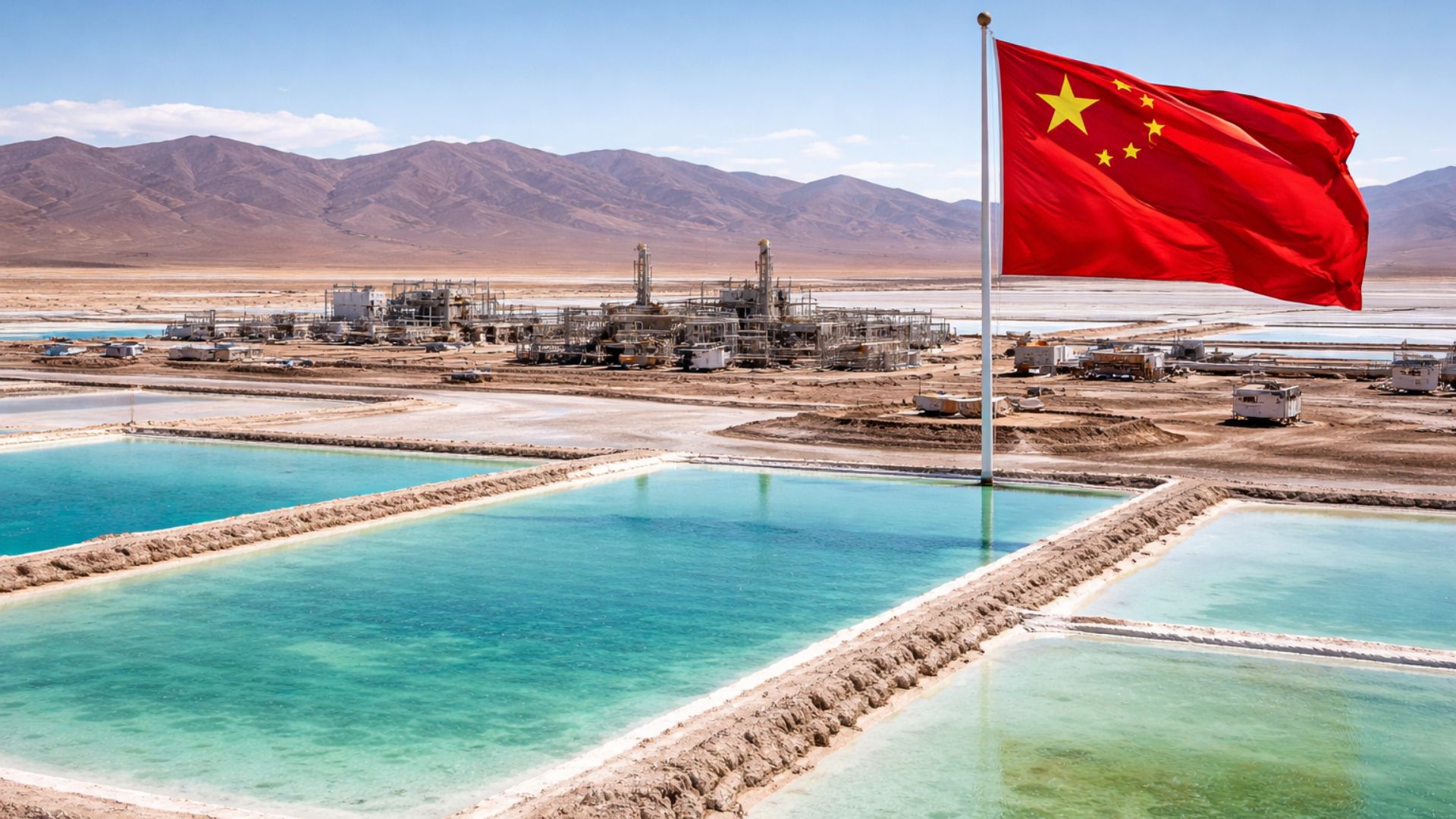


China Increases Presence in Argentine Lithium With Focus on Projects in the North of the Country, Particularly in Jujuy, Within the Lithium Triangle, While Companies Seek to Expand Production, Ensure Strategic Supply, and Meet the Growing Demand for Batteries and Electrification Technologies in the Global Market.
China has increased its presence in the lithium sector in Argentina, focusing on projects in the North of the country, an area that is part of the so-called Lithium Triangle with Bolivia and Chile.
Among the highlighted initiatives is the Caucharí-Olaroz, in the province of Jujuy, operated by Minera Exar and controlled by a partnership that includes the Chinese Ganfeng Lithium, the Canadian Lithium Argentina, and the provincial state-owned company JEMSE.
The project, which recently began commissioning, is discussing an expansion to raise the annual production to 85,000 tons of lithium carbonate equivalent by 2029, in a move aligned with the demand for batteries and electrification technologies.
-
Chinese E-commerce Giant Predicts Robots Will Replace 700,000 Delivery Workers as Autonomous Vehicles Expand to 200 Cities, Offering Training for Workers to Maintain Their Machines

-
Trump warns Europe with 100% tariff threat on digital tax, potentially impacting wine and trade agreements

-
As Homeownership Becomes Unattainable in Brazil, Japanese Municipalities Offer Abandoned Houses for as Low as $3,000 to Revitalize Aging, Emptying Cities
-
Job Market in 2026 Welcomes High School Graduates: Logistics, Retail, and Construction Hire Without College Degrees; Quick Courses in Forklifting, Building Electricity, and Welding Boost Salary Prospects


Despite the talk of a “race” for a strategic input, available public data points to a more objective dynamic.
Chinese companies, through equity stakes and purchase contracts, seek to ensure supply in a market that has already become central to electric vehicles and energy storage.
At the same time, Argentina is trying to boost investments, exports, and revenue, while facing pressures for stricter environmental rules and greater local returns in the producing provinces.
Caucharí-Olaroz Project and Production Expansion Plans
Located in the salt flats of Jujuy, the Caucharí-Olaroz operates with a nominal capacity of 40,000 tons per year of battery-grade lithium carbonate.
The ownership structure indicated by the company itself places Ganfeng as the largest shareholder of the asset, followed by Lithium Argentina, with JEMSE as the local partner.
The project gained traction as it moved from the initial operation phase to a stage where production increase targets began to be communicated more clearly.
In corporate results and public statements recorded by the company, production for 2024 is around 25,400 tons, and guidance for 2025 indicated a range higher than the first full year, reinforcing the narrative of industrial ramp-up.
It is in this context that the goal of tripling production by the end of the decade emerges.
The projection to reach 85,000 tons annually by 2029 has been associated with an expansion plan disclosed by industry outlets and reproduced in presentations and communications from the sector.
Chinese Strategy and Global Supply Assurance
The Chinese influence in the battery supply chain helps explain the interest in Argentine lithium.
China holds a significant share of global processing and is home to manufacturers that rely on long-term contracts to mitigate supply risks.
In this scenario, Argentina offers known reserves, a portfolio of projects at various stages, and the geological advantage of brines in Andean salt flats.
This extraction model tends to present distinct costs compared to hard rock projects developed in other continents.
Moreover, trade numbers show the relevance of the Chinese market for Argentine exports of the product.
In 2023, Argentina exported lithium carbonates primarily to:
- China
- Japan
- United States
This commercial relationship, however, is not limited to Caucharí-Olaroz.
Ganfeng itself, one of the largest global producers of the metal, announced the start of production at another project in Argentina, Mariana, in the province of Salta.
The disclosed investments total US$ 790 million in the industrial plant and an additional US$ 190 million in an associated solar park for energy supply.
The sum approaches US$ 1 billion, but refers to this specific venture, not to Caucharí-Olaroz.
Lithium, Energy Transition, and Market Challenges
Lithium has become a key input as it lies at the center of the most widely used battery technology in the market.
This role is particularly relevant in the chemistries used in electric vehicles and stationary energy storage.
Therefore, governments and companies treat the metal as a strategic component of the energy transition, with direct impacts on industrial competitiveness and supply security.
In Argentina, the sector’s expansion is intertwined with an economic environment seeking to attract foreign capital and accelerate projects.
In 2025, there was a record of mineral exports at the beginning of the year, with lithium among the highlighted items.
Yet, the sector’s performance remains subject to price and volume fluctuations.
Despite growth, progress is not linear.
The global market has experienced recent periods of volatility, with supply expanding faster than some demand projections at certain times.
This movement pressures prices and alters investment timelines.
On the other hand, companies continue to announce expansions and permit applications, indicating that the medium-term horizon is still seen as promising by those in the sector.
Sustainability, Licensing, and Environmental Governance
The intended production leap in brine projects brings a parallel requirement.
Environmental management and the licensing process have become central points in the sector’s agenda.
In the Andean region, the recurring concern involves water use, the balance of sensitive ecosystems, and the social impacts on nearby communities.
In the case of Caucharí-Olaroz, there has been public record of movement to enable an additional expansion phase.
These movements include submissions and procedures related to environmental permits and a regime of investment incentives in Argentina, known as RIGI.
The discussion about sustainability also appears as a market demand.
Manufacturers and buyers have been demanding traceability and clearer environmental standards, while local governments press for economic compensation and investments in infrastructure.
In this scenario, the so-called race for lithium transforms into a competition for contracts, licenses, and predictable delivery capacity.
As Argentina tries to consolidate its position as a relevant supplier and China reinforces its supply strategy with equity stakes and purchases, which will weigh more in the coming years: the speed of supply expansion or the capacity to meet increasingly stringent environmental and social demands?






Porquê não exploramos nossas próprias riquezas???
Porquê os estrangeiros tem que ficar com as nossas riquezas?????
China vai investir no sul do Brasil???
Que piada!!!!