Portuguese
  Spanish


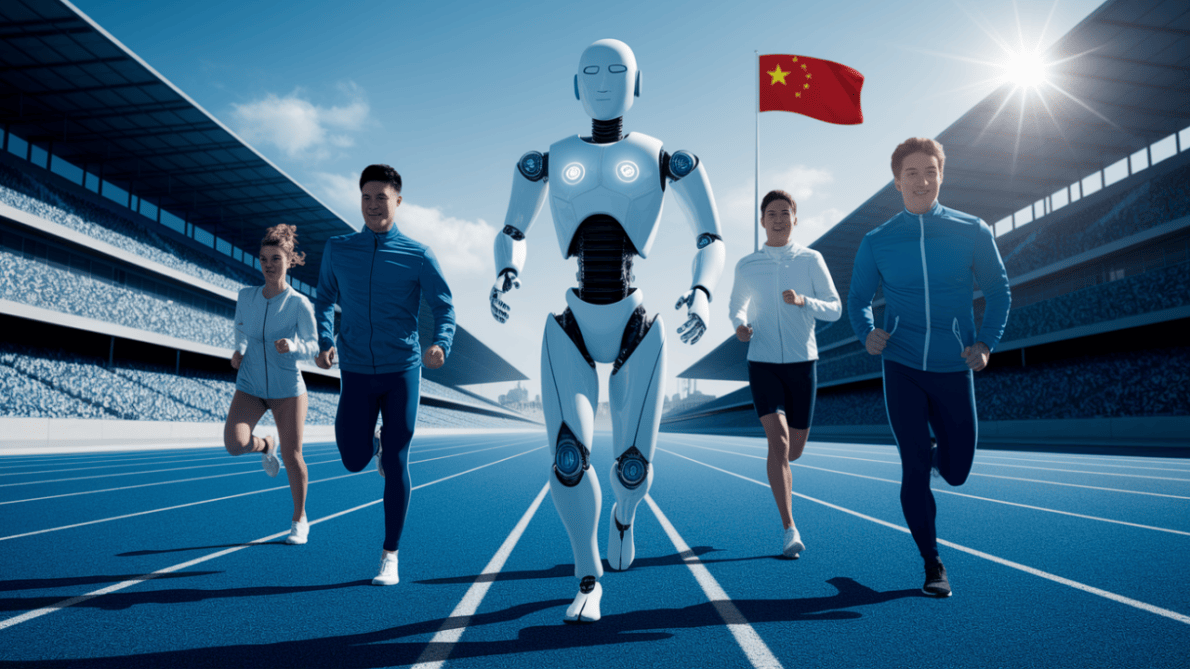


China Is Innovating with the First Half Marathon Between Humans and Robots in a Demonstration of Technological Power.
Beijing is about to make history in the global sports and technological scene with the holding of the first officially contested half marathon by humanoid robots. The event, scheduled for April 19, is promoted by the government of China as a showcase of advances in robotics development in the country and as a clear message to international competitors: the Asians are accelerating in the technological race.
The so-called Yizhuang Half Marathon in Beijing will bring together both human runners and robots developed by Chinese companies in a 21-kilometer race that aims to go beyond sport. More than physical performance, the event represents the convergence of innovation, artificial intelligence, and political ambition.
Robots vs Humans: Two Tracks, Two Worlds
The organization of the half marathon has thought of everything to ensure the safety of participants.
-
16-Year-Old from Brazil’s Sertão Wins Young Scientist Award for AI Predicting Rainfall with 94.5% Accuracy to Aid Farmers

-
Netherlands Reports First Child Euthanasia Case Since Rule Expansion for Minors

-
Brazilian Innovator Survives Homemade Submarine Dive in Paraty Despite Hatch Leak and False Oxygen Alarm
-
China Develops Custom 140-Ton Electric Mining Truck with 770 kWh Swappable Battery, Deploys 290 Units in Xinjiang’s Largest Zinc Mine



The robots and human runners will use separate tracks in order to avoid accidents and allow each category to have its own pace and dynamics.
In addition to traditional medals, there will be specific prizes for the machines that complete the course in the shortest time or that demonstrate the greatest energy endurance, meaning those that cover the distance without changing batteries.
According to the organizers, the expectation is that the robots will complete the 21 km in about three and a half hours. One of the tested prototypes, the Tiangong Ultra, has already managed to complete the experimental course in 2 hours and 52 minutes.
Despite the time being considerably longer than that of an elite athlete — the world record for the half marathon is 56 minutes and 42 seconds, set by Ugandan Jacob Kiplimo.
Display of Technological Strength
Much more than just a sports event, the half marathon in China is a true spectacle of technological marketing.
The country wants to show the world, especially the United States, that it is ahead in the race for dominance in humanoid robotics.
As experts point out, the Sino-American rivalry now also occupies the racetracks.

According to state network CCTV, several companies are already in advanced testing phases with their humanoid robots, adjusting performance, balance, and energy consumption.
The startup DeepSeek, for example, has gained notoriety for providing more accessible artificial intelligence models for other companies, boosting automation in various sectors.
A Message for the Future of Work
Besides being an international showcase, the event also serves as a warning within China itself.
The rising wages and economic slowdown have pressured Chinese companies to seek technological alternatives.
Automation with robots represents a way to contain labor costs while maintaining productivity and competitiveness in the global market.
The half marathon with robots symbolizes this transition. By putting machines side by side with humans in an activity historically dominated by people, the Chinese government sends a clear message: the future is coming — and it may be running beside you.
The Presence of Humanoid Robots Represents a New Chapter in Marathons
Never before has a half marathon officially included humanoid robots. The initiative from China puts the country at the forefront of a revolution that unites technology, sports, and politics.
Even though robots may not surpass humans on the tracks for now, the finish line of this race is much larger: it is in the domination of the future.
Whether you are an athlete, a technology enthusiast, or just a curious observer, the Yizhuang Half Marathon in Beijing promises to make history — as the race that united legs and circuits in the same competition.