Portuguese
  Spanish


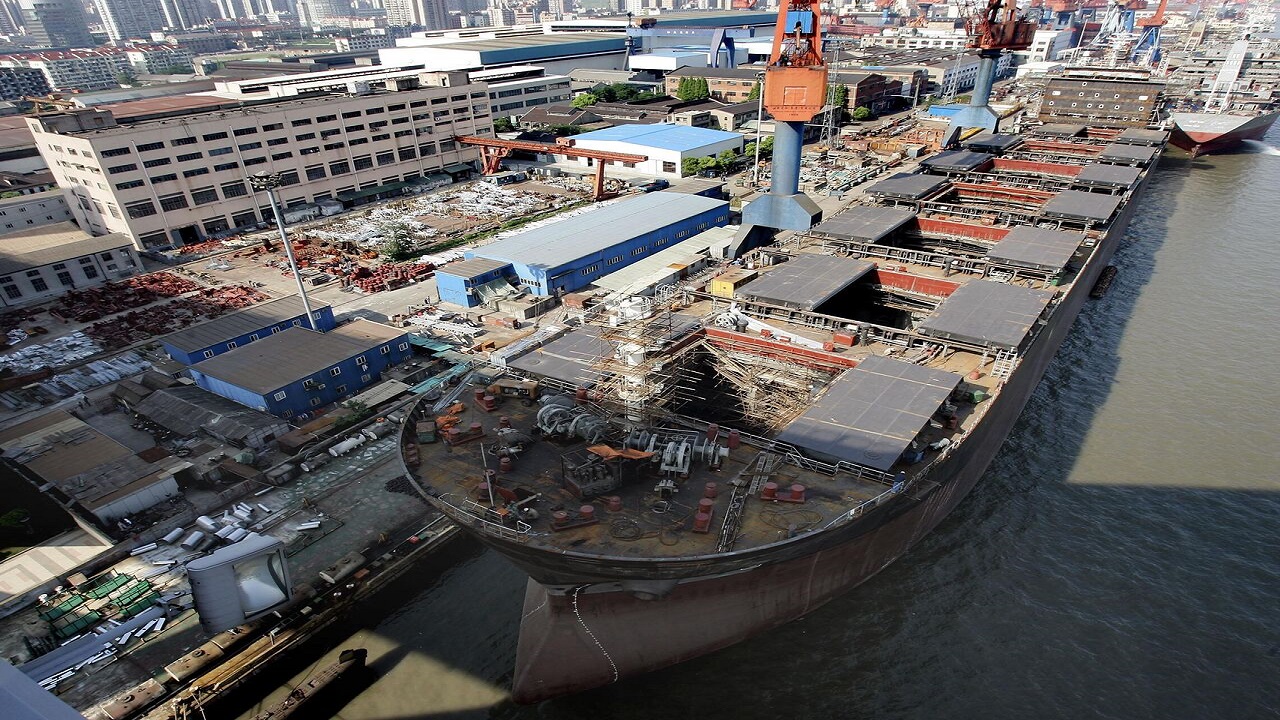

China Delivers The Largest Intermodal Ship For Transporting Liquefied Natural Gas. Vessel Measures 239 Meters In Length.
The Hudong-Zhonghua shipyard, based in Shanghai, China, and Shipbuilding Trading delivered an intermodal ship with gass natural liquefied with a capacity of 80,000 cubic meters, making it the world’s largest intermodal gas carrier. Named Dapeng Princess, the vessel is also the first ship delivered by Hudong this year.
Intermodal Ship Measures 239 Meters In Length
This delivery marks a new era for the Chinese shipbuilding industry aiming to double the production capacity of LNG carriers, according to the Global Times. The vessel is a fourth-generation intermodal ship measuring 239 meters in length and 36.6 meters in width, developed to navigate both deep and shallow waters, meaning it is designed to operate in both rivers and the open sea.
Moreover, the Chinese intermodal ship uses advanced, highly reliable technology, marking a significant milestone in the global shipbuilding industry. Chinese shipbuilders achieved a record of 55 orders for large gas transport ships last year, accounting for 30% of global orders.
-
The man who started in construction with his own house founded a company in 1957, went through a banking crisis in 1987, and ended up connected to 16,500 houses in Houston.

-
They exchanged the idea of a large house for a 35 m² warehouse, spent US$ 12,000 on the structure, and created a tiny house in Colorado with space to live and work.
-
While modern cities rely on pumps and electricity, in Iran, ancient tunnels carried water through the desert using only slope and gravity.
-
Instead of sending families far from the city, a project in Chile intentionally created incomplete houses on expensive urban land and left technical space for each to grow.



Intermodal transport is that which is done using more than one mode, meaning that transport documents are issued individually for each operation, and the responsibility among carriers is divided according to the transport route. Every time there is a change in mode, a new contract for tracking the cargo is made and takes effect, paying each carrier the corresponding freight.
The method of traction and handling of goods remains the same, even though the mode of transport is modified. The goal is to ensure that costs for each mode are reduced, providing a more advantageous total expense for companies that opt for this type of activity.
China Expands Control Of The Gas Market
China is rapidly becoming the dominant force in Liquefied Natural Gas (LNG), with 40% of recent long-term contracts among global players responding to Chinese buyers. China’s leading energy group, Sinopec, reached a 27-year agreement with the state-owned QatarEnergy at the end of 2022 to purchase 4 million tons of Liquefied Natural Gas per year. Imports are expected to start within 3 years.
As an essential customer, China is also negotiating to invest in a major project in Qatar to expand LNG production. A private sector energy company from China, ENN Group, signed a contract last year with Texas-based Energy Transfer to purchase 2.7 million tons of gas per year for 20 years.
China Triples Purchase Scale
Throughout 2021 and 2022, China closed long-term LNG purchase contracts worth nearly 50 million tons per year, according to European research firm Rystad Energy.
China has tripled its purchase scale through long-term contracts in just two years, exceeding the volume of about 16 million tons per year between 2015 and 2020. In 2020 and 2021, spot transactions accounted for up to 50% of China’s natural gas imports, much higher than the estimated 30% for Japan.
However, China seems to have changed its strategy to meet long-term demands. Long-term contracts offer greater supply stability compared to spot contracts.