






 Portuguese
  Spanish


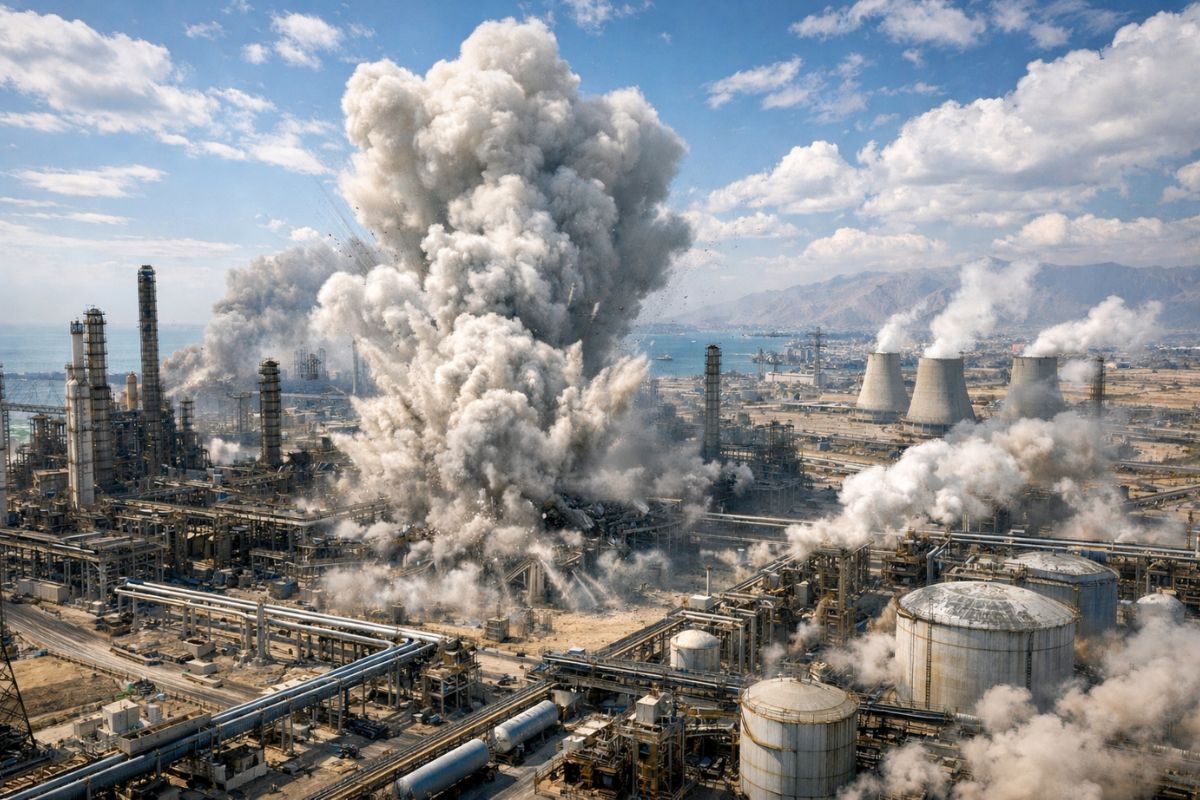

Blackouts intensify when two refineries are shut down and daily gas flow falls between 100 and 140 million m³, revealing how dependence on a single energy hub became a clear target.
What seemed like a surgical strike was, in practice, a blow to the machinery that sustains the country. With blackouts spreading and the energy crisis deepening, Iran felt the weight of relying on gas as the basis of its daily functioning within hours.
On March 18, 2026, around 2 PM, Israeli jets struck Assaluyeh and stopped between 100 and 140 million cubic meters of gas per day, with two refineries shut down. The impact was immediate: blackouts increased, shortages worsened, and the operation exposed a point that had been built over decades, the vulnerability created by the geography itself and the concentration of infrastructure.
The attack on Assaluyeh and the cut that froze the system

The offensive targeted processing plants, storage tanks, pipelines, petrochemical complexes, and refineries in Assaluyeh. There were fires on site, but they were controlled and no immediate deaths were reported. Israel warned Washington beforehand, and, according to the base, Trump approved while American forces did not participate.
-
U.S. Dismisses Brazilian Foreign Ministry’s Military Risk Warning as “Absurd,” Cites Brazilian Criminal Gangs Operating in the U.S. Since May 2026

-
Ukraine War Impacts Brazilian Fuel Supply: Russian Diesel Imports Drop 65% in June, Brazil Turns to US and India Amid Market Concerns

-
Chinese Nuclear Submarine Launches Simulated Warhead Missile in Pacific, Heightening Regional Tensions Amid Naval Drills with Russia Near Qingdao; New Zealand and Papua New Guinea Warn of Persistent Chinese Military Presence
-
Ayatollah Ali Khamenei’s Funeral Draws 15 to 20 Million in Tehran, Calls for Revenge Against Trump After Joint Israel-U.S. Attack

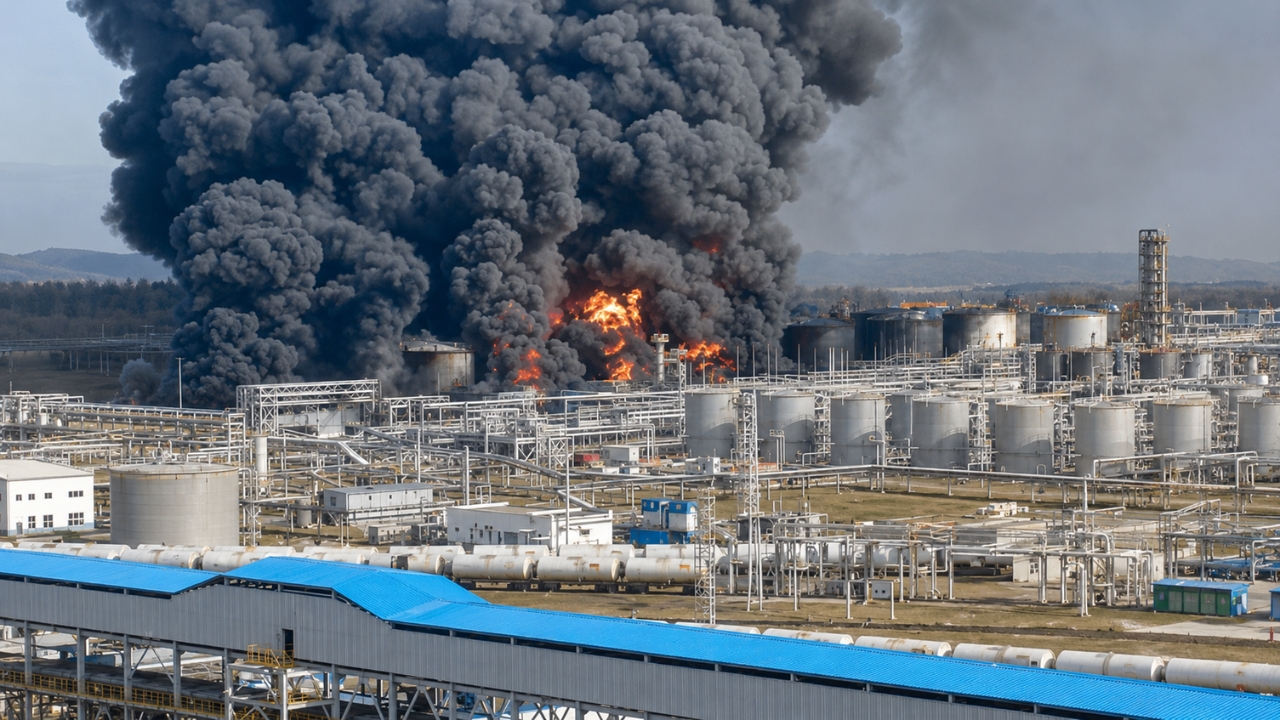


What turned the episode into a crisis was not just the physical damage. It was the domino effect: less gas available per day means less energy for a country that primarily runs on gas. And when gas fails, blackouts appear first.
Why did blackouts increase so quickly
Iran has about 120 trillion cubic feet of natural gas, which is equivalent to approximately 18% of the world’s gas, second only to Russia. The center of this power is South Pars, half of the largest gas field in the world shared with Qatar.
This single field sustains the country’s routine. It provides most of the domestic gas, covering over 80% of Iranian energy consumption and generating about 85% to 86% of electricity. When Assaluyeh is hit and part of this chain is interrupted, blackouts cease to be an inconvenience and become a symptom of a system with no margin for maneuver.
The exposed fragility: concentrating energy too much in one place
In addition to the attack itself, the report points out an uncomfortable detail: concentrating 70% of the country’s energy supply in a single location gave the enemy a clear target. On paper, a remote point may seem defensible. In reality, it becomes a master switch: if someone finds the right place and turns it off, the entire country feels it.
That is why, even with the common reading of “air superiority,” the actual effect was different. Iran became trapped in its own energy architecture, and the blackouts were the most visible sign of this trap.
The geography of Iran as a shield and as a trap
The report describes Iran as a “mountainous basin” that dictates where rain falls, where drought prevails, where armies clash, and where cities thrive or wither. The country is surrounded by large mountain ranges and is largely above 1,500 meters, with little flat land outside of narrow strips along the Caspian Sea and in the Khuzestan plain.
This relief both protects and isolates. The Tehran North Highway, for example, required 137 tunnels to cross the Alborz. There was work started in 1997, with drilling for nearly two decades, abandonment with less than a quarter completed, and when Iranian companies took over, issues arose, including flooding, methane, compacted rocks, and machines “swallowed” by the mountain, requiring bypass tunnels to remove equipment and restart. It was not a lack of will, it was the terrain demanding its price.
Expensive, slow infrastructure always under pressure
The geography that raises military barriers also makes any internal corridor more expensive. The report cites examples such as:
Kendovan Tunnel: widening began in 1995, seemed simple, but groundwater flooded in, rock repeatedly collapsed, and the project only finished in 2002.
Baktiari Dam: planned to be one of the tallest in the world in a Zagros gorge, a $2 billion contract with China in 2011, canceled in less than a year and transferred to the Revolutionary Guard, with ceremonies and access, but without a completed dam.
In transportation, the Trans-Iranian Railway, inaugurated in 1939, crossed the Zagros with 126 tunnels and faced inclines of up to 2.8% on the stretch between Tehran and the Caspian. The Tehran Chomal highway is portrayed as a continuous battle: dozens of tunnels, compressed rock pushing walls, methane and hydrogen sulfide requiring pressurized air, water flooding at 800 L per second, geological failures jamming machines. Every meter becomes a contest with the mountain.
In this context, when an attack causes blackouts, it does not find a country with an alternative network ready. It finds a country where connecting and providing redundancy is costly and time-consuming.
Blackouts and war, but the water crisis continues there


The base also reminds that, even with the world’s attention focused on the war, water continues to be scarce. Iran has only about 1/3 of its land suitable for agriculture, and only 12% is actually under cultivation. Less than a third of the cultivated areas are irrigated, while the rest depends on rain in a country where 80% of the land is arid or semi-arid.
There are mentions of satellite data indicating that about 68% of the surface has high or very high susceptibility to desertification. The country receives an average of 235 to 250 mm of rain per year, approximately half of the global average for land areas, with most of the rain falling between November and May and a long dry season.
Between 2003 and 2019, the base claims that Iran lost approximately 211 km³ of its total water reserve. And the availability of water per capita would have fallen from about 4,500 m³ in the 1970s to approximately 1,000 m³ today, placing the country in the category of absolute scarcity. In other words, blackouts are exploding in a country that has already been accumulating other structural pressures.
The Strait of Hormuz: the strong card amid the risk
Despite everything, Iran still has a strategic power point described as irreplaceable: the Strait of Hormuz, which is 167 km long with narrow shipping routes. About 20% of the world’s oil supply passes through here, roughly 20 million barrels per day, along with significant volumes of LNG and petrochemicals.
The base mentions that, in June 2025, Iran used dual-function drones within a “smart control” doctrine, hitting targets and allowing neutral traffic, resulting in a 20% drop in global oil supply and an increase of 50% to 100% in maritime insurance premiums. By 2026, more than 1,650 vessels would have suffered GPS and AIS interruptions in the strait, making commercial navigation a daily calculated risk.
This is the central irony of the situation: the country can threaten the world through geography, but it can also be paralyzed by it when its energy is too concentrated.
What the attack really revealed about Iran
In the end, the episode in Assaluyeh showed two facts at the same time:
1) The dependence on gas is so high that a local shock turns into national blackouts.
2) The geography that protects critical facilities also isolates, increases costs, and delays alternatives, creating a system with few Plan Bs.
The attack did not “invent” the weakness. It merely tightened a point that already existed.
Are these blackouts exposed in March 2026 a temporary shock or a sign that Iran’s energy fragility has become a routine risk?


