






 Portuguese
  Spanish


A Greater Bay Technology (GBT), a Chinese advanced battery company, announced that it will launch the world’s first solid-state battery produced on an industrial scale by 2026 — with a single cell reaching energy density between 260 and 500 watt-hours per kilogram, double or more than any conventional lithium-ion battery used today in electric cars, with a debut planned in GAC Hyptec’s high-end models.
What a solid-state battery is and why it is different
The battery that every electric car uses today — lithium-ion — has a liquid electrolyte. This liquid is what allows ions to move between the anode and cathode during charging and discharging. It is efficient, but has serious problems: the liquid is flammable (hence EV battery fires), degrades over time, and limits the energy density that the design can achieve.
The solid-state battery replaces the liquid electrolyte with a solid material — ceramic, polymer, or sulfide. The result is a battery that does not catch fire (the solid material is not flammable), degrades much more slowly, and can achieve dramatically higher energy densities.
GBT achieved 260 to 500 Wh/kg in its cells. The best conventional lithium-ion batteries reach 200-280 Wh/kg. In practice, an electric car with a solid battery of 500 Wh/kg could travel twice the distance with the same battery weight — or travel the same distance with half the weight, freeing up space and reducing cost.
-
Brazilian Steel Giant Donates 6 Million Tons of Waste to Pave Streets in 60 Cities, Tackling Infrastructure and Waste Challenges

-
BMW Demonstrates Real Value of Humanoid Robots: 30,000 Cars Assembled with Physical AI in European Production Line, Experiment Continues

-
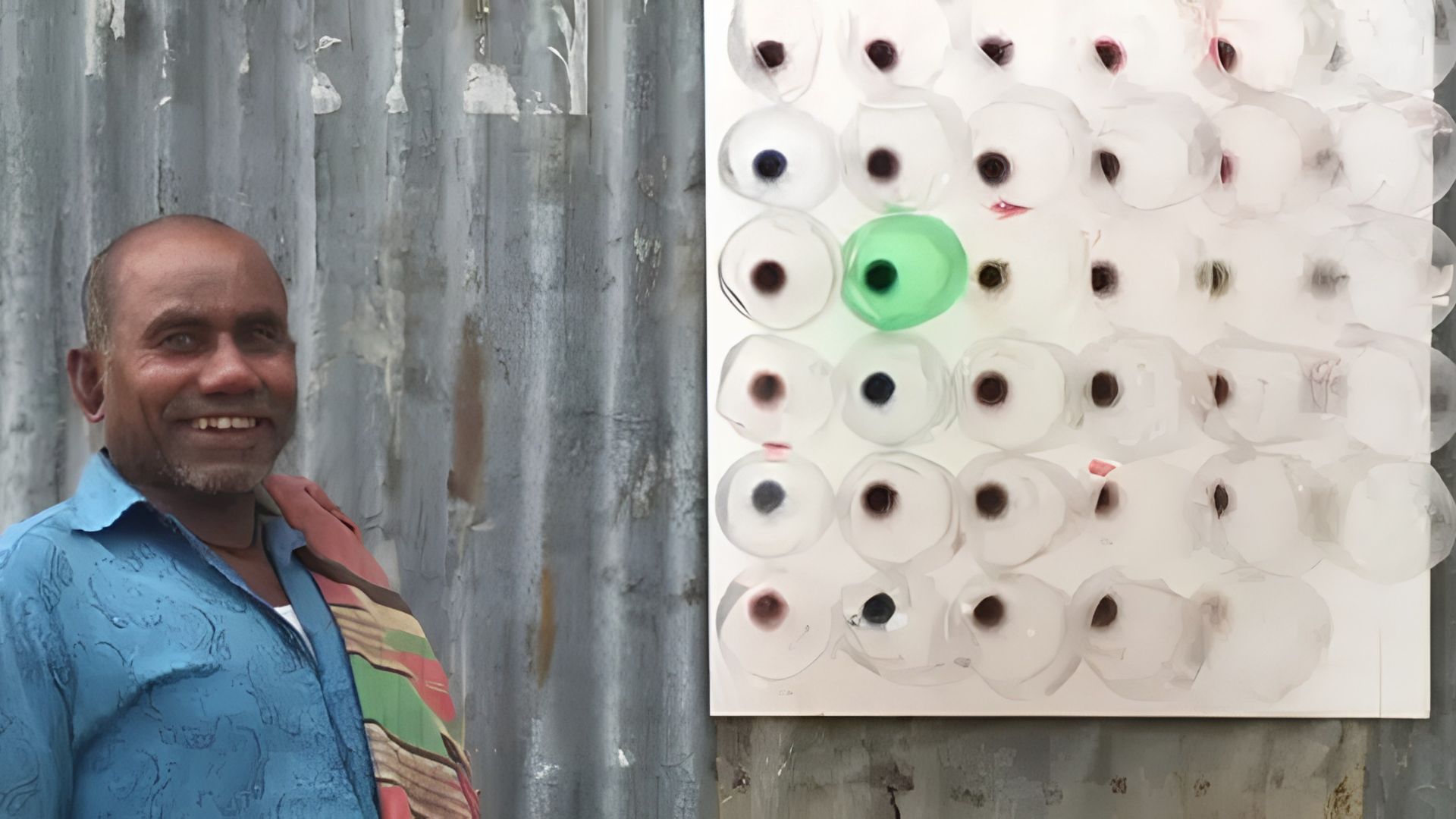
Cut Plastic Bottles Become Electricity-Free Air Conditioners in Bangladesh, Cooling Metal Homes During Extreme Heat

-
Over 70 Experts Join Global Project to Monitor Giant Asteroid Apophis, Visible to the Naked Eye During 2029 Earth Approach; Introducing Asteroids2029 Initiative



What “industrial scale” means for GBT
Solid-state batteries have existed in the laboratory for decades. The problem has always been production at scale. Toyota promised solid batteries for 2025, then postponed to 2027-2028. QuantumScape, an American startup backed by Volkswagen, has struggled for years to move from the lab to the factory.
GBT claims to have solved this problem. The company announced production capacity at the GWh — gigawatt-hour — level, which is the minimum scale to supply batteries for vehicles in commercial volume. One GWh is enough to equip approximately 10,000 electric cars with 100 kWh batteries each.
The initial launch takes place in GAC’s Hyptec models — a Chinese premium vehicle brand that uses cutting-edge technology as a market differentiator. Launching in a premium brand is the classic high-cost technology debut strategy: the premium consumer pays more for the novelty, which makes the business viable before scale reduces costs.
Why China is ahead and what competitors are doing
China dominates 75% of global conventional lithium-ion battery production, via CATL, BYD, CALB, and others. The advantage is not just cost — it is an integrated supply chain, specialized labor, and decades of battery manufacturing experience.
This entire ecosystem is now being applied to the solid battery. GBT is far from alone: CATL has its own solid battery in development, with a debut promised for 2027-2028. BYD is also working in the segment. The race within China is intense.
In the US, Factorial Energy tested a Mercedes that traveled 745 miles (1,200 km) with a single solid battery charge, with a commercial launch planned for 2027. Toyota, after years of delays, maintains a solid battery target for commercial models in 2027-2028.
The window in which GBT has an advantage is 2026-2027. If scale production works as announced, the company can capture the global premium segment before Japanese, American, and European competitors are ready to supply.
What this changes for the global EV market and for Brazil
A 500 Wh/kg battery that does not catch fire and lasts twice as long removes the two biggest obstacles to electric car adoption: range anxiety and fear of fire. If GBT delivers what it promises, the conversation about whether the electric car replaces the combustion car stops being speculation and becomes a schedule.
For Brazil, the impact has two sides. On the oil side: fewer combustion vehicles mean less demand for oil in the long term, which affects Petrobras and the entire pre-salt ecosystem — in a 10 to 20-year horizon. On the lithium side: Brazil has the third-largest lithium reserve in the world, concentrated in the Jequitinhonha Valley in Minas Gerais and the Northeast. A battery that uses more lithium per kilogram — which solid ones tend to do — increases demand for the resource that Brazil has underground.
An important caveat that solid battery enthusiasts sometimes ignore: the energy density of 500 Wh/kg is the cell number, not the pack. When the battery is integrated into a pack with the thermal management system, casing, connectors, and control electronics, the pack density drops to 60-70% of the cell value — which means 300-350 Wh/kg of pack, still significantly above the best current lithium-ion batteries (which reach 200-250 Wh/kg of pack). Even with this discount, the gain is transformative: a car that today has a range of 400 km with a 75 kWh pack would go to 600+ km with the same weight, or maintain 400 km with a much lighter and cheaper pack. For the total vehicle cost — where the battery still represents 30-40% — this weight reduction has a direct financial impact. GBT needs to prove not only that the cell works in the lab, but that the integrated pack achieves this density under mass production conditions — the step that separated promise from real product in all previous battery technologies.
If a 500 Wh/kg battery that does not catch fire reaches the mass market, the electric car definitively wins over the combustion car — and Brazil, with the largest ethanol volume in the world and immense lithium reserves, which side of this dispute will it take?


