Portuguese
  Spanish


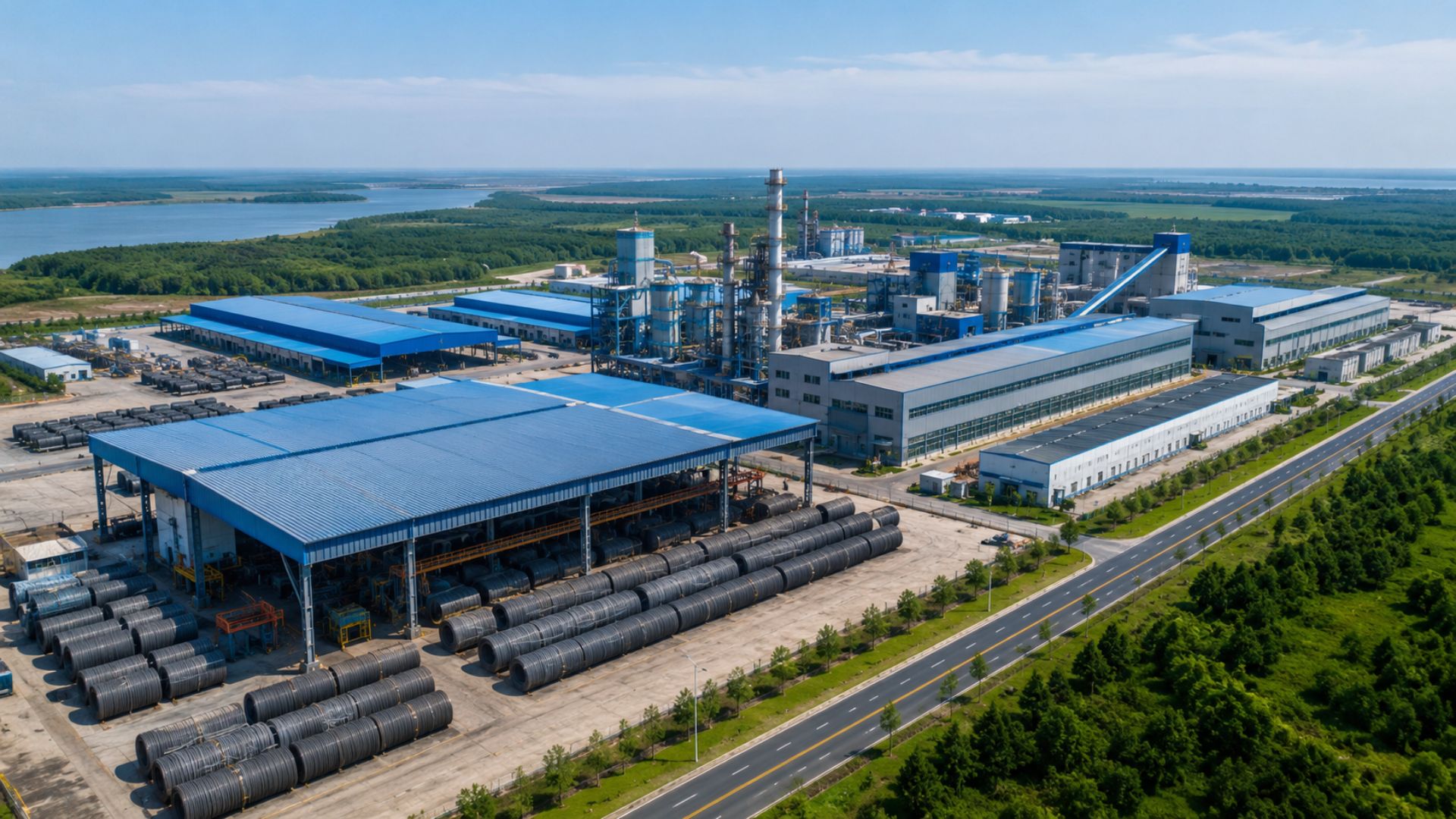


Chinese Broad Wire, founded in 1954 in Shanxi province and with 40 years of export to markets in America, Europe, and Asia, signed a protocol of intent with the government of Mato Grosso do Sul to install a wire industry in the Três Lagoas industrial district, strengthening the cellulose production chain in the region.
According to the RCN67 portal, Chinese Shanxi Yuci Broad Wire Products, specialized in the manufacturing of metal wire for the cellulose sector, has just signed a protocol of intent with the government of Mato Grosso do Sul to install an industry in Três Lagoas. Governor Eduardo Riedel signed this Wednesday (6), and the company intends to occupy an area in the municipality’s industrial district to supply the wires used in the cellulose bales produced by the region’s factories. Broad Wire already operates as a partner of Suzano in Brazil and also serves Bracell and Arauco, which means that the operation in Três Lagoas is born with guaranteed clientele just a few kilometers from the factory door.
The move is not casual. The arrival of the Chinese company is part of a deliberate strategy by the state government to attract suppliers for the large industries in the cellulose sector to Mato Grosso do Sul. The goal is to shorten supply chains, reduce logistical costs, and generate industrial jobs around what the state calls the Cellulose Valley. For factories already installed in the region, having a wire supplier operating in the same industrial district means accessing raw material at a lower cost and with a drastically shorter delivery time, advantages that directly reflect on the competitiveness of the cellulose produced in Três Lagoas.
Who is Broad Wire and why does it manufacture wire for cellulose?

Shanxi Yuci Broad Wire Products was founded in 1954 in Shanxi province, China, and has over four decades of experience in exporting metal wire to global markets. The Chinese company has an annual production capacity of 100,000 tons and supplies customers in countries such as the United States, Canada, Chile, Italy, Finland, Thailand, and Indonesia, in addition to maintaining consolidated commercial operations in Brazil, where it already serves large groups in the paper and cellulose sector.
-
28-meter, 156-ton titans traveled 20,000 km from China to the port of Santa Catarina: Portonave received 7 fully electric megacranes, part of a R$ 210 million package, to double container handling.

-
They exchanged the idea of a large house for a 35 m² warehouse, spent US$ 12,000 on the structure, and created a tiny house in Colorado with space to live and work.

-
A newly opened terminal in the middle of the Amazon has begun transporting soy and corn through Amapá, eyeing the queue of ships that is congesting the ports in the South.

-
Goodbye to old tiles: renovation technique without construction transforms bathrooms in a few hours, eliminates debris, and reduces costs with coverings using special paints, high-resistance adhesives, and modern finishes that completely renew the space.


The wire that Broad Wire manufactures is an essential component in the cellulose chain: it ties and holds together the bales of cellulose pulp that leave the factories for the domestic market and for export. Without this input, production units need to import from distant suppliers, which increases logistics costs and creates dependence on international deadlines. With the installation of the industry in Três Lagoas, the Chinese company eliminates this distance and begins to offer the wire directly in the hub where it is consumed, an arrangement that benefits both the company and the region’s cellulose factories.
Três Lagoas and the weight of the Cellulose Valley

The choice of Três Lagoas as the site for the new industry does not surprise those who follow the sector. The municipality has consolidated itself as one of the largest cellulose production hubs in the world, housing units of companies like Suzano, which operate on a scale capable of influencing the global supply of the commodity. Três Lagoas concentrates enough production volume to justify the installation of specialized suppliers within its own territory, and it is precisely this attraction effect that the state government seeks to expand.
Negotiations between Broad Wire and the municipality began in November last year, when Mayor Cassiano Maia received representatives of the Chinese company in the municipal office. On the occasion, the entrepreneurs presented their interest in establishing the factory and discussed opportunities for industrial expansion, investments in logistical infrastructure, and strengthening the city’s export sector. The mayor highlighted that the arrival of Broad Wire reinforces Três Lagoas’ prominence in the cellulose sector and expands the municipality’s potential as an integrated industrial hub, where raw material, production, and suppliers coexist within the same geographical ecosystem.
The state government’s active search strategy
The installation of the Chinese Broad Wire is another chapter in a state policy that the government of Mato Grosso do Sul systematically pursues. According to state secretary Artur Falcette, the state continuously maps supplier companies to take advantage of the favorable environment created by the expansion of the cellulose production chain. The model consists of identifying opportunities, locating strategic suppliers, and actively seeking out companies interested in investing in the region, instead of passively waiting for investments to arrive through market initiative.
The result of this approach is a multiplier effect: each new cellulose industry installed in Mato Grosso do Sul attracts suppliers of inputs such as wire, chemicals, and equipment, which in turn generate local jobs and wealth. The arrival of yet another international company in the Cellulose Valley demonstrates that the strategy is working, and that Três Lagoas is on its way to becoming not just a production hub, but a complete industrial ecosystem where the entire cellulose value chain operates in an integrated manner. For the Chinese Broad Wire, Brazil offers a growing market; for Mato Grosso do Sul, each new factory is another step towards the industrialization of a state historically dependent on agribusiness.
And what do you think, does the arrival of a Chinese company like Broad Wire strengthen or cause concern for the local industry in Três Lagoas? Should the Cellulose Valley attract even more international suppliers, or should the focus be on developing Brazilian wire and input companies? Leave your comment and tell us what you think about this strategy of the Mato Grosso do Sul government.