Portuguese
  Spanish


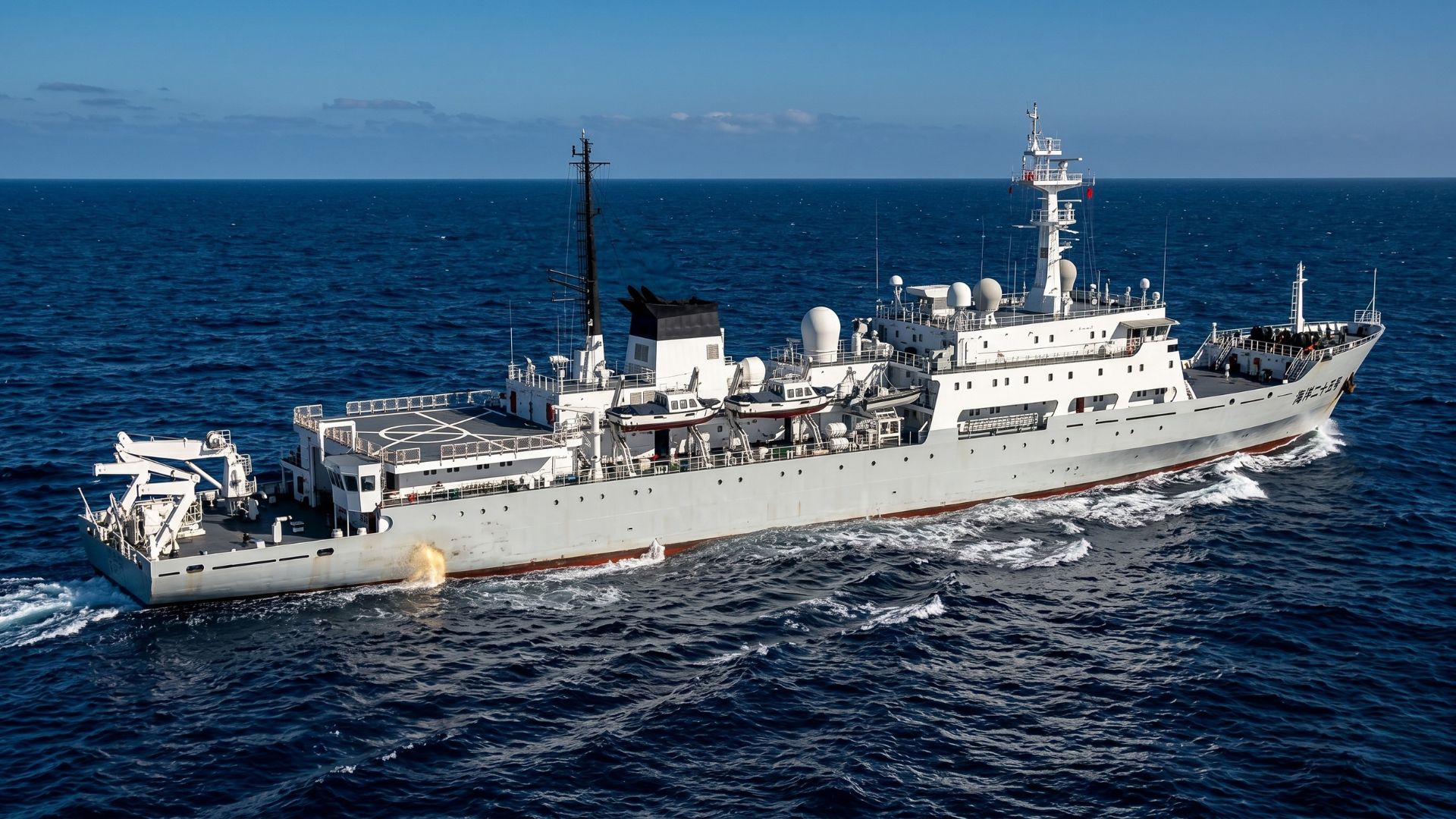


Chinese Navy vessel docks in Salvador after US report cites China-linked structures in Bahia and heightens geopolitical tension.
The authorization given by Brazil for the arrival of an oceanographic vessel from the Chinese Navy at the Port of Salvador has once again placed Bahia at the center of the growing geopolitical dispute between the United States and China. The ship Chen Jingrun, considered one of the most advanced scientific vessels of the People’s Liberation Army Navy of China, was authorized by the Brazilian Navy to remain in Salvador between June 6 and 10, 2026, just weeks after a US Congressional report raised suspicions about China’s strategic presence in the South Atlantic and directly cited structures linked to China in Bahian territory.
The movement drew attention because it occurs at a time of increased rivalry between Washington and Beijing in areas considered strategic for maritime security, telecommunications, space monitoring, and naval projection. The document released by a US House of Representatives committee in March 2026 indicated that Brazil is part of a Latin American network of Chinese infrastructure that could have both civilian and military applications. Among the points cited by the Americans is a ground station located in Bahia linked to the Chinese company Beijing Tianlian Space Technology.
Chinese ship authorized by Brazil is among the most modern in Beijing’s oceanographic fleet
The ship authorized to dock in Salvador belongs to the Type 636/636A class, used by the Chinese Navy in long-duration oceanographic research missions.
-
European Parliament Approves Digital Euro, Aiming to Challenge Visa and Mastercard’s Dominance and Transform Payments Across Europe by 2029

-
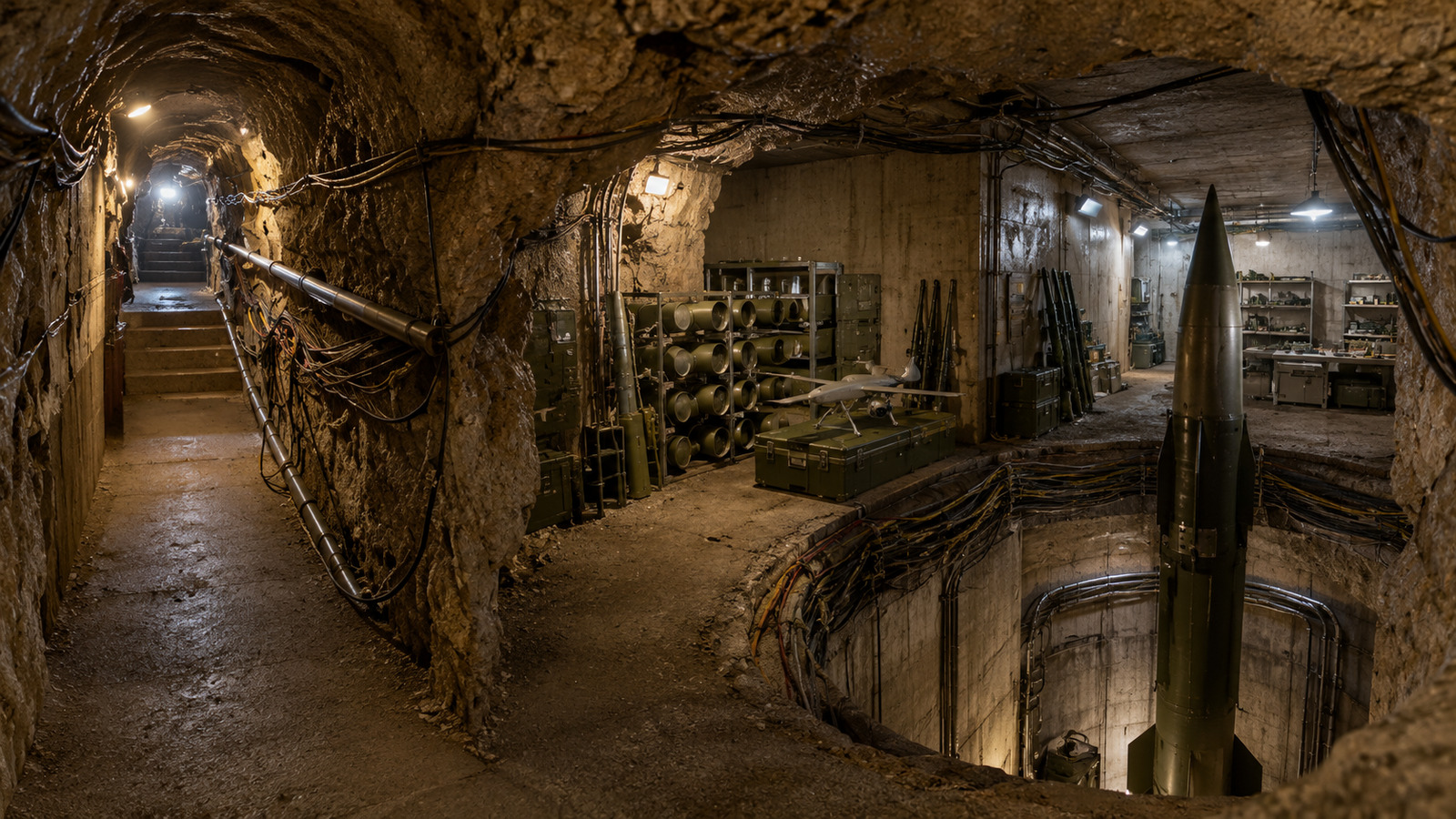
Israel finds Hezbollah militarized tunnel over 200 meters long under village, with 4 missile launch shafts, 12 chambers, anti-tank missiles, drones, and weapons depots at a depth of 25 meters.

-
Ukraine launches largest drone attack on Moscow since 2022, Russia claims to have intercepted nearly 200 aircraft near the capital, Kapotnya refinery targeted again, and offensive reignites alert about war reaching the Russian energy heart just a few kilometers from the Kremlin.

-
Truck drivers, freight, and fines from 2022 take center stage in politics: Chamber approves MP with amnesty, mandatory tracking by CIOT, million-dollar penalties, and new minimum wage for those who spend more than 24 hours on the road.



According to information published by Revista Sociedade Militar and confirmed by an official Navy statement cited by the Bahia Notícias portal, the Chen Jingrun is approximately 129.8 meters long, with a displacement of about 5,872 tons, autonomy for up to 60 days at sea, and a maximum speed close to 33 km/h.

The vessel is officially classified as an oceanographic research ship, but this type of platform has been observed with growing concern by the United States and Western allies. In different parts of the world, Chinese scientific ships have come to be analyzed as strategic assets capable of conducting hydrographic surveys, collecting maritime data, analyzing the submarine relief, and ocean monitoring with potential military application.
The episode gained international dimension because the Brazilian authorization occurred precisely after the increase in U.S. political pressure on Chinese expansion in Latin America. The U.S. report states that Chinese space and maritime infrastructure in the region can serve both commercial and strategic objectives, especially in areas related to surveillance, satellite tracking, and naval projection.
U.S. Report Cited Chinese Structures Installed in Bahia
The American document titled “China in Our Backyard: Pulling Latin America into China’s Orbit” stated that Beijing owns or maintains access to at least 11 space facilities in Latin America. Among them, the authors mentioned a ground station located in Salvador known as Tucano Ground Station.
According to the report, the structure operates in partnership between Brazilian and Chinese companies focused on satellite data analysis. American lawmakers stated that this type of facility could be used for space monitoring, tracking orbital objects, and identifying foreign military assets.
The document did not present public proof of direct military use of the structure but argued that space technologies have the potential for dual use, both civil and military at the same time.


The report’s repercussion increased the political debate about the Chinese presence in Brazil, especially in strategic areas related to telecommunications, port infrastructure, energy, satellites, and ocean research. The arrival of the Chinese ship in Bahia a few weeks later further amplified the international perception that Brazil is trying to maintain diplomatic balance between the two largest powers on the planet.
Brazil Maintains Simultaneous Approach with China and the United States
The visit of the Chinese ship occurs in parallel with the expansion of military cooperation between Brazil and the United States. Recently, the country hosted operations related to the U.S. nuclear aircraft carrier group USS Nimitz during naval exercises in the South Atlantic.
At the same time, the Brazilian government maintains a strong economic approach with China, Brazil’s main trading partner since 2009.
Geopolitical experts interpret Brazil’s stance as a strategy of non-automatic alignment. Instead of fully adhering to one of the global blocs, Brazil tries to preserve economic, diplomatic, and military relations simultaneously with Washington and Beijing.
This balance, however, has been becoming increasingly delicate as the rivalry between Chinese and Americans intensifies in sectors considered strategic. The South Atlantic has gained increasing importance within this scenario because of maritime routes, underwater resources, space infrastructure, and Chinese naval expansion outside Asia.
Chinese oceanographic ships have become a target of international concern
International concern about Chinese scientific vessels is not new. In recent years, the United States, Japan, India, and other countries have begun to monitor Chinese oceanographic missions in sensitive regions more closely.

In September 2024, the Japanese Ministry of Defense stated that a Chinese hydrographic ship entered Japanese territorial waters without authorization, an episode that increased tensions in the Indo-Pacific. According to Japanese authorities cited at the time, such vessels could be used to map submarine routes, ocean relief, and ideal conditions for future military operations.
The Chinese Navy itself has been rapidly expanding its capability to operate far from the Asian coast. International analysts classify Beijing’s naval force as an expanding blue-water navy, capable of sustaining oceanic operations increasingly distant from the Chinese coast.
In this context, scientific, hospital, and oceanographic missions have also come to be seen as instruments of diplomatic projection and global strategic presence.
Salvador becomes a new focal point of global geopolitical dispute
The choice of Salvador as the destination for the Chinese ship also drew attention because Bahia had already been appearing in strategic discussions related to the Chinese presence in Brazil. Besides the suspicions raised by Americans about space infrastructure, the state has also been receiving Chinese investments in areas of energy, ports, logistics, and infrastructure.
The authorization for the docking of the Chen Jingrun was officially published in the Federal Official Gazette and signed by the deputy chief of the Brazilian Navy General Staff. The text does not detail which activities will be carried out during the vessel’s stay in Salvador.
Even so, the episode reinforced the perception that the South Atlantic has definitively entered the radar of the strategic dispute between China and the United States. The ocean, historically distant from the central tensions of the Cold War and the Indo-Pacific, now increasingly appears associated with commercial routes, maritime surveillance, space infrastructure, and global geopolitical influence.