Portuguese
  Spanish


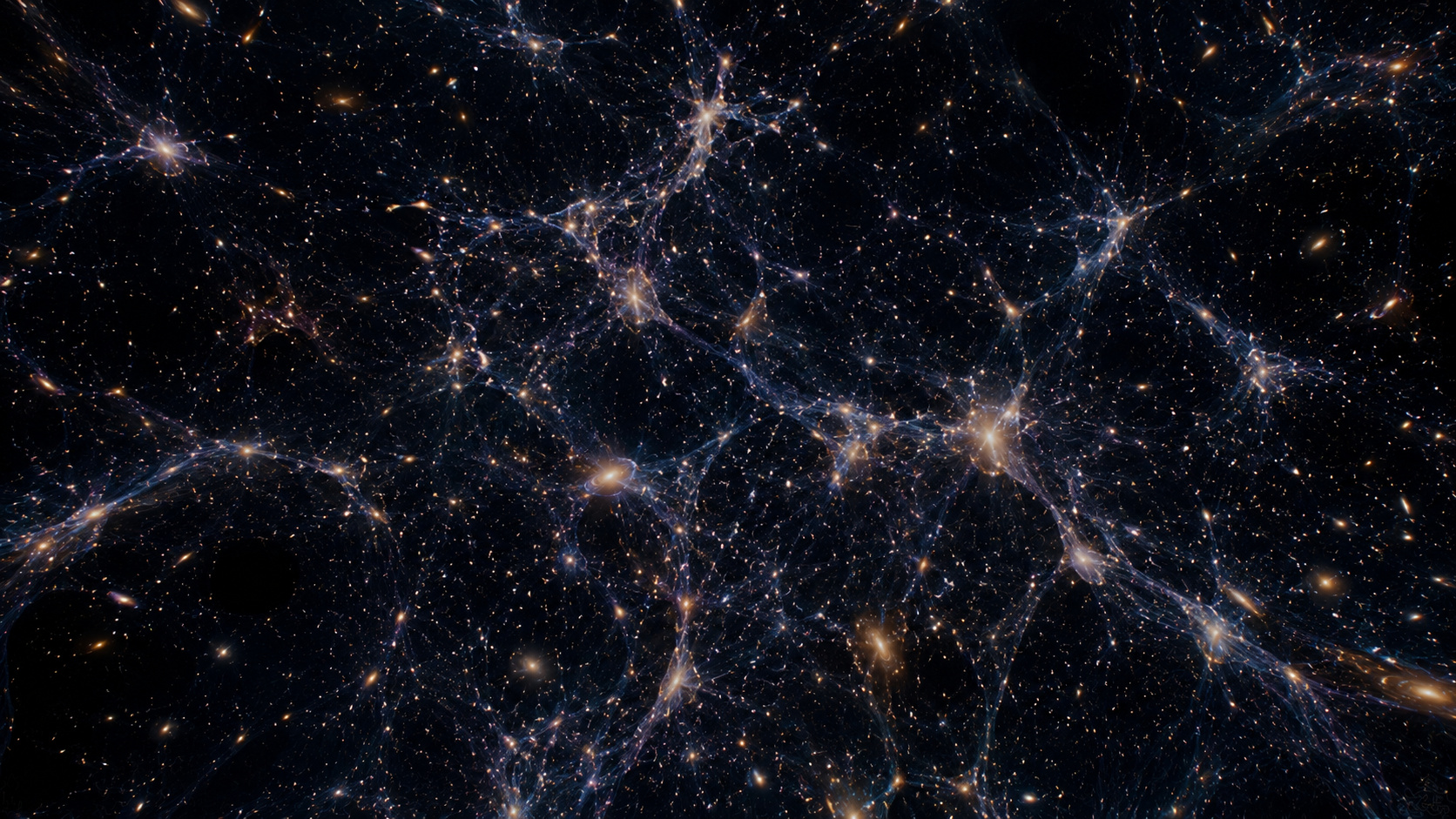


Researchers have discovered that a rare galaxy in cosmic transition is 100 million light-years from Earth, and the Hubble telescope photographed the never-before-seen phenomenon.
According to a report by Phys.org, the study was published in May 2026 in The Astrophysical Journal.
Therefore, the discovery documents for the first time a galaxy changing from a spiral to an elliptical structure in an observable way.
-
Brazilian Innovator Survives Homemade Submarine Dive in Paraty Despite Hatch Leak and False Oxygen Alarm

-
China Develops Custom 140-Ton Electric Mining Truck with 770 kWh Swappable Battery, Deploys 290 Units in Xinjiang’s Largest Zinc Mine
-
Meta to Launch Arena, a New Prediction App Targeting 3.56 Billion Users, Competing with Polymarket and Kalshi

-
Scientist Challenges Famous Human Evolution Theory, Argues Homo Sapiens Evolved Gradually Over Thousands of Years





The galaxy in question has been cataloged as NGC 7252 and is located in the constellation Aquarius.
According to the Space Telescope Science Institute, NGC 7252 emerged from the merger of two spiral galaxies approximately 1 billion years ago.
The complete transition process between spiral and elliptical can take up to 5 billion years in total.
Astronomer Pieter van Dokkum from Yale led the discovery
Astronomer Pieter van Dokkum from Yale University led the international study.
According to Yale, van Dokkum has been working in partnership with researchers from the Space Telescope Science Institute in Baltimore since 2020.
Therefore, the work combined 480 hours of Hubble observations with data from the Atacama Large Millimeter Array (ALMA) telescope in Chile.
The team identified 12,000 young stars in accelerated formation within NGC 7252.
Additionally, the star formation rate is 7 times higher than the average for galaxies of similar size.
How the Hubble Space Telescope still operates after 36 years
The Hubble Space Telescope was launched on April 24, 1990, aboard the Space Shuttle Discovery.
According to NASA, the telescope orbits 547 km above Earth and completes a revolution around the planet every 95 minutes.
Therefore, in 36 years of operation, Hubble has produced more than 1.7 million observations and captured images of 50,000 different celestial objects.

The total cost of Hubble since its launch exceeds $16 billion.
According to NASA, the mission is expected to continue until 2030 or 2032, when it will re-enter Earth’s atmosphere.
Why NGC 7252 is called Atoms-for-Peace
The galaxy NGC 7252 is also known by the nickname Atoms-for-Peace.
According to NASA Goddard, the nickname comes from its visual resemblance to the symbol of the International Atomic Energy Agency.
Therefore, the galaxy has been famous in astronomy textbooks since the 1990s.
NGC 7252 is 200,000 light-years in diameter, twice the size of the Milky Way.
Additionally, the central core is 4 times brighter than normal spiral galaxies due to accelerated star formation.
The gas stripping process that reorganized the galaxy
The gas stripping process dragged 80 billion solar masses of molecular gas during the original merger.
According to van Dokkum, the material was redistributed into two stellar tails, each 100,000 light-years long.
Therefore, NGC 7252 has the appearance of a cosmic butterfly with symmetrical stellar wings.
The tails contain 200 million stars in accelerated formation, according to the study.
- Distance from Earth: 100 million light-years
- Diameter: 200,000 light-years (2× Milky Way)
- Mass of gas dragged: 80 billion solar masses
- Stellar tails: 100,000 light-years each
- Stars in formation: 200 million in the tails
- Total transition time: 5 billion years
According to the Space Telescope Science Institute, NGC 7252 is one of 50 known transitioning galaxies in the observable universe.
For other space discoveries, see coverage on orbital data centers and the Tengeh solar park in Singapore.
James Webb Space Telescope to follow up in 2027
NASA’s James Webb telescope has scheduled observation of NGC 7252 for 2027.
According to NASA, Webb will have 130 hours of dedicated observation of the galaxy.
Therefore, astronomers will be able to analyze the chemistry of the molecular gas in the stellar tails.
The James Webb has a primary mirror of 6.5 meters and operates 1.5 million km from Earth at the Lagrange point L2.
According to NASA, the telescope cost $10 billion and was launched on December 25, 2021.

The discovery of NGC 7252 in transition confirms that galaxies change structure over billions of years.
However, according to the Space Telescope Science Institute, the process is only observable in a very specific cosmological window.
Nonetheless, according to van Dokkum, new data from James Webb in 2027 may answer fundamental questions about galactic evolution that astronomers have been pursuing for 60 years with Hubble.