Portuguese
  Spanish


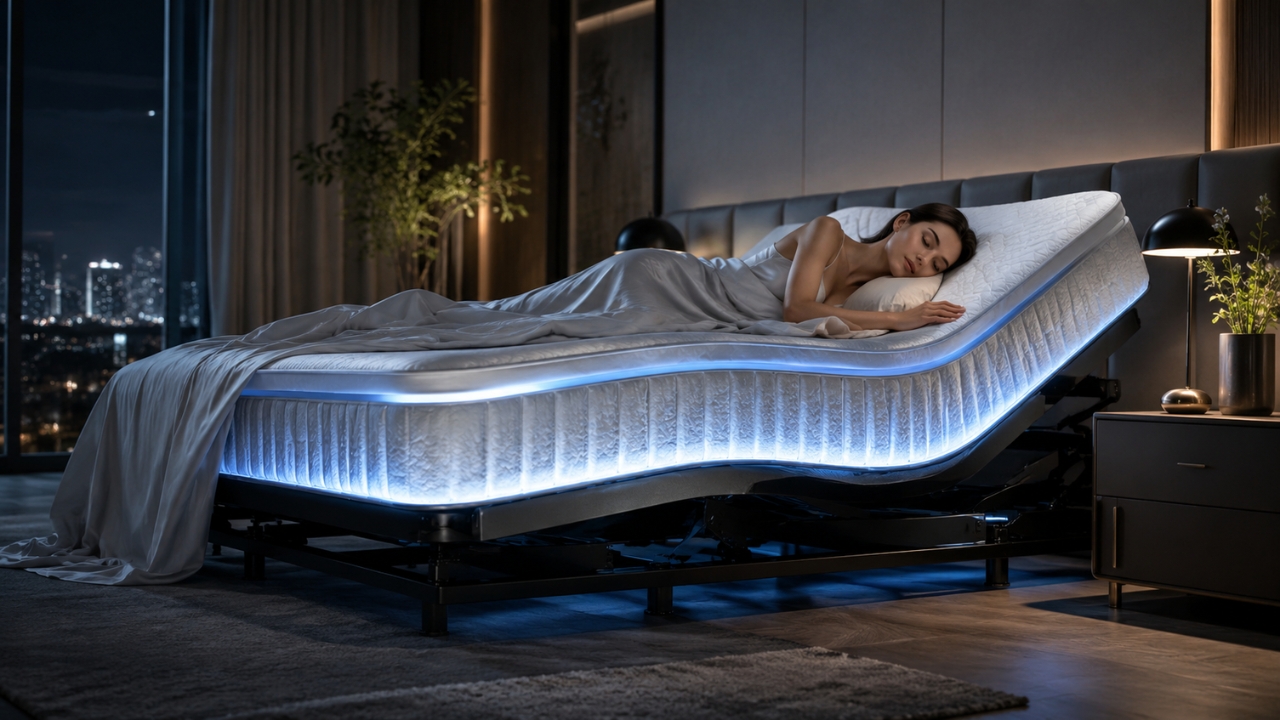

Presented at CES 2026, an artificial intelligence rest system promises to identify body pressure, adapt the base, and transform sleep into a personalized, connected, and much more technological experience.
The traditional mattress, still, silent, and the same all night long, may be entering a new phase. A Chinese sleep technology company has introduced a system that promises to do something that seemed like futuristic exaggeration: read the body while the person sleeps, adjust firmness in real-time, and transform the bed into an active rest machine.
The novelty comes from Stareep, which announced at CES 2026 its SmartSleep ecosystem, described as a mattress and base system with artificial intelligence capable of adapting to the body during the night. According to the company, the proposal is not just to monitor sleep but to intervene while the person is sleeping, automatically adjusting support, posture, and comfort.
In practice, the promise is simple to understand and strong enough to attract attention: the bed would cease to be a passive piece of furniture. Instead of just receiving the body’s weight, it would respond to movements, pressure, and even signals related to breathing, creating a very different experience from common mattresses.
-
Tesla injected an additional $250 million into the German factory, doubled the battery cell target, and opened its own production line for startups.

-
No more TV stuck on the wall: Samsung The Freestyle+, the new projector with over 400 lumens projects on walls, floors, and ceilings, bringing cinema to any corner of the house.

-
A Japanese governor single-handedly stalled the construction of the world’s fastest train for nine years, and only now has he agreed to allow a tunnel excavated at a depth of 1,400 meters.
-
Almost 1 billion euros, two gigafactories, and a million-dollar public investment, Chinese company aims to turn Spanish city into Europe’s new battery hub.



The mattress that doesn’t stay still while you sleep

The big bet of the system lies in a two-layer architecture with artificial intelligence. The top layer adapts to the body’s contour, while the bottom layer makes dynamic firmness and support adjustments, allowing changes during the sleep cycle.
This means that the bed could react when the person changes position, distributes weight poorly, or needs more support in a specific area. The idea is that the mattress is not just “soft” or “hard,” but adaptable to the body in real-time.
According to Stareep, the system learns user habits and responds to pressure, movement, and physiological signals. The company positions the technology as a new category within the smart sleep market: moving from simple data collection to direct action during the night.
The difference from common smart mattresses
Many smart mattresses and accessories already promise to measure sleep, record movements, track snoring, or generate reports in the app by morning. The problem is that, in most cases, they only inform what happened afterward.
SmartSleep tries to go beyond this logic. The proposal is for artificial intelligence to make adjustments during sleep, without waiting for the user to wake up to show graphs. The bed, in this case, would not just be an expensive sensor under the body, but an active system.
This is precisely what makes the topic appealing: a mattress that changes before you notice the discomfort. For a market accustomed to selling foam, springs, pillow tops, and density, the introduction of AI completely changes the narrative.
Pressure, breathing, firmness, and smart awakening
During the presentation scheduled for CES 2026, Stareep claims it will demonstrate real-time pressure mapping, responsive breathing support, AI-guided firmness changes, and smart awakening features.
Also appearing in the ecosystem is MatchFit 2.0, a technology that recommends mattress firmness and pillow height based on body data. The proposal is to reduce guesswork and transform bed shopping into something more personalized.
In addition to the mattress, the set includes smart bases, pillows, smart mattress covers, sleep monitoring systems, and connected wearable devices, such as smart rings and EEG devices. In other words, the bed becomes part of a larger network within the connected home.

The common bed could become the next smart appliance
The most curious thing is that the bed has always been one of the oldest and most stable objects in the house. It has changed in material, size, and design, but its basic function has remained practically the same: to support the body during rest.
With this type of technology, the bedroom enters a new competition. After the smart refrigerator, connected air conditioner, washing machine with sensors, and robot vacuums, now it’s the mattress that starts to gain machine functions.
The promise is bold: transforming rest into an adjustable, monitored, and personalized process. For those who suffer from discomfort, poor posture, or wake up tired even after several hours of sleep, the idea of a bed that adapts itself has strong appeal.
Is it still a trade show promise or a real revolution?
Despite the impact of the announcement, caution is necessary. Much of the available information comes from the company itself and materials related to the CES presentation. Important details are still missing, such as final price, global availability, independent tests, and real performance outside the demonstration environment.
It is also not correct to claim that the system solves insomnia, pain, or health problems. What exists so far is a technological promise: a mattress with AI that tries to optimize support, posture, and comfort during the night.
Even so, the concept draws attention because it touches on something universal. Everyone sleeps. Everyone knows what it’s like to wake up with pain, heat, discomfort, or a feeling of a poorly spent night. Therefore, the idea of a mattress that learns the body and changes by itself has the potential to become a topic of discussion.


The end of the passive mattress?
If the technology delivers what it promises, the mattress may cease to be just a piece of foam or springs chosen in the store and used for years without major changes. It can become an intelligent device, capable of learning, reacting, and adjusting every night.
Stareep still needs to prove that the innovation works in practice, but the message is clear: artificial intelligence is reaching even the most intimate place in the house, the bed. And, if before the mattress only supported the body, now the new promise is that it will start working while the person sleeps.