Portuguese
  Spanish


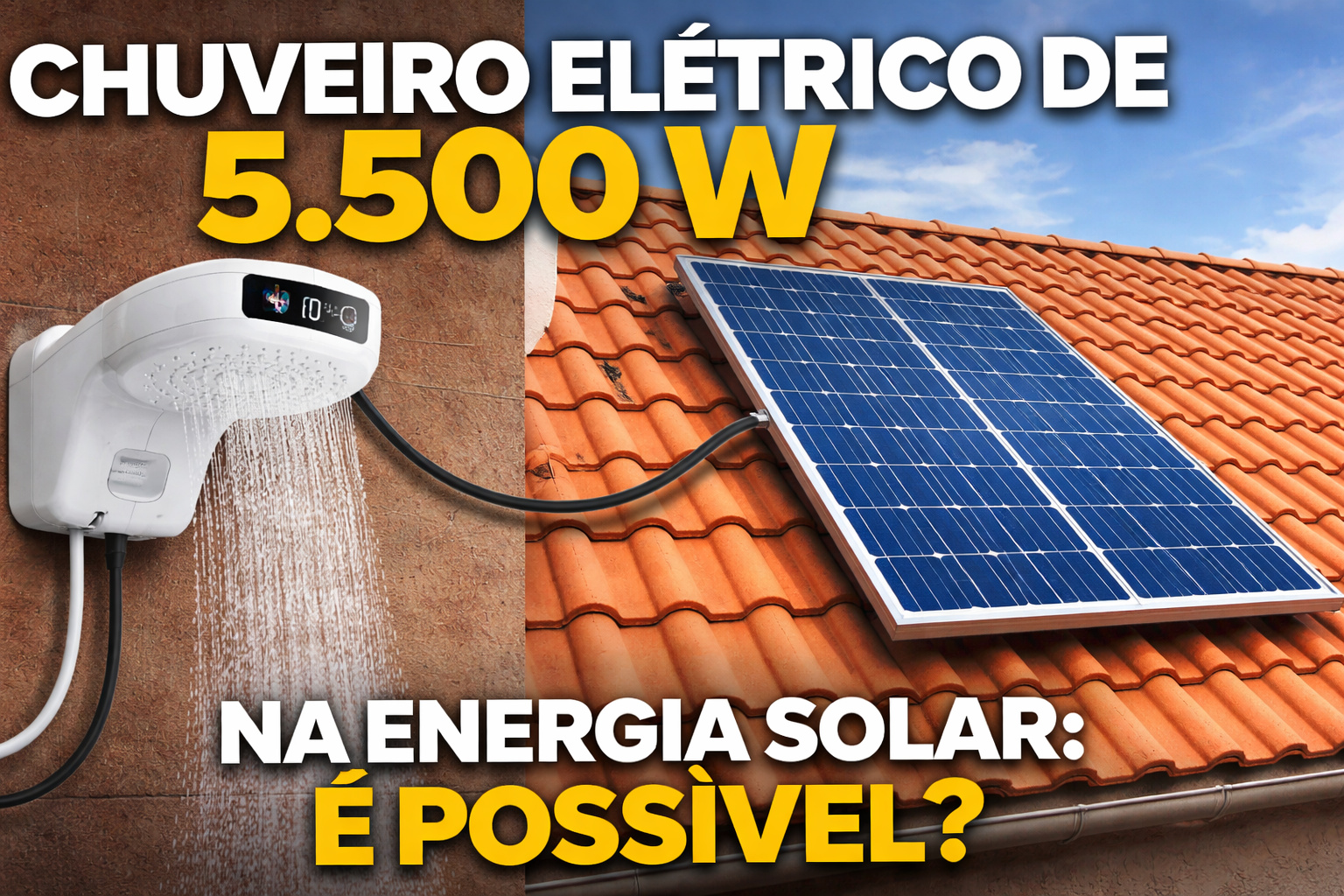


Electric Shower of 5,500 W on Solar Energy: Is It Possible? See How Many Panels Would Be Needed, Actual Consumption, Limitations and Involved Costs.
When the question arises whether a 5,500 W (5.5 kW) electric shower can operate solely on photovoltaic solar energy, the curiosity makes sense: showers are the most “aggressive” household appliances in terms of instant consumption. And the answer involves power, instant generation, consumption, and inverters, not just the number of panels.
To begin with, a 5,500 W shower running at maximum power consumes 5.5 kWh per hour (in energy terms) and requires 5.5 kW instantaneously (in power terms). This detail is crucial because a solar panel does not deliver accumulated energy, but rather power at the moment there is sunlight.
How Much Energy Does a Shower Consume?
If we consider a 10-minute shower:
-
Giant Batteries Take Center Stage in Chile Auction as Company Offers 960 GWh of Solar Energy for Nighttime Use, Aiming to Stabilize Solar Power Supply

-
World’s Largest Engie Solar Plant in Brazil Highlights Billion-Dollar Energy Waste Issue: Company Considers Batteries and Bitcoin Mining to Avoid Wasting Production

-
Over 60 Tractors Take to the Streets in Lopera as Solar Parks Compete with Olive Groves, Affecting 13,000 to 100,000 Trees According to Conflicting Reports
-
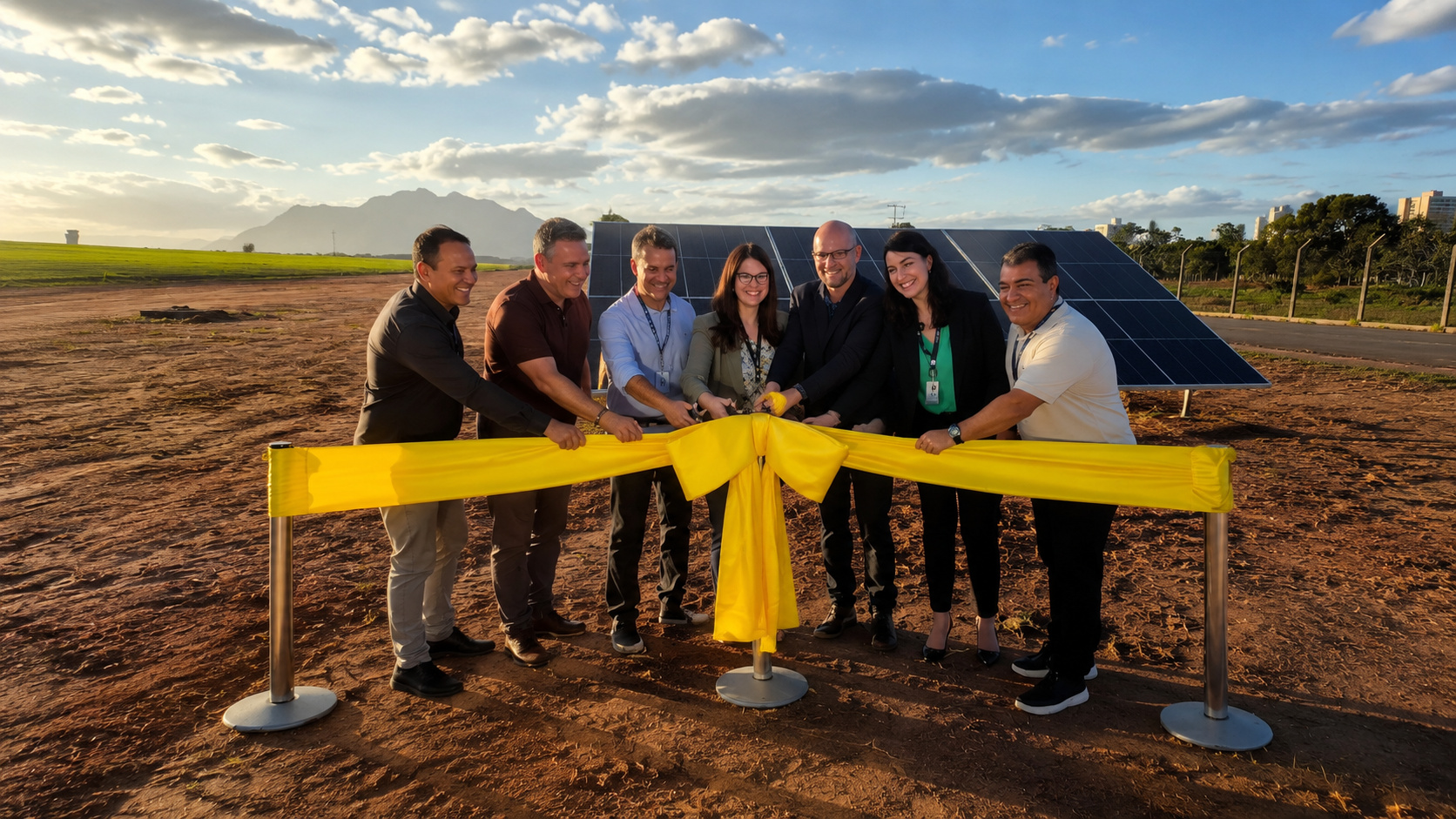
Brazil’s Vitória Airport to Launch Solar Plant Covering Area of 10 Soccer Fields, Boosting Clean Energy and Cutting Costs


- 5.5 kW × (10 ÷ 60) ≈ 0.91 kWh per shower
In other words, a single shower consumes almost 1 kWh. To compare: an inverter refrigerator consumes about 0.9 kWh… per day. A hot shower = an entire day of the refrigerator.
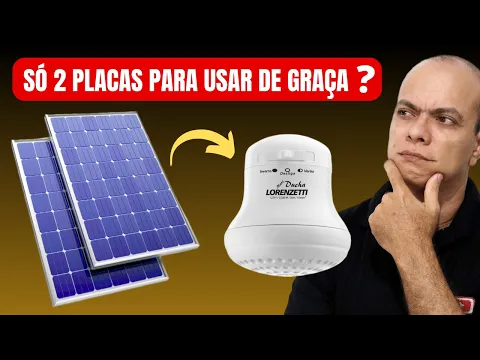

How Many Solar Panels Would Be Necessary?
Now comes the important part: it’s not enough to look at daily energy; it’s also about the instant power during the shower.
1) OPTION A — Generate 5,500 W Only with Panels at the Time of the Shower
A solar panel of 550 Wp (common in Brazil from 2024–2026) produces, on average, 400–450 W in optimal conditions at noon. To deliver 5,500 W instantaneously:
- 5,500 W ÷ 450 W ≈ 12.2 panels
In other words, 12 panels of 550 W would be needed generating simultaneously, under strong sunlight, with an adequate inverter. This disregards shading, variation in angle, and clouds — in practice, it may require up to 14 or 15 panels for a margin.
2) OPTION B — Use Panels + Batteries
If the shower is at night, it is even more complex:
- 1 shower of 10 min ≈ 0.91 kWh
Considering batteries with 80% efficiency:
- 0.91 ÷ 0.80 ≈ 1.14 kWh effective
A common LiFePO4 battery of 12V/100Ah = 1.28 kWh. In other words, one battery would supply energy for one shower. For 4 showers in a day, 4 batteries would be needed, which is economically unfeasible just for showers.
And the Inverters? Another Bottleneck
Even if generation exists, the system needs to support the instantaneous current. A 5.5 kW shower requires an inverter capable of delivering:
- 5,500 W continuous
- Compatible voltage (127 or 220V)
This means inverters of 6,000 W or more. Common residential systems are sized for low continuous consumption, not for peaks of 5.5 kW. That’s why installers do not recommend connecting a shower directly to solar power.
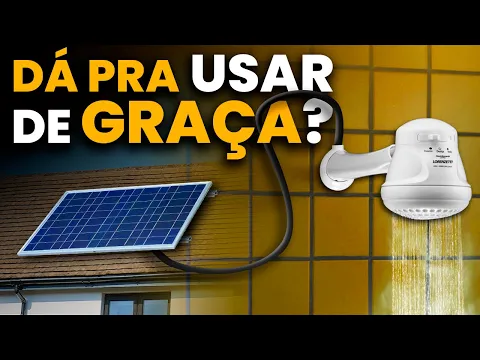
So Is It Possible or Not? Technically yes, but only with a large number of panels (12–15), a compatible inverter (≥ 6 kW), appropriate structure, and a shower at noon (to avoid batteries). For real use (at night or with clouds), it becomes economically unfeasible.
How Does the Market Solve This?
Instead of electricity, homes with solar energy usually use:
1) Solar Thermal Heater
It is not photovoltaic — it uses water + sun + reservoir.
2) Gas + Instant Heating
It doesn’t burden the inverter and doesn’t take up roof space.
3) Hybrids (Thermal-Solar + Electric Support)
It avoids the scenario of 15 panels just for a shower.
Final Technical Summary
| Item | Value |
|---|---|
| Shower Power | 5,500 W |
| Panels Needed at Noon | ~12 to 15 units of 550 W |
| Consumption per Shower (10 min) | ~0.91 kWh |
| Batteries per Shower (12V 100Ah LiFePO4) | 1 unit |
| Inverter Needed | ≥ 6 kW |
| Technical Feasibility | Yes |
| Economic Feasibility | Low |
It is feasible on paper, but does not make sense in practice, because it requires a system that is expensive, oversized, and inefficient, while solar thermal heating performs the same function at 10% of the cost and without giant inverters.