






 Portuguese
  Spanish
 6 min of reading
  0 comments


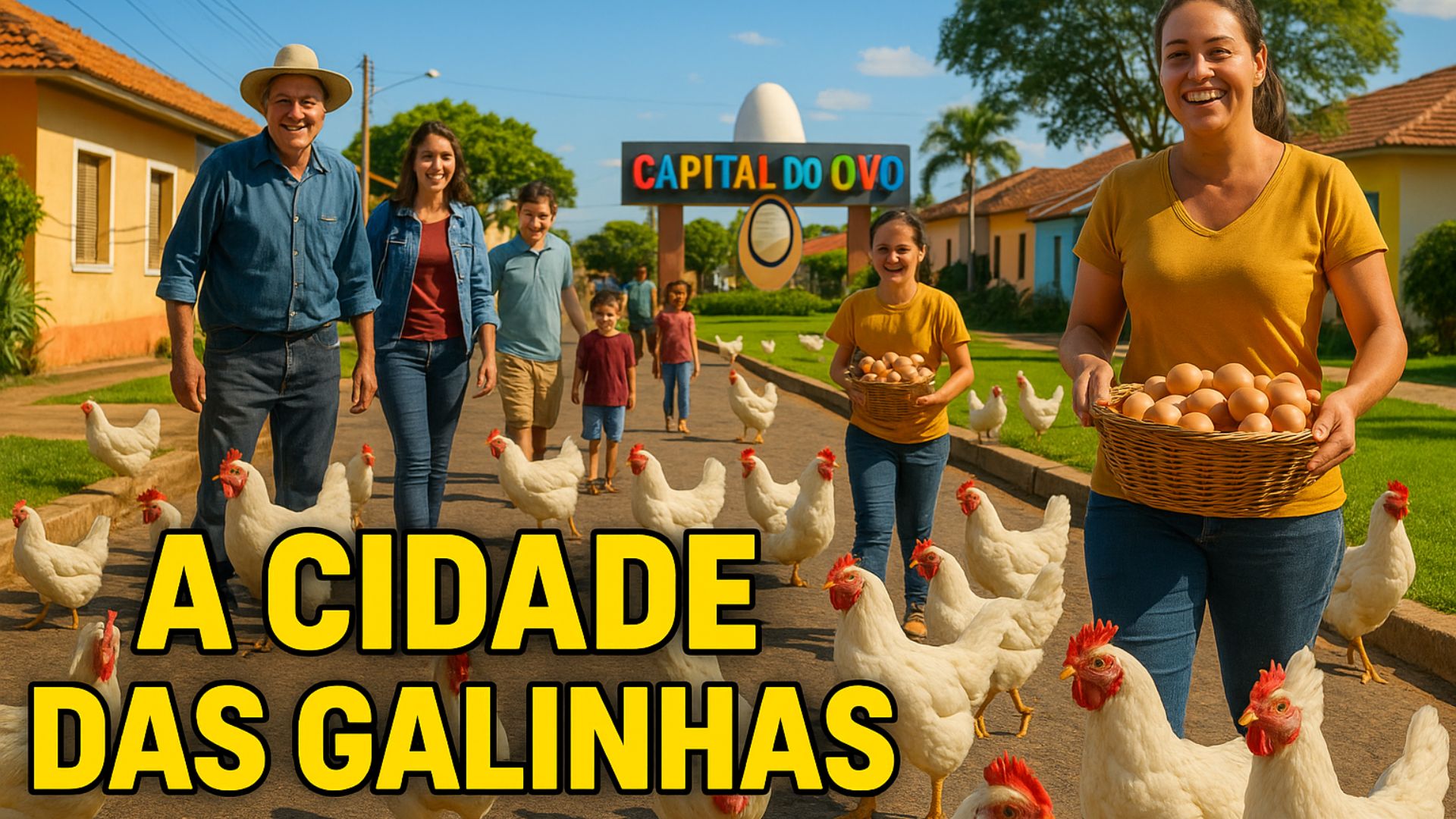
In The Paulista Interior, A City Transformed The Egg Into A Symbol Of Identity, Economy And Tourism, Bridging Japanese Tradition, Agricultural Innovation And Urban Curiosities That Attract Visitors From All Over The Country.
In Bastos, in the interior of São Paulo, poultry farming shapes the economy and daily life.
About 530 kilometers from the capital, the municipality carries the title of “Egg Capital” and exhibits a striking numerical relationship: there are more than 550 chickens per resident, with around 11 million birds distributed across approximately 60 farms for 20 thousand inhabitants.
The sector accounts for a significant share of São Paulo’s production and supports supply chains, services, and commerce.
-
Dona Floripes is 103 years old, drinks Coca-Cola every day, dances alone at home, makes the doctor wait, and says she doesn’t consider herself old because old is what you throw away.

-
United Arab Emirates build a 600-meter intake channel and a 3.6 km submarine outfall to create a desalination plant that will draw in saltwater and produce 681 million liters of potable water per day.
-
Cleaning teams doubted this beach robot until they saw it sifting the sand by itself; the equipment looks simple, uses solar energy, removes buried dirt, reduces manual effort, and is quietly changing the cleaning of tourist areas.
-
Elon Musk has enough money to buy the entire Brazilian stock exchange, give R$ 100 to every person on the planet, and still have more than US$ 184 billion left in his pocket.


The Japanese influence is in the city’s DNA and helped transform an agricultural settlement into a productive hub.
Beyond scale, Bastos has projected a unique aesthetic in the urban space, with references to the egg in squares and public facilities, signaling an identity that spans generations.
Egg Festival Drives The Economy And Reinforces The City’s Brand
Every year, in July, the city hosts the Egg Festival, a fair that has established itself as a showcase of national poultry farming.
The event attracts producers, investors, researchers, and visitors interested in technology and business in the sector.
In different pavilions, there are exhibitions, egg quality competitions, equipment demonstrations, and technical lectures.
For the locals, the program serves as a rite of reaffirmation.
As the public circulates through booths with solutions for nutrition, health, and automation, hotels, restaurants, and local services enhance the movement, directly impacting revenue and employment.
The fair also fulfills a role of technical updates, bringing farms closer to suppliers and research centers.
Themed City: The Egg In The Urban Layout
The relationship with the food spills over from the farms to the urban landscape.
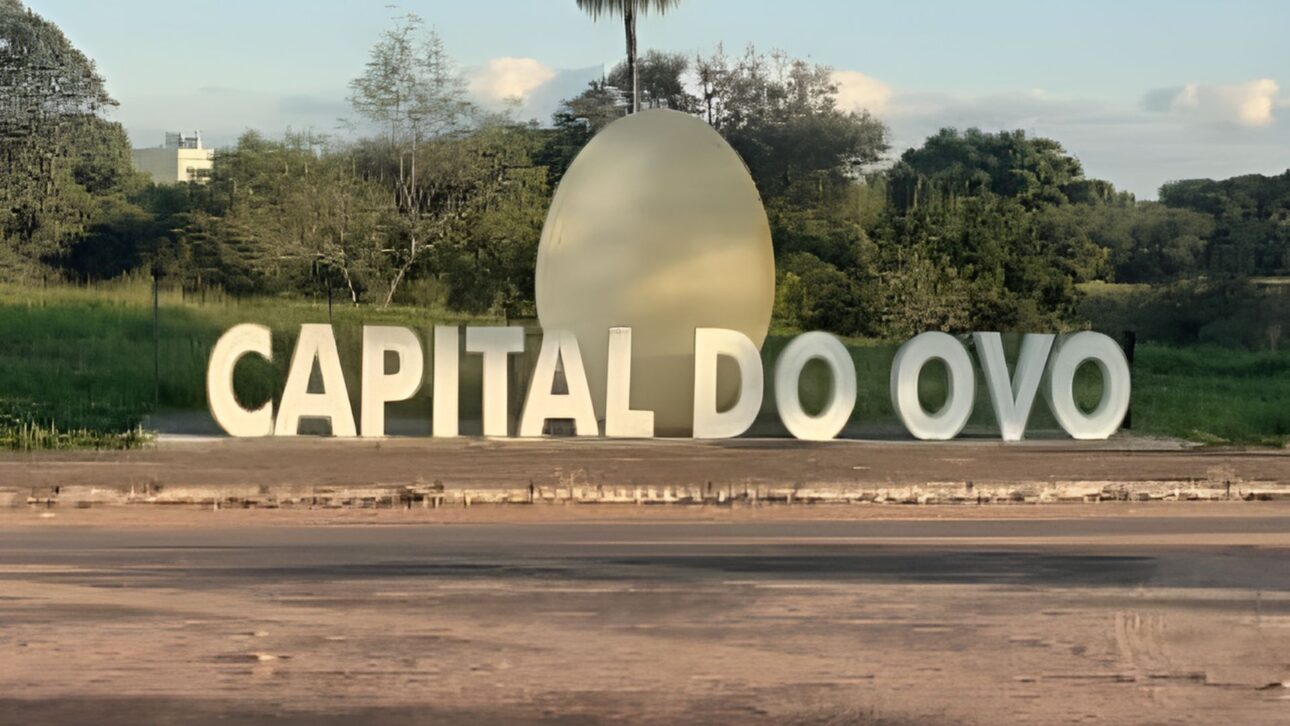
In the Egg Square, a central point, the inspiration is literal: sidewalks and lamps are oval-shaped, and a sign invites passersby to take photos.
The set serves as a reminder of the product that helped pave streets, finance schools, and support families.
In a municipality with such a defined vocation, urban symbols end up functioning as territorial branding and tourist tools.
Japanese Roots: From Colonization Dream To Poultry Farming
The local history intertwines with Japanese immigration.
In 1928, the immigrant Senjiro Hatanaka came to Brazil with the mission of identifying land for new families.
The area was chosen and, from there, the colony grew, bringing work methods, cooperation, and discipline that shaped the regional economy.
At first, coffee and cotton crops dominated until poultry farming gained space as a more stable alternative.
The change accelerated when international conditions altered the demand for silk threads, an activity that Bastos managed to develop on a large scale during World War II.
With the reconfiguration of the market, farms multiplied, and the city deepened its specialization.
From Silk To Egg: Techniques, Families, And Productivity

The advancement of the poultry hub is explained by a combination of factors.
Families of Japanese origin established a productive model of meticulous management, focus on quality, and adoption of technology.
The work across generations, cooperative organization, and investment in health and genetics reduced losses, increased productivity, and standardized the product.
This technical culture also influenced the rural landscape: climate-controlled barns, management with biosecurity, and constant monitoring of the supply chain became part of the process.
The standardization reflected in the market, with more homogeneous eggs and classification systems that facilitated sales to retail chains.
Bastos And The Demographic Profile Shaped By Immigration
The Japanese presence remains visible on the streets, in cultural associations, and in cuisine.
According to IBGE data mentioned by local sources, Bastos ranks among the Brazilian municipalities with the highest proportion of Asian descendants.
In numbers cited in the reference material, 10.3% of the population identified as yellow, which would place the municipality behind Assaí in Paraná.
This context helps to understand how cultural and economic practices have persisted, maintaining community ties and networks of cooperation.
Egg Consumption In Brazil And Effect On The Paulista Hub
The domestic market sustains production.
According to the base text, egg consumption in the country is said to have reached 4.67 billion dozen in the year, a record reflecting a change in eating habits and competitive prices compared to other proteins.
Domestic demand reduces reliance on exports and tends to stabilize prices for consumers, a condition that provides predictability for producers and investors.
In São Paulo, the activity shows dynamism, with growth in production compared to the previous year.
Other states, such as Paraná and Espírito Santo, also show increases.
Although specific numbers vary according to the methodology and the analyzed period, the upward movement in consumption amplifies the relevance of hubs like Bastos, which supply retail networks and the out-of-home food sector.
Identity And Intangible Heritage Of Work
Poultry farming is not limited to statistics.
In Bastos, each farm carries stories of migration, adaptation, and family entrepreneurship.
The Japanese tradition shaped a culture of quality that influences decisions in the countryside and in the city.
The aesthetics of the egg, spread across squares and signs, serves as a visual narrative of a collective project that has lasted for decades.
Community belonging reveals itself in festivals, the maintenance of cultural associations, and care for memory.
At the same time, the productive routine demands constant updating: sanitary regulations, animal welfare, traceability, and energy efficiency are part of the agenda of farms, pressured by costs and the need to maintain standards on a large scale.
Bastos On The Map Of Brazilian Poultry Farming

The specialization has transformed the municipality into a reference.
With approximately 60 farms and a flock of about 11 million chickens, Bastos occupies a prominent position in the state and supplies various markets.
The reputation built over nearly a century sustains opportunities for new businesses and professional training, including the arrival of automation technologies and data analysis in daily management.
The continuity of this role depends on factors such as infrastructure, energy, and logistics.
In addition, the sector follows debates about production systems, buyer market requirements, and potential certification of welfare.
In the domestic scenario, the consumer preference for a versatile and easy-to-prepare food keeps demand strong, which helps explain why the “land of the egg” continues to be a barometer of national poultry farming.
Culture, Economy And Possible Future
From the sign in the square to the egg-shaped sidewalks, the city has materialized in public space the product that propelled its trajectory.
The Egg Festival celebrates this history and connects Bastos to the latest in applied innovation, without breaking with the community foundation that supported growth.
Amid preserved traditions and embedded technology, the municipality envisions continuity for a sector that has reinvented itself more than once throughout the century.
As producers take care of daily routines on farms and researchers test new solutions, the question that echoes is direct: how does Bastos intend to balance cultural legacy, competitiveness, and sanitary requirements to remain at the forefront of Brazilian poultry farming in the coming years?


Be the first to react!