Portuguese
  Spanish


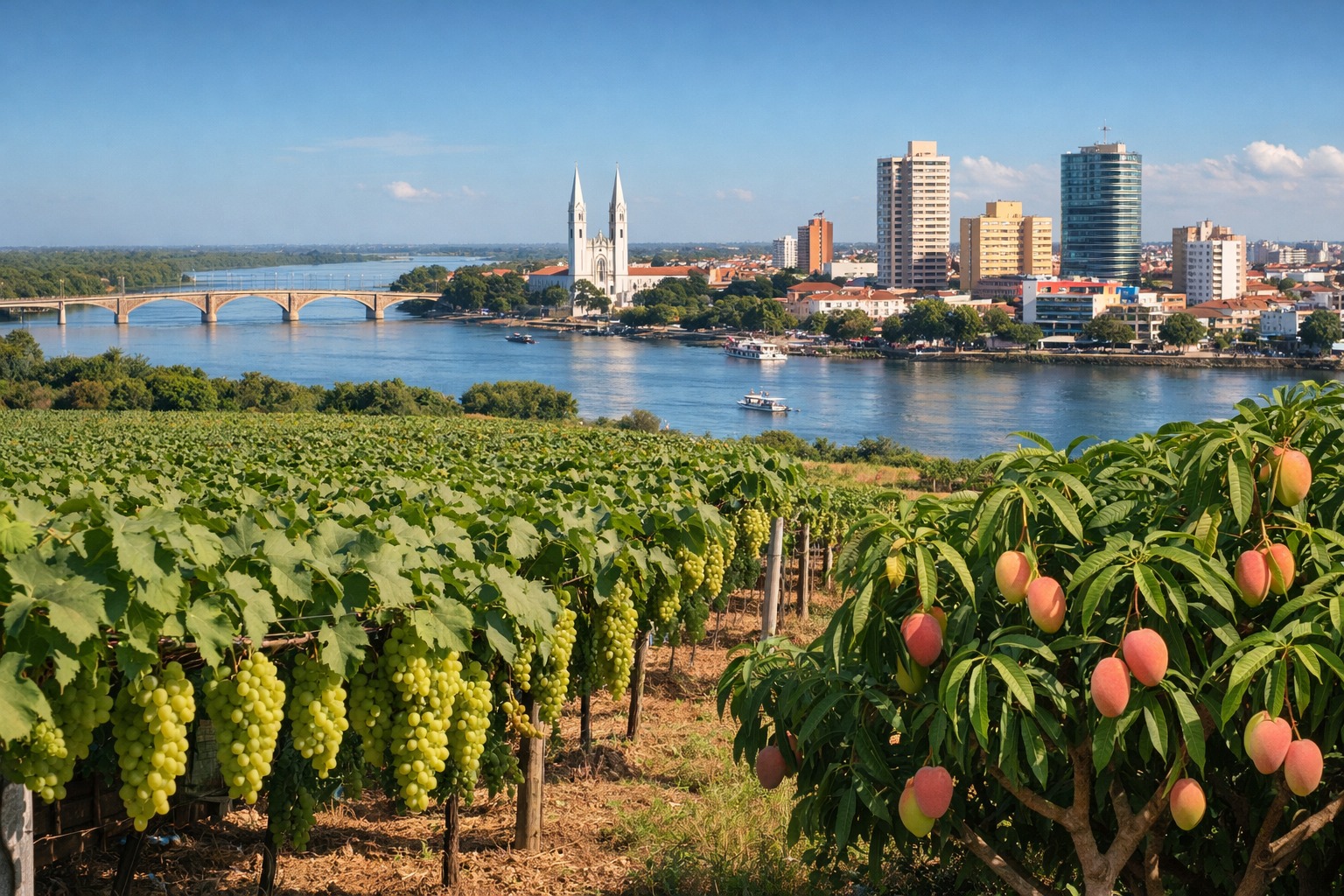


Petrolina, Founded in 1870, Concentrates 62% of Table Grapes and 61% of Mangoes in Brazil, Has 418 Thousand Inhabitants and Establishes Itself as a Hub of Brazilian Agribusiness in the São Francisco Valley
Petrolina, in the hinterlands of Pernambuco, has established itself as a highlight of the Brazilian agribusiness by accounting for about 62% of the national production of table grapes and 61% of mangoes, bringing together approximately 418 thousand inhabitants and strengthening the economy, infrastructure, and jobs in the São Francisco Valley region.
Leadership in Brazilian Agribusiness Transforms the Hinterlands
On the banks of the São Francisco River, the strength of Brazilian agribusiness has redefined the economic profile of the municipality.
The São Francisco Valley region now concentrates most of the national production of table grapes and mangoes, placing Petrolina among the main export hubs in the country.
-
Over a Thousand Nelore Cattle Die Unexpectedly in Brazilian Feedlot, Raising Concerns About Intensive Livestock Farming

-
Researchers Turn Discarded Mango Pits into Hydrogel That Absorbs 400% of Its Weight in Water, Offering Agricultural Solution for Droughts and Waste Reuse

-
Flower strips in Brazilian farms become pest control strategy, attracting predator insects and reducing the need for chemical pesticides.

-
Yara acquires Texas ammonia plant for $1.3 billion, boosting global fertilizer competition with 1.3 million tons annual capacity


This performance is the result of a process initiated in the 1960s when irrigation projects structurally changed the local productive dynamics.
The technology allowed for overcoming the arid climate and transformed previously dry areas into fertile territories.
As a result, the municipality came to be recognized as the “California of the hinterlands,” consolidating fruit farming as the main economic driver and increasing its relevance within Brazilian agribusiness.
Irrigation Projects Boosted the Economy and Infrastructure
Founded in 1870 as a crossing point to Juazeiro, in Bahia, Petrolina originated from historical accounts that associate its name with the combination of Pedro and Lina.
For decades, it maintained a transit profile until the implementation of irrigation systems.
From the 1960s onwards, the new productive structure stimulated economic growth and urban expansion. The advancement of fruit farming strengthened commerce, services, and infrastructure, increasing the generation of direct and indirect jobs.
This model consolidated the municipality as a regional reference in Brazilian agribusiness, with a direct impact on productive organization and local development.
Education and Public Spaces Strengthen Quality of Life
In addition to agricultural production, Petrolina presents a schooling rate of over 98% among children and youth. The presence of the Federal University of the São Francisco Valley contributes to professional training and energizes the local economy.
In leisure, the Petrolina Waterfront and the Josepha Coelho Park serve as traditional meeting points. The São Francisco River is integrated into the daily life of the population, especially at dusk, when the orange sky reflects in the waters.
Gastronomy and Wine Expand Economic Activities
The Bodódromo has become a culinary reference with dishes based on goat meat, accompanied by cassava and cowpea.
The local gastronomy integrates a set of activities surrounding the economic dynamism of the city.
The wineries in the Valley produce wines year-round, a condition made possible by the tropical climate. Wine tourism is growing and attracting visitors interested in tastings and rural experiences, enhancing the visibility of Brazilian agribusiness in the region.
Facilitated Access Strengthens Visitor Flow in the City
The Senator Nilo Coelho Airport receives direct flights from major Brazilian capitals, facilitating movement. Highways also connect the city to the northeastern coastline.
Between December and March, islands of the São Francisco River and boat tours see heightened demand. In the milder months, visitors explore wineries and enjoy pleasant nights in the hinterlands, maintaining a steady flow throughout the year.
Throughout this historical process, Petrolina has consolidated its strategic role in Brazilian agribusiness, based on intensive agricultural production, consolidated infrastructure, and diversification of economic activities.
With information from NSC Total.