Portuguese
  Spanish


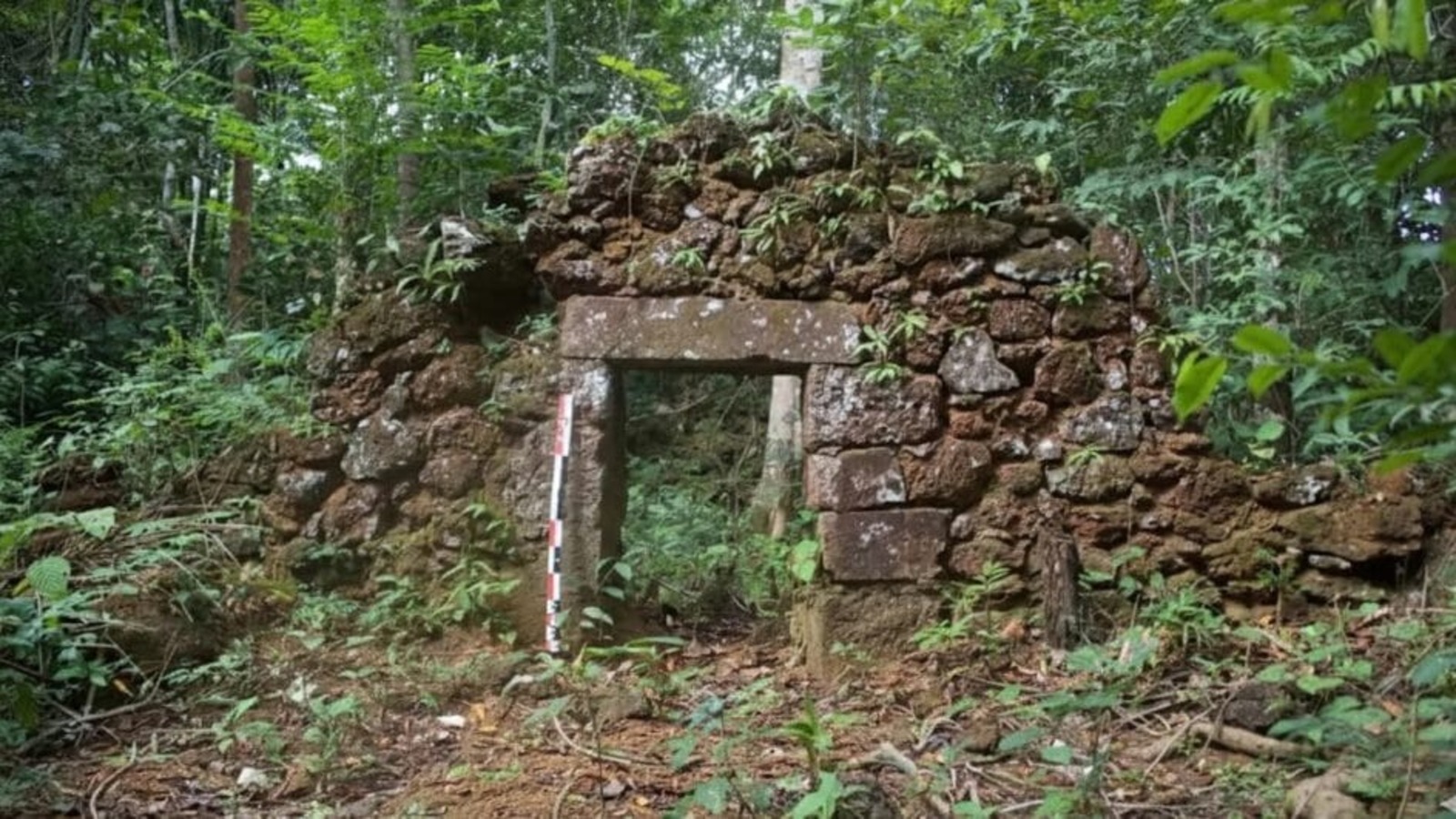

Archaeological Discovery Reveals The Ghost Town Lamego Under The Amazon Rainforest, Proving That The Portuguese Occupation Was Planned, Structured And Articulated
Under the green cloak of the Amazon, an ancient city called Lamego has reemerged. For centuries, no one knew it was there. What seemed like mere forest was hiding streets, houses, and a planned urban layout.
This changes a lot, because until recently it was believed that the occupation in the interior of the region was fragile and disorganized.
The finding shows the opposite: there was planning, social hierarchy, and a consolidated presence of the Portuguese crown.
-
The Trap of Modern Technology: How Screen Overload and Digital Connections Can Impact Your Mental Health and Well-being

-
Wyoming Couple Grows Tropical Fruits Year-Round in -40°C Using Geothermal Greenhouse, Demonstrating Earth’s Heat Can Produce Oranges and Lemons in Snow Without Traditional Heating

-
Ship Returns from Brazilian Coast with Thirty Newly Discovered Life Forms
-
Nigerian Professor Invents Electricity-Free Refrigerator Using Clay Pots and Wet Sand, Extending Shelf Life of Vegetables to 27 Days; 7,000 Units Distributed in Energy-Deprived Villages



The Decisive Role of Lidar
The revelation was only possible thanks to Lidar technology. By firing laser pulses from aircraft, it is possible to map the terrain even under dense vegetation. Thus, the forest did not need to be cut down.
Therefore, streets and buildings were detected with precision. What was once invisible to the human eye has now become part of historical narrative.
This method has another advantage. It allows understanding the past without destroying the current environment. Archaeology gains knowledge without sacrificing preservation.
What Life Was Like In Lamego
Studies indicate that about 300 people lived in the city. Portuguese settlers and enslaved people shared the same space, but under unequal conditions.
This structure reveals that even in distant places the colonial model was repeated.
Forced coexistence, sustained by rigid power relations, ensured the functioning of the local economy. This reinforces how the Portuguese empire maintained its influence even in hard-to-reach areas.
Bragança: Another Nearby Village
Not far away, the Village of Bragança was also identified. There, researchers found aligned streets and buildings indicating similar organization. The proximity between the two centers suggests a direct link.
This network of nuclei expanded the reach of the Portuguese occupation. It shows that the Amazon was not just made up of isolated small villages, but of interconnected localities.
Memory That Needs To Be Preserved
The discovery of the ghost town of Lamego paves the way for a new understanding of colonization. By revealing a planned urban nucleus, it becomes clear that the history of the forest is more complex than previously thought.
Moreover, it brings a warning. Preserving these sites is essential, because they are not just sources of scientific information. They also carry the cultural memory of the region, connecting past and present.
The forest holds secrets. Now, it is up to us to protect them so that they can continue to tell stories to future generations.
With information from NSC Total.