






 Portuguese
  Spanish



In Just Two Seconds of Microgravity, Researchers from Germany Created an Ultracold Atomic Cloud, Surpassing Even the Coldest Regions of Space
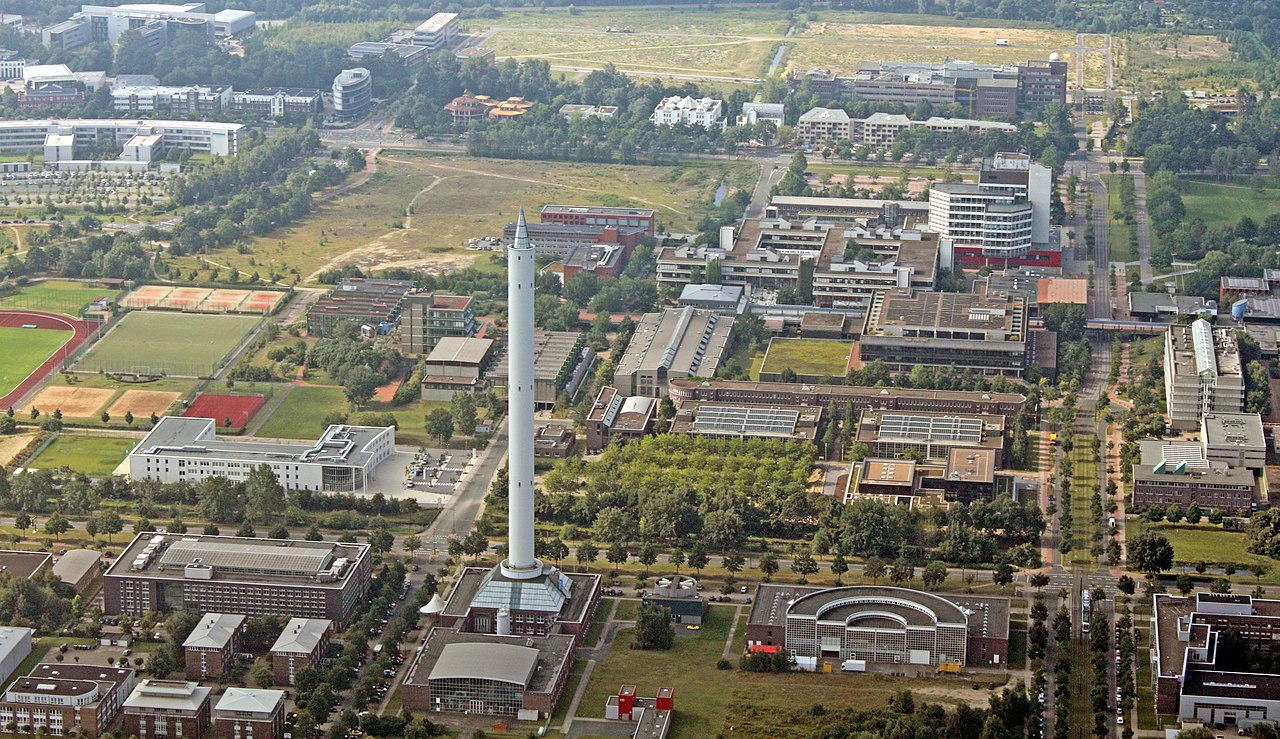
A 146-meter tower in northern Germany became the stage for a historic feat. Inside it, scientists managed to achieve the lowest temperature ever recorded in the universe, albeit for just two seconds. The experiment was conducted in 2018, in the city of Bremen, at the Center for Applied Space Technology and Microgravity (ZARM).
The site features a free-fall tower built in 1990. It is used to create microgravity conditions, replicating what occurs with satellites and the International Space Station (ISS).
This happens because in free fall, objects do not collide with anything – gravity continues to act, but there is no direct contact with surfaces. The mass of the bodies, therefore, enters a state of near weightlessness.
-
China Develops Custom 140-Ton Electric Mining Truck with 770 kWh Swappable Battery, Deploys 290 Units in Xinjiang’s Largest Zinc Mine

-
Meta to Launch Arena, a New Prediction App Targeting 3.56 Billion Users, Competing with Polymarket and Kalshi

-
Scientist Challenges Famous Human Evolution Theory, Argues Homo Sapiens Evolved Gradually Over Thousands of Years
-
15-Year-Old American Builds Ocean Generator with PVC Pipe and 3D-Printed Propeller for $12, Wins National Prize, Presents at White House, and Makes Forbes 30 Under 30 List




To ensure these conditions, the vertical tube of the tower is evacuated with special pumps that remove all the air, creating an almost total vacuum. Then, a research capsule is launched with the help of a catapult.
The absence of gravity lasts about 4.75 seconds. However, with the launch system, this time can be extended to up to 9.5 seconds – adding ascent and descent.
It was within this short interval that the experiment took place. The scientists inserted a cloud of ultracooled gas into the capsule. This cloud is called a Bose-Einstein condensate (BEC), considered the fifth state of matter. The other four are the most well-known: solid, liquid, gas, and plasma.
During the fall, the cloud was cooled to about 38 picokelvin, that is, 0.000000000000000000038 Kelvin above absolute zero.
To give you an idea, absolute zero is -273.2 °C, the point where atoms virtually stop vibrating. For comparison, until then, the coldest temperature in the universe had been measured in the Boomrang Nebula, located 5,000 light-years from Earth, at -272.15 °C.
The thermometer of the German scientists stopped at 38 picokelvin. But this value is symbolic, as no common equipment would be capable of measuring such low temperatures.
It is necessary to use extremely sensitive sensors that detect the movement of atomic particles. This is because heat or cold is nothing more than the vibration of these atoms. The more they vibrate, the warmer it gets. The less they move, the colder.
Despite the title of record, the temperature achieved was not the main focus of the experiment. The researchers wanted to create the atomic cloud with the lowest possible velocity.
Extreme cooling was the way to achieve this. In a regular laboratory, under normal gravity, the cloud could only remain stable for 22 milliseconds before breaking apart. In the Bremen tower, it lasted 90 times longer.
The experiment was conducted by scientists from ZARM, with support from the German Aerospace Center and universities in Germany, such as Leibniz University Hannover, Humboldt University of Berlin, and Johannes Gutenberg University Mainz. They participated in the QUANTUS project.
At the same time, a similar BEC had been maintained for one second in orbit on the ISS. But, according to the authors of the experiment in Bremen, with their methods, it would be possible to reach 17 seconds under ideal conditions in orbit.
The BEC, apart from the record, may have practical uses. It may be utilized in navigation systems and in measurement instruments with extreme precision, according to the scientists. The experiment was documented in a scientific publication.
With information from Xataka.





