Portuguese
  Spanish


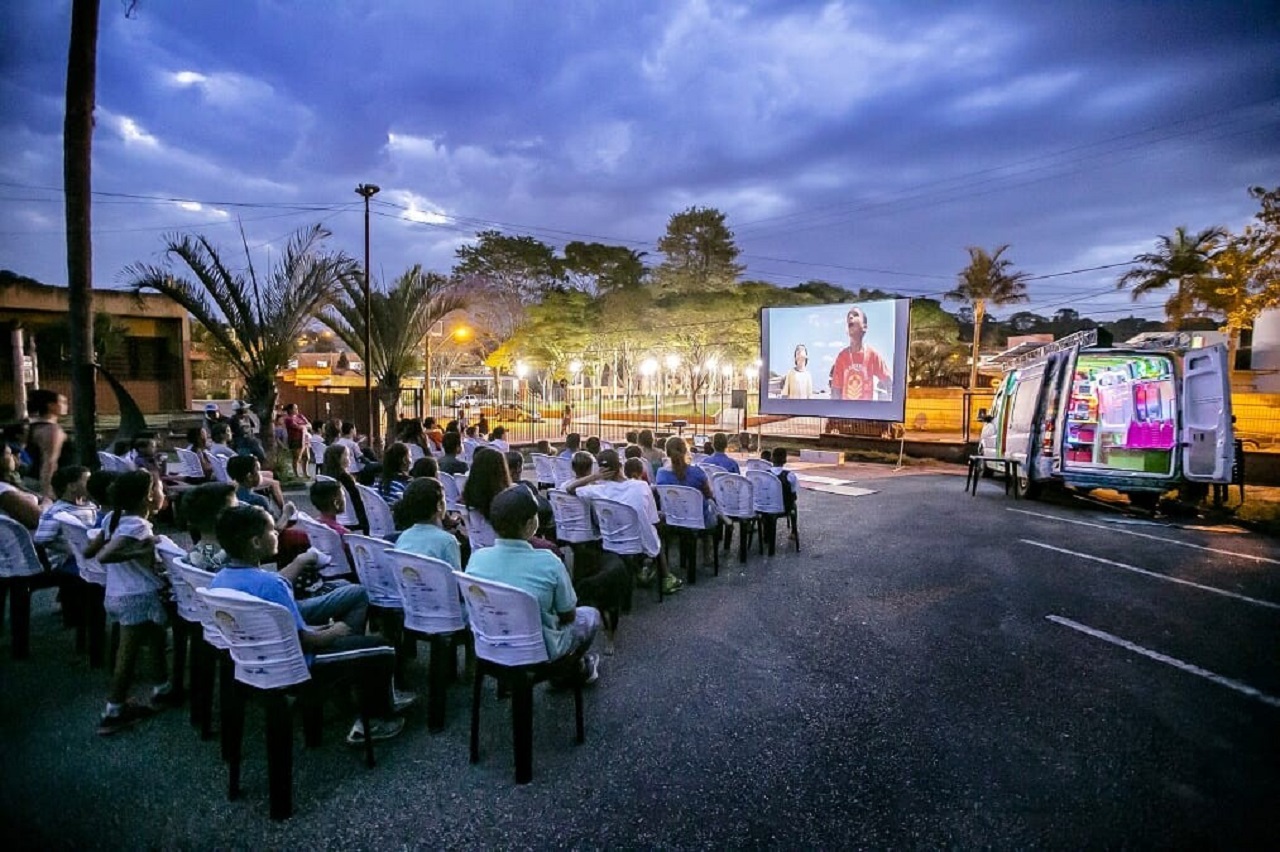

Have You Ever Imagined Watching a Movie on the Big Screens Using Solar Energy? This Is the Proposal of Cinesolar, a Cinema Totally Powered by Renewable Energy That Has Already Held More Than a Thousand Sessions in 440 Brazilian Cities
The Cinesolar project arrived in Paraíba this month with activities held in João Pessoa and Campina Grande. The initiative offered film screenings powered by solar energy, and the event also included artistic workshops. The screenings took place on Sunday in Campina Grande and on Monday (24) in João Pessoa. Cinesolar screened Brazilian short films and the feature films “Rio” and “Mogli – The Wolf Boy”. The project is the first mobile cinema in Brazil to be powered by clean and renewable energy, in this case, solar energy, and has been in circulation since 2013.
Read Also
Cinesolar Talks About Sustainability for Young People and Children
The focus of Cinesolar is to bring art to more remote communities that face difficulties accessing cultural equipment in cities. In addition to the film screenings, in João Pessoa, the project presented the Solar Workshop, a video workshop for children and young people focused on sustainability. As a result of this activity, a film was produced with the participants and screened during the cinema session for the local community.
-
Fired during apartheid and with a little borrowed money, an electrician started with a borrowed truck and transformed electrical services into a group connected to energy, real estate, and infrastructure in South Africa.

-
Wood has ceased to be just a construction material in Yale research and has become insulation for electrical transformers that face intense heat, aging, and increasing pressure from the renewable energy-powered grid.
-
More than 1,000 residents of a remote island in Kiribati now have clean water and electricity with solar systems operated by the community itself.
-
Ceará brings together 7 giants and R$ 66 billion to transform Pecém into the largest green hydrogen hub in Brazil, with final decisions expected by the end of 2026.



The solar-powered cinema event was held in person, following all health protocols required by the Health Department regarding the pandemic.
Hand sanitizer was provided for hand hygiene, and access control and seating distance were also implemented. Additionally, the use of masks was mandatory throughout the screening period.
Solar-Powered Cinema Has Already Held More Than a Thousand Sessions
On the 23rd, Cinesolar was in Campina Grande, at Praça Jornalista Evandro Barros, in the Pedregal neighborhood. On the 24th, the cinema screenings arrived in the capital, with workshops at Escola Viva Olho do Tempo, in Gramame.
The sessions took place in the same location. In total, the solar-powered cinema has held more than a thousand sessions, including short films with socio-environmental themes and feature films, in 440 cities across the country. More than 300 workshops have been conducted, providing basic techniques and elements that are part of cinematographic language.
Understand How Cinesolar Works
The solar-powered cinema features two sprinters equipped with solar panels and an energy conversion system that offers approximately 20 hours of activity autonomy.
Inside the “vans,” chairs for the audience, a projector, sound system, among others, are also brought. Once cleared, the space turns into a classroom with a permanent exhibition on technology and science. The first Cinesolar unit was named Tupí, in homage to Brazil’s indigenous peoples, and the second unit was named Mahura, which includes stories from ancestors from Africa.
In total, solely by using solar energy, the initiative has already saved about 2,317 kW and reached 197,468 people with its events. Workshops such as Eco-Grafite, a graffiti that uses natural pigments, and Solar Oven, which shares production technology teachings, among various other workshops, are also offered.