Portuguese
  Spanish


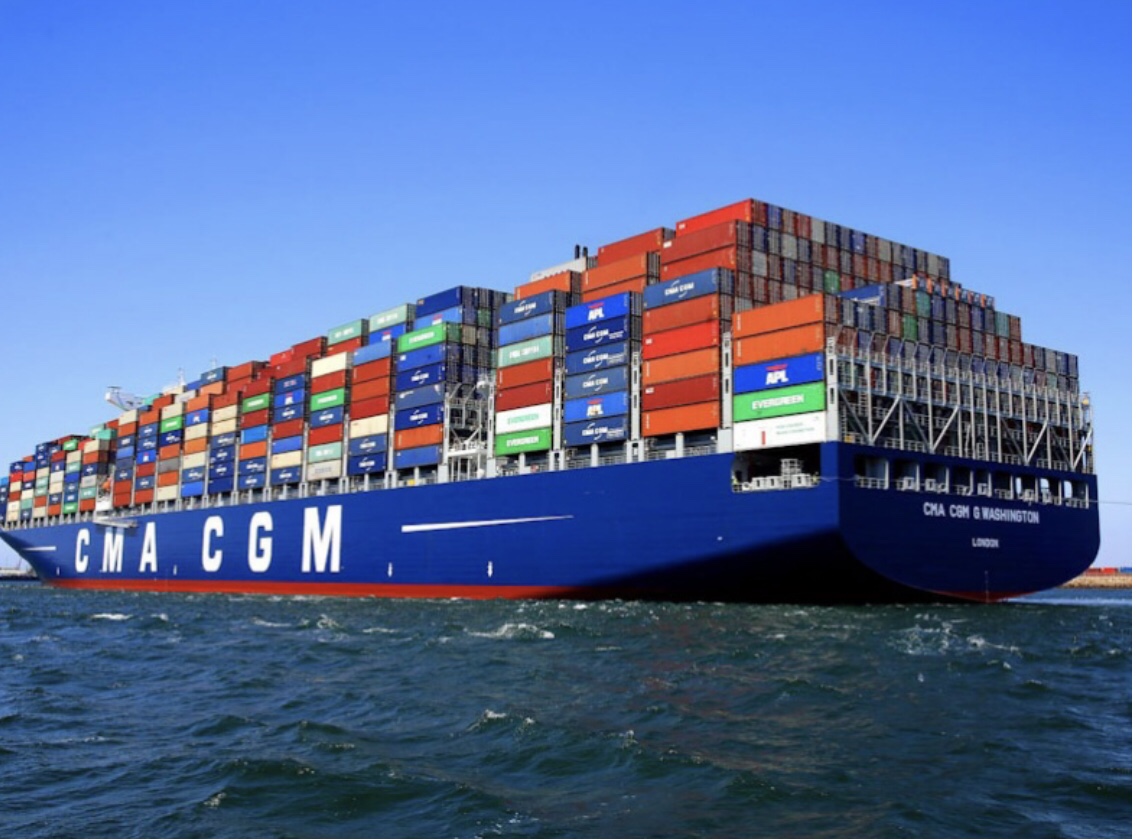

The International Port Sector Is Now Witnessing a Sharp Drop in Freight Rates Due to a Decrease in Port Market Demand and Fewer Logistics Issues, as Noted by CMA CGM.
The maritime transport giant CMA CGM has very optimistic projections for the port market regarding cargo movements in the international scenario. This is because logistics issues are becoming less frequent in the sector, along with freight rates, which have been decreasing in recent weeks, following the declining demand for cargo handling operations.
The Port Market Now Has Even Lower Freight Rates and Fewer Logistics Issues in Cargo Movement Around the Globe, Says CMA CGM
The last few weeks have been essential for significant changes in international freight relations, and the maritime transport company CMA CGM commented on the current scenario.
Among the main points highlighted by the company is the reduction in demand and its influences on operations. With the decreasing demand for operations, the level of logistics bottlenecks in activities is becoming increasingly relaxed.
-
They exchanged the idea of a large house for a 35 m² warehouse, spent US$ 12,000 on the structure, and created a tiny house in Colorado with space to live and work.

-
While modern cities rely on pumps and electricity, in Iran, ancient tunnels carried water through the desert using only slope and gravity.
-
Instead of sending families far from the city, a project in Chile intentionally created incomplete houses on expensive urban land and left technical space for each to grow.
-
General Motors Replaces Over a Thousand Workers with 50 Cobots at Electric Vehicle Plant, UAW Union Criticizes Move Amid Industry’s Automation Push


Thus, the port market is witnessing a reduction in cargo marketing issues, while also accompanied by a significant decrease in product freight rates. The drop in demand has also been the main driver of low freight costs worldwide.
Thus, the CEO of CMA CGM, Rodolphe Saade, commented on the current scenario and highlighted that “What we have been seeing for many weeks is a decrease in freight rates across almost all sectors. We expect this decline to continue. I don’t think we will see a sharp drop, but rather a soft landing.”
In addition to the maritime transport company CMA CGM, the World Trade Organization also reinforced the changes in freight rates and logistics in the global port market during this past week.
The organization stated that goods trade flows slowed in the last quarter and are likely to remain weak in the second half. This scenario is mainly due to the easing of trade relations earlier in the year, with the opening of the global market after the initial pandemic period.
Container Shipping Companies May Be Harmed by the Low Demand Period in the International Port Market
Although CMA CGM has pointed out the reduction in freight rates as a highly positive scenario for the coming years, not all companies will benefit from the current port demand situation.
This is because commercial opening and the drop in freight rates may lead to the end of a very profitable period for shipping companies specialized in container ships, following two years of high rates and capacity shortages due to pent-up consumer demand during the pandemic.
The CEO of CMA CGM, Rodolphe Saade, stated that while there are significant improvements in the international port market logistics, some supply chain issues still exist, citing persistent congestion in places like the USA and Europe.
Learn More About CMA CGM
CMA CGM is a maritime transport services group that currently serves more than 420 ports around the world across five continents, supported by a fleet of 545 ships, which in 2020 transported about 21 million TEU (twenty-foot equivalent units). Now, the company seeks stability in the port market and makes its projections about the future of the sector.