Portuguese
  Spanish


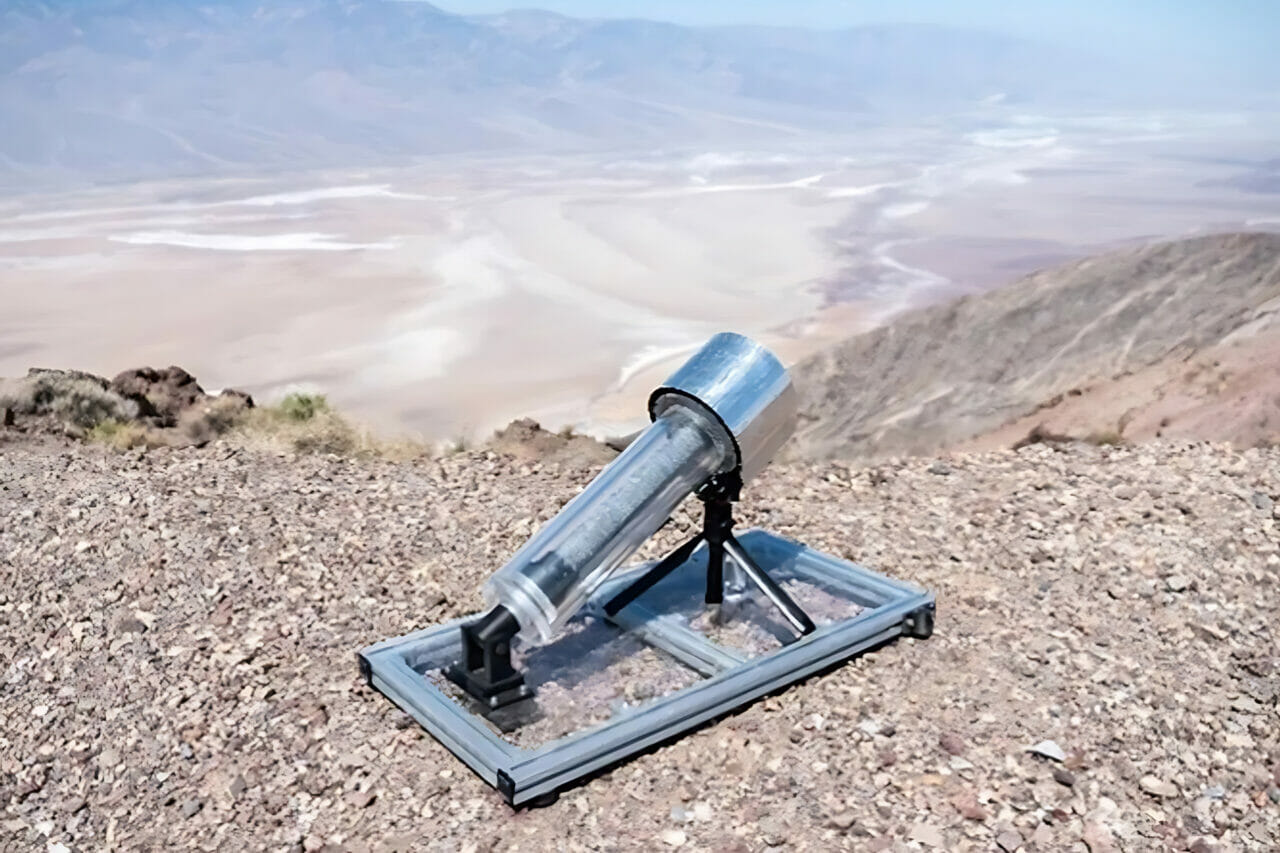

The Operation of the Water Collector Is Based on Capturing Water Particles Present in the Atmosphere, Using an Ultra-Permeable Material Known as Metal-Organic Framework (MOF).
In an era where water scarcity is becoming increasingly prevalent in various parts of the world, innovations seeking effective solutions to this problem are more important than ever. The latest innovation in this field is a portable water collector device created by researchers at the University of Berkeley, California. This technology is designed to extract and transform water molecules from the air into drinking water using solar energy.
An Innovative Solution to Global Water Scarcity
Around the world, nearly one-third of the population already lives in areas with water shortages, a situation that is only worsening over time due to events like global warming. The UN estimates that by 2050, about five billion people could face some type of water scarcity during part of the year. In the face of this scenario, discovering new water sources is of utmost relevance.
The new device is specially designed to operate in outdoor environments, even in extremely dry conditions. Tested in Death Valley, the driest and hottest place in North America, it has proven capable of providing potable water, demonstrating its potential as an effective solution to water scarcity.
-
São Paulo Unveils Latin America’s Largest Underground Reservoir, Holding 900 Million Liters, in the Greater São Paulo Area

-
Chinese Teen Wins Gold in Germany for Invention Turning Air Moisture into Underground Irrigation in Drought-Stricken Areas

-
Desertification Threatens Brazil’s Caatinga: 85% of Semi-Arid Region Affected, 30 Million at Risk, and Efforts Underway to Restore 10 Million Hectares by 2045
-
Few People Realize Earth Spins at 1,670 km/h Unnoticed: Explained by Gravity and Brain Perception





How The Water Collector Works
The operation of the device is based on collecting water particles present in the atmosphere, using an ultra-permeable material known as Metal-Organic Framework (MOF). This material was chosen for its ability to operate efficiently in low humidity conditions.
The MOF has proven to be highly efficient: during tests in Death Valley, the device was able to collect up to 285 grams of water per kilogram of MOF in a single day, which is equivalent to approximately one glass of water. Additionally, the device can operate for many years before it needs to be replenished or replaced.
Implications and Applications
The potential application of this device is vast. Given that it can provide drinking water in areas where supply is scarce or nonexistent, it can be a valuable tool in combating drought. Possible uses range from providing a glass of water for drinking to applications in agriculture and air conditioning supply.
Furthermore, it is important to highlight the sustainability of this device. It extracts water from the air and transforms it into drinking water using only solar energy, emitting no harmful gases into the environment, unlike other water collection systems.
The invention of this device represents an important milestone in the fight against water scarcity. It offers the promise of autonomy in access to water for many who currently live without this vital resource. In a world where lack of water is becoming a reality for many, innovations like this are essential. The hope is that more advances like this continue to emerge, providing sustainable and viable solutions to an increasingly urgent global problem.