Portuguese
  Spanish


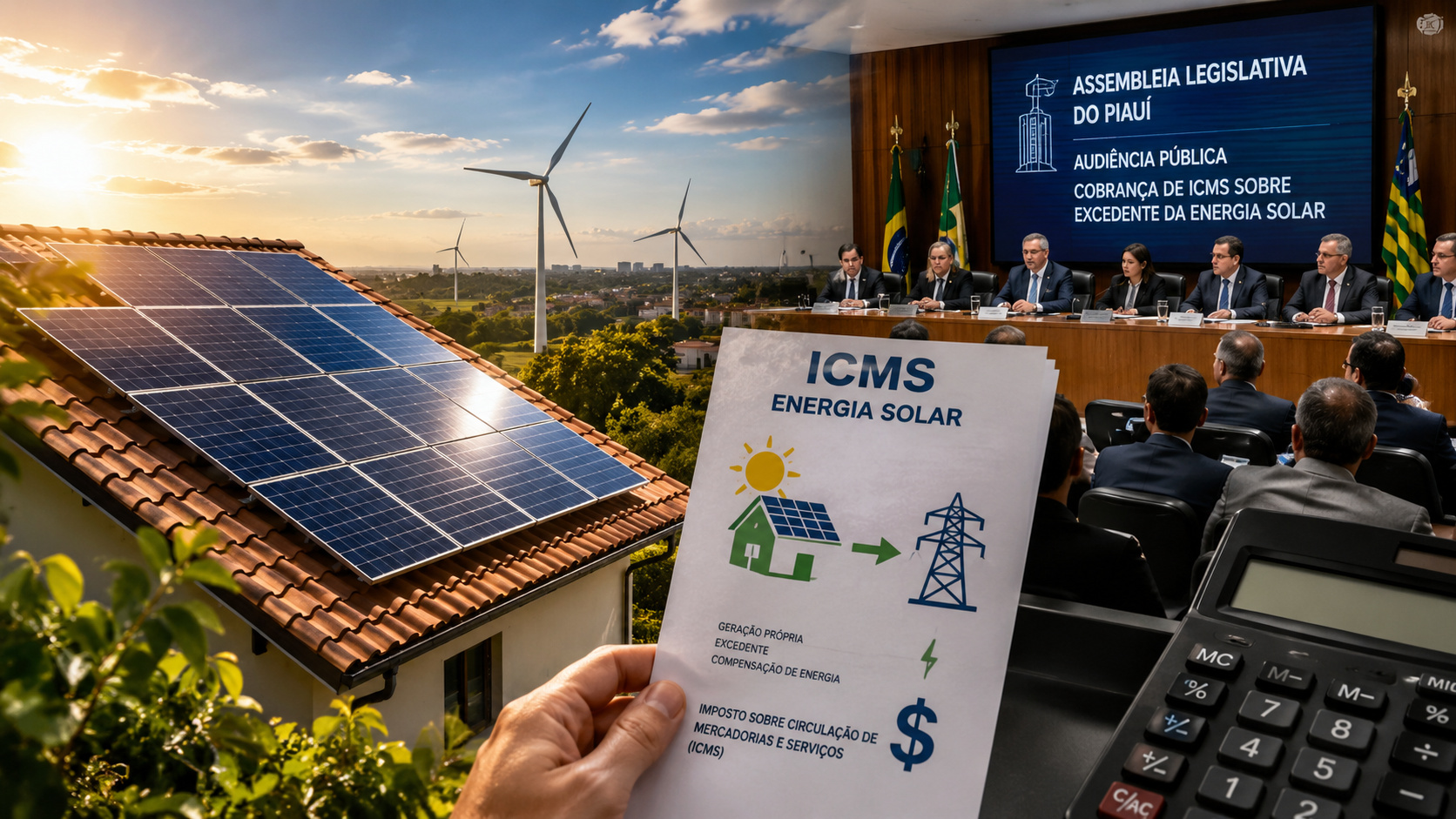

The discussion about the collection of ICMS on solar energy gained prominence in Piauí after a public hearing was held in the state’s Legislative Assembly. The meeting brought together parliamentarians, government representatives, and specialists from the electricity sector to debate the impacts of taxation on consumers who use their own energy generation systems, especially solar and wind energy.
The topic has been generating concern among consumers and companies in the renewable energy sector. This is because many owners of photovoltaic systems have started to question the incidence of taxes on energy compensated in the electrical grid.
According to the Piauí State Treasury Department, ICMS is not applied directly to the generation of solar energy, but rather to charges related to the use of the electrical distribution infrastructure.
-
Solar energy reaches 55 GW, becoming the second largest power source in Brazil’s energy mix

-
Solar energy can increase property value by up to 10% and become a selling point.
-
Solar and wind energy surpass natural gas for the first time in the world and accelerate energy revolution

-
Africa has about 500,000 cell towers and most still burn diesel to operate, while companies rush to cover antennas with solar energy and avoid signal blackouts.


What motivated the debate about solar energy in Piauí
The public hearing was held to clarify doubts about the billing model applied in the state and to discuss possible alternatives for consumers who produce their own energy.
Furthermore, parliamentarians sought to understand the economic impacts of taxation for residences, businesses, and producers who have invested in distributed generation systems.
In recent years, the growth of solar energy in Brazil has accelerated significantly, also increasing debates about regulation, energy compensation, and taxation.
How self-generation of solar energy works
Distributed generation allows consumers to produce electricity through solar panels installed in homes, businesses, or rural properties.
When the system produces more energy than the property consumes, the surplus is sent to the distributor’s electrical grid.
Subsequently, this credit can be used to offset consumption during periods of lower generation.
This model helped boost the expansion of solar energy in several regions of Brazil.
What is ICMS on solar energy
ICMS is the Tax on Circulation of Goods and Services, a state tax applied to different economic operations.
In the case of solar energy, the discussion specifically involves the compensation of surplus energy injected into the electrical grid.
According to the Piauí government, the charge does not occur on the production of energy itself, but on tariffs related to the use of electrical infrastructure.
Even so, consumers and sector representatives question the financial impacts of the measure.
Why consumers are concerned
Many consumers have invested in photovoltaic systems seeking savings on their electricity bill and greater energy independence.
Furthermore, solar energy has become one of the main alternatives for reducing long-term energy costs.
In this context, the possibility of increased taxation raises concerns about the financial return on these investments.
Experts state that regulatory changes can directly affect the economic attractiveness of self-generation.
The growth of solar energy in Brazil
Solar energy has been experiencing strong expansion in the country in recent years.
According to data from the electricity sector, millions of Brazilian consumers already use photovoltaic systems in homes, businesses, and rural properties.
Furthermore, technological advancements have reduced installation costs and expanded access to distributed generation.
Brazil has become one of the fastest-growing solar energy markets in the world.
The role of distributed generation
Distributed generation is considered strategic for diversifying Brazil’s energy matrix.
Furthermore, the model helps reduce energy transmission losses and encourages the use of renewable sources.
Experts also highlight environmental benefits related to the reduction of pollutant gas emissions.
In this scenario, solar energy has gained an important place within energy transition policies.
The government’s argument about the charge
Representatives of the Treasury Department state that the charge is related to the use of the electricity grid by consumer units.
According to the understanding presented during the public hearing, consumers with their own generation continue to use the distributors’ infrastructure for energy compensation.
Therefore, part of the charges related to the operation of the electricity grid would remain subject to taxation.
The topic, however, continues to generate different interpretations among specialists and sector representatives.

The impact on the renewable energy sector
Companies linked to the solar energy market are closely following the debate.
Furthermore, the sector fears that tax increases could reduce the growth rate of distributed generation.
Experts warn that regulatory uncertainty could affect new investments in renewable energy.
At the same time, state governments seek to balance tax collection and the expansion of the energy sector.
The advance of solar energy in the Northeast
The Brazilian Northeast has enormous potential for solar energy generation due to the high incidence of solar radiation for much of the year.
Furthermore, Northeastern states have been registering accelerated growth in residential, commercial, and industrial photovoltaic projects.
In this context, debates about solar energy taxation have gained relevance in different regions of the country.
Piauí, in fact, appears among the states with strong expansion in the renewable energy sector.
What specialists advocate
Electricity sector specialists advocate for greater regulatory clarity to ensure legal certainty for consumers and investors.
Furthermore, solar energy representatives argue that incentive policies are important to expand the adoption of renewable sources.
Among the main points discussed are:
- Taxation on energy compensation
- Costs of electrical infrastructure
- Sustainability of distributed generation
- Legal certainty for consumers
- Incentives for renewable energy
The debate is expected to continue advancing in the coming months.
The economic impact of solar energy
The expansion of solar energy moves billions of reais in Brazil.
Furthermore, the sector creates jobs, drives technological innovation, and strengthens the sustainable economy.
Consumers have also come to see self-generation as a form of protection against increases in electricity tariffs.
Therefore, tax changes can directly influence the growth of the photovoltaic market.
The future of solar energy in Brazil
Even with tax discussions, specialists believe that solar energy will continue to grow in the country.
Furthermore, the pursuit of sustainability and energy savings tends to further strengthen the sector.
New technologies, cost reduction, and the expansion of distributed generation are expected to continue driving investments in renewable energy.
In this scenario, debates on taxation and regulation will be fundamental in defining the future of the market.


What to expect after the public hearing
The Legislative Assembly of Piauí is expected to continue discussing alternatives related to the collection of ICMS on solar energy.
Additionally, consumers and industry representatives await possible revisions or clarifications regarding the model applied in the state.
The topic may also influence similar discussions in other regions of Brazil.
Finally, the debate reinforces how the expansion of solar energy is transforming not only Brazil’s energy matrix, but also the economic, regulatory, and tax discussions related to the electricity sector.