Portuguese
  Spanish


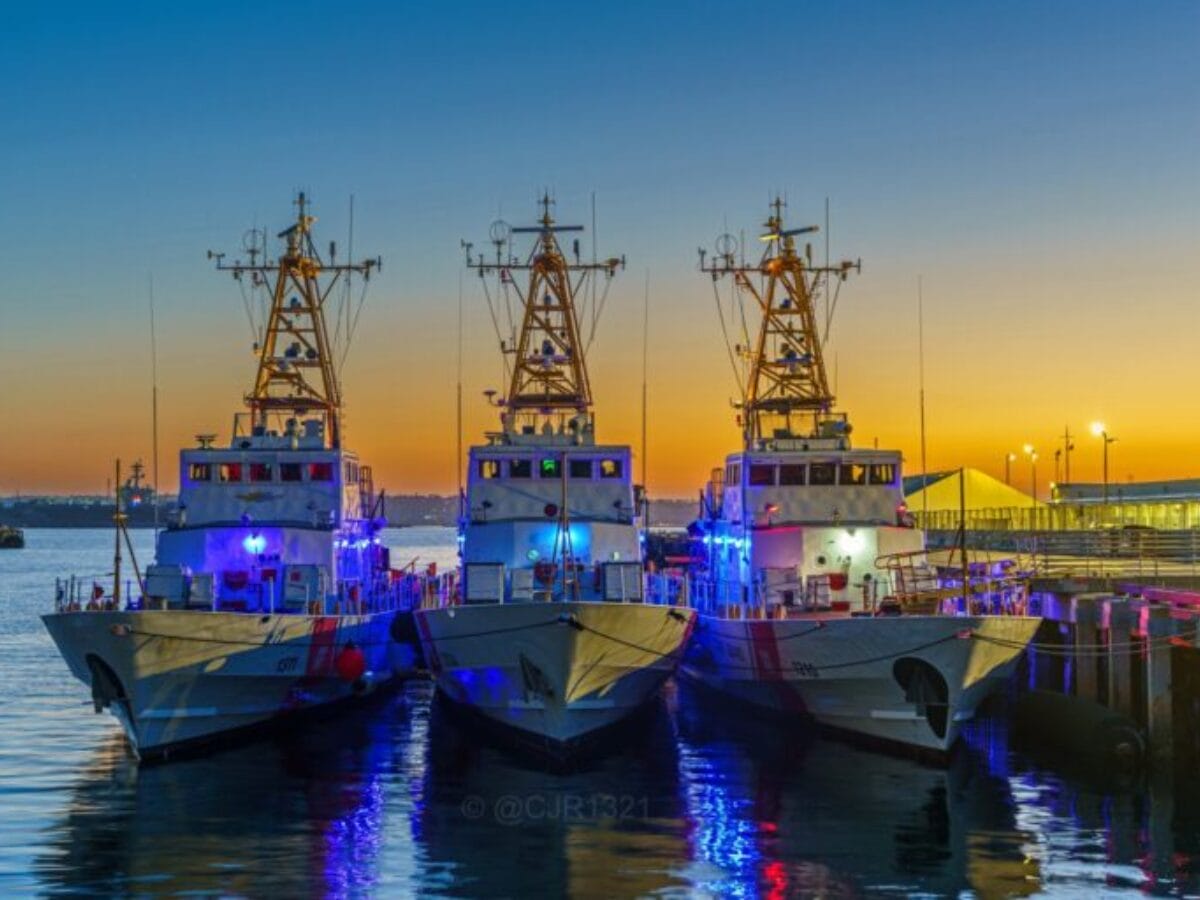

Three Island-Class Patrol Boats, with a History of Service in the United States Coast Guard, Have Been Officially Transferred to the Colombian Navy as Part of a Strategic Cooperation to Strengthen Surveillance and Combat Drug Trafficking in Latin America.
On May 19, 2025, Colombia took an important step in strengthening its maritime defense with the incorporation of three Island-class patrol boats. The vessels — USCGC Liberty (WPB-1334), USCGC Mustang (WPB-1310), and USCGC Naushon (WPB-1311) — were officially transferred by the United States in a ceremony held at the port of San Diego, California, through the Excess Defense Articles (EDA) program.
This initiative allows the donation of deactivated military equipment to allied countries as part of the U.S. effort to foster regional security. With nearly 40 years of service to the U.S. Coast Guard, the ships were recently decommissioned and will now continue their mission under the Colombian flag.
Ships with Operational History Begin Service in the Colombian Navy
Before their arrival in Colombia, the vessels left Alaska on May 14, navigating down the Pacific coast and crossing the Seymour Narrows Strait in British Columbia, until they docked in San Diego for the formal transfer ceremony.
-
North Korean Fiasco: Launch of the Largest Warship Ends in Sinking

-
While giant ships still burn heavy fuel and the maritime sector races against climate targets, Maersk and Vale are starting to bet on ethanol as a new route to reduce emissions at sea.

-
China begins construction of the world’s largest LNG ship, a 344-meter giant capable of supplying 4.7 million homes for a month, carrying 271,000 m³ of gas, and placing QatarEnergy in the largest naval order ever recorded in world history.
-
China is designing a container ship with a thorium nuclear reactor that will operate for 40 years without refueling, and the 25,000-container giant from Jiangnan Shipyard will cross oceans without emitting carbon in an industry that burns 300 million tons of fuel per year.



Built between 1985 and 1992, the Island-class patrol boats are 110 feet long (33.5 meters), capable of speeds over 29 knots and with endurance of up to five days at sea.
Their design was intended for missions involving coastal patrol, search and rescue, fisheries enforcement, and drug trafficking combat.
In addition to the United States, vessels of this class have also been transferred to allies such as Greece, Ukraine, Costa Rica, and Pakistan, demonstrating the model’s reliability and versatility.
Colombian Objective Is to Expand Naval Presence in Strategic Areas
The arrival of the Island-class patrol boats represents a significant reinforcement of the structure of the Colombian Navy, especially in its operations in areas of maritime surveillance, interception of illegal vessels, and protection of territorial waters.
This move integrates the Colombian strategy to expand naval presence in high-risk and strategically significant zones, especially in light of ongoing challenges related to drug trafficking and illegal fishing.
“The incorporation of these vessels will enhance the Colombian Navy’s capacity in maritime surveillance operations, drug trafficking combat, and protection of its territorial waters.”
Modernization and Operation Entry in the Coming Weeks
Before being officially integrated into the operations of the Colombian Navy, the three ships will undergo technical updates and specific adaptations to meet local operational requirements. The adjustments are expected to include improvements in communication systems, sensors, and navigation equipment.
The expectation of naval authorities is that the ships will be ready to operate in the coming weeks, strengthening coastal control in sensitive regions of the country.
Military Cooperation Strengthens Ties Between Colombia and the United States
The transfer of the vessels also symbolizes the strengthening of strategic ties between Colombia and the United States.
This partnership, solidified through the EDA program, represents more than just a simple transfer of military material: it is a joint effort to promote stability, regional security, and integration among allied armed forces.
“The transfer also strengthens the strategic ties between Colombia and the United States, promoting greater cooperation in regional security.”
Source: Naval Power