Portuguese
  Spanish


Million-dollar investment in integrated sanitation is expected to transform Santa Luzia, in Estrutural, with water and sewage networks, drainage, paving, and social actions aimed at thousands of residents in one of the most vulnerable areas of the Federal District.
In Santa Luzia, in Estrutural, in the Federal District, Caesb has started an integrated sanitation project estimated at almost R$ 100 million to provide treated water, sewage, drainage, paving, and social actions to about 20,000 residents.
Scheduled since November 2025, the intervention includes 27 km of water supply network, 11 km of sewage network, two lift stations, 10 km of stormwater galleries, and four detention basins.
In addition to the sanitation networks, the project includes 35,000 square meters of asphalt paving and 15,500 square meters of interlocking pavement, with structures aimed at reducing flooding, open ditches, exposed cesspools, and illegal connections.
-
28-meter, 156-ton titans traveled 20,000 km from China to the port of Santa Catarina: Portonave received 7 fully electric megacranes, part of a R$ 210 million package, to double container handling.

-
They exchanged the idea of a large house for a 35 m² warehouse, spent US$ 12,000 on the structure, and created a tiny house in Colorado with space to live and work.

-
A newly opened terminal in the middle of the Amazon has begun transporting soy and corn through Amapá, eyeing the queue of ships that is congesting the ports in the South.

-
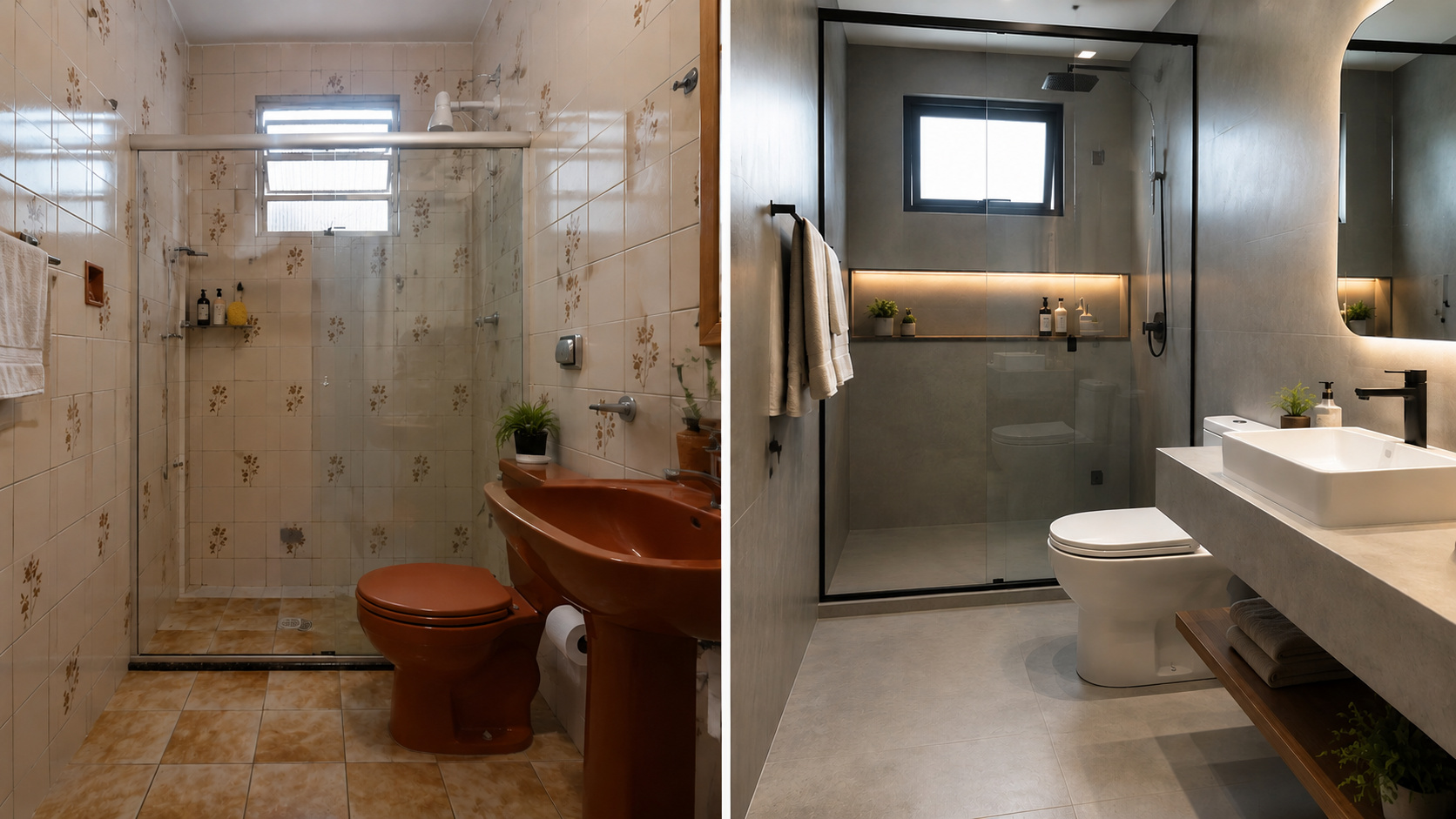
Goodbye to old tiles: renovation technique without construction transforms bathrooms in a few hours, eliminates debris, and reduces costs with coverings using special paints, high-resistance adhesives, and modern finishes that completely renew the space.


Located near the former Estrutural landfill and the border with Brasília National Park, the area served is among the most vulnerable points in the DF and is classified as a region of social interest regularization.
Integrated sanitation in Santa Luzia
In practice, Caesb’s proposal combines water supply, sewage collection and treatment, urban drainage, paving, and sanitary and environmental education actions within the same intervention front.
Within the project’s polygon, the families included should receive regular water and sewage connections, accompanied by technical guidance for the correct use of the new structures installed in the community.
Through the sewage system, the waste collected in Santa Luzia will be sent by two lift stations to the North Sewage Treatment Plant, located in Brasília.
To reinforce the supply, the project includes the installation of a booster, equipment used to increase water pressure in the network and serve the settlement, which occupies about 70 hectares.
Residents expect service regularization
Resident of Quadra 23 for 14 years, Vera Lúcia Guedes, 67, sees the arrival of sanitation as progress for public health and the regularization of essential services.
“They are important for public health reasons and also for us to get out of illegality,” said Vera when commenting on the works that should reach the area where she lives.
Among residents who have lived for years with improvised solutions for water and energy, the expectation also involves replacing precarious structures with formal services in a community marked by irregular occupation.
The waste picker Ana Cristina Rodrigues, 48, reported that she had to fetch water at dawn from a fountain and resort to illegal energy connections before the advancement of public works in the area.
Works began on Rua 64
On Rua 64, defined as the model street of the project, services began with 160 meters of paving with blocks, 313 square meters of sidewalks, 56 connections with water meters, and 59 meters of drainage network.
Alongside the physical interventions, teams conduct home visits, distribute informational materials, map community leaders, and maintain coordination with the Regional Administration of Estrutural and housing agencies of the Federal District.
According to Caesb, the pioneering nature of the project lies in the combination of sanitation, urbanization, sanitary education, community participation, and coordination between public agencies in an area of high social vulnerability.
Água Legal expands service in DF
Also within the regularization strategy, the Água Legal program brings potable water supply to communities not yet fully regularized and in the process of urban consolidation in the Federal District.
Created in 2019, the program allows Caesb to implement water networks in communities located in Areas of Social Interest Regularization, as the company reported when detailing the actions in Santa Luzia.
With the arrival of the regular network, precarious solutions give way to formal supply, with billing for consumption and the possibility of reduced tariffs for families enrolled in social programs of the Government of the Federal District.
The integrated sanitation of Santa Luzia is part of a broader front of urban infrastructure in Estrutural, a region that has undergone paving, drainage, and public service regularization works in recent years.
Detailing the project, Caesb informs that the intervention is expected to benefit approximately 20,000 residents, distributed across about 4,000 to 4,500 homes, with a total planned investment of approximately R$ 100 million.