Portuguese
  Spanish


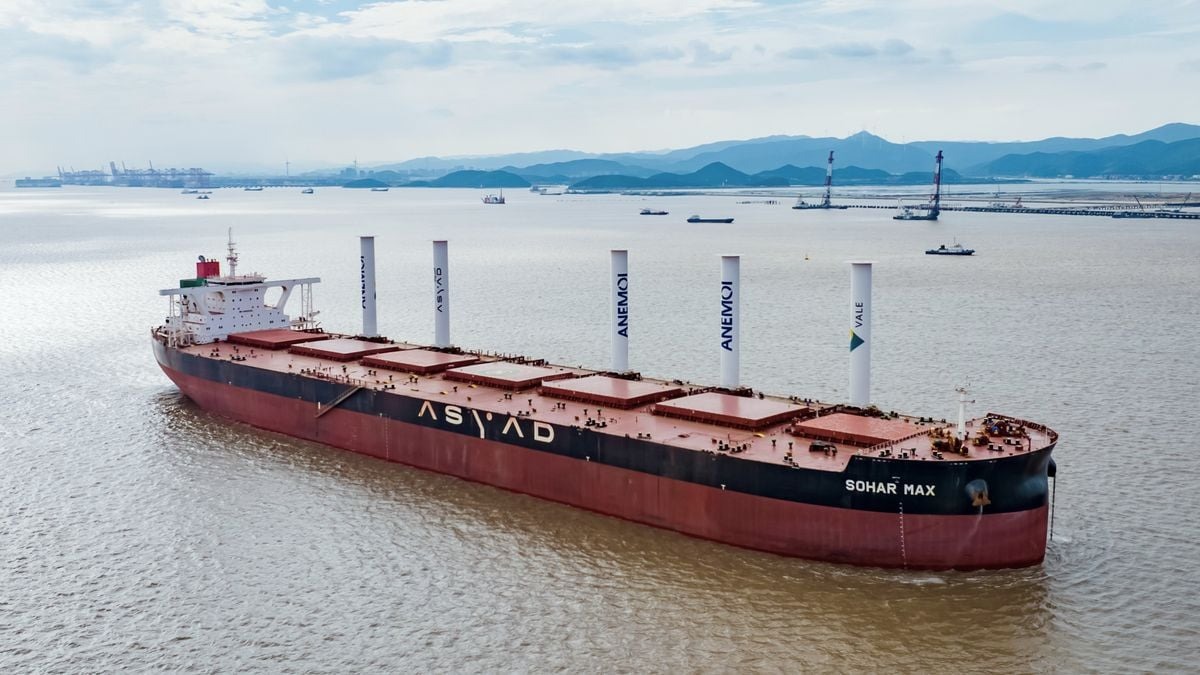


The Giant Sorrar Max Impresses With 362 Meters, Capacity for 400 Thousand Tons and 300 Ton Tubular Sails, Technology That Saves Fuel, Reduces Environmental Impact and Reinforces Brazilian Competitiveness
The sea giant known as Sorrar Max catches attention at first glance. With 362 meters in length, the vessel surpasses even many cruise ships and translates, in steel and engineering, the monumental scale of mineral transport. Designed to carry up to 400 thousand tons, the ship combines technology developed in three countries, but carries what executives describe as a kind of national identity, a “Brazilian soul.”
Innovative Wind Technology
The main differential of Sorrar Max lies in its tubular sails. Each structure weighs 300 tons and acts as a sophisticated system for harnessing the winds.
As they rotate, they utilize the so-called Magnus effect to generate additional propulsion force. In practice, this translates into an average fuel consumption savings of 6% during voyages.
-
Eni Acquires 25% Stake in Chilean Lithium Project, Plans to Invest Up to $225 Million in Eco-Friendly Extraction Method

-
French Brand Transforms 6 Million Brazilian PET Bottles into Sustainable Sneakers for Global Fashion Market
-
Abandoned Factory in Rio’s North Zone Becomes Urban Hazard with Standing Water and Debris

-
The U.S. Navy Conducts Submarine Tests in Idaho Lake to Detect Underwater Noises Hidden by the Ocean


According to the Indian captain who commands the ship, the beginning was not simple. The impressive size brought challenges in handling and required operational adjustments.
Over time, however, the crew adapted, refining procedures and navigation routines.
On the first voyage from China to Brazil using the wind sails, the results were surprising. Fuel savings reached 9%, which represented 125 tons less of bunker consumed.
For a single crossing, the number is significant and indicates the potential of the technology.


Environmental and Economic Impact
The initiative integrates Vale’s efforts to reduce the environmental impact of its operations while simultaneously enhancing competitiveness.
By cutting part of the fossil fuel consumption, the ship helps to decrease the carbon footprint associated with mineral transport.
Interestingly, the principle behind this innovation harkens back to the origins of navigation. The use of wind as an energy source was gradually abandoned with the advent of steam and later combustion engines.
Now, faced with the pressures of climate change, the shipping industry is revisiting this concept with a modern approach.
More than a technological advancement, the project points to a change in mindset. In a scenario of rising costs in maritime transport and tensions on strategic routes, solutions that reduce expenses and emissions gain relevance.
The expectation is that initiatives like this will strengthen the position of Brazilian companies in the global market, as well as pave the way for new applications of wind energy in the oceans.
With information from CNN.