Portuguese
  Spanish


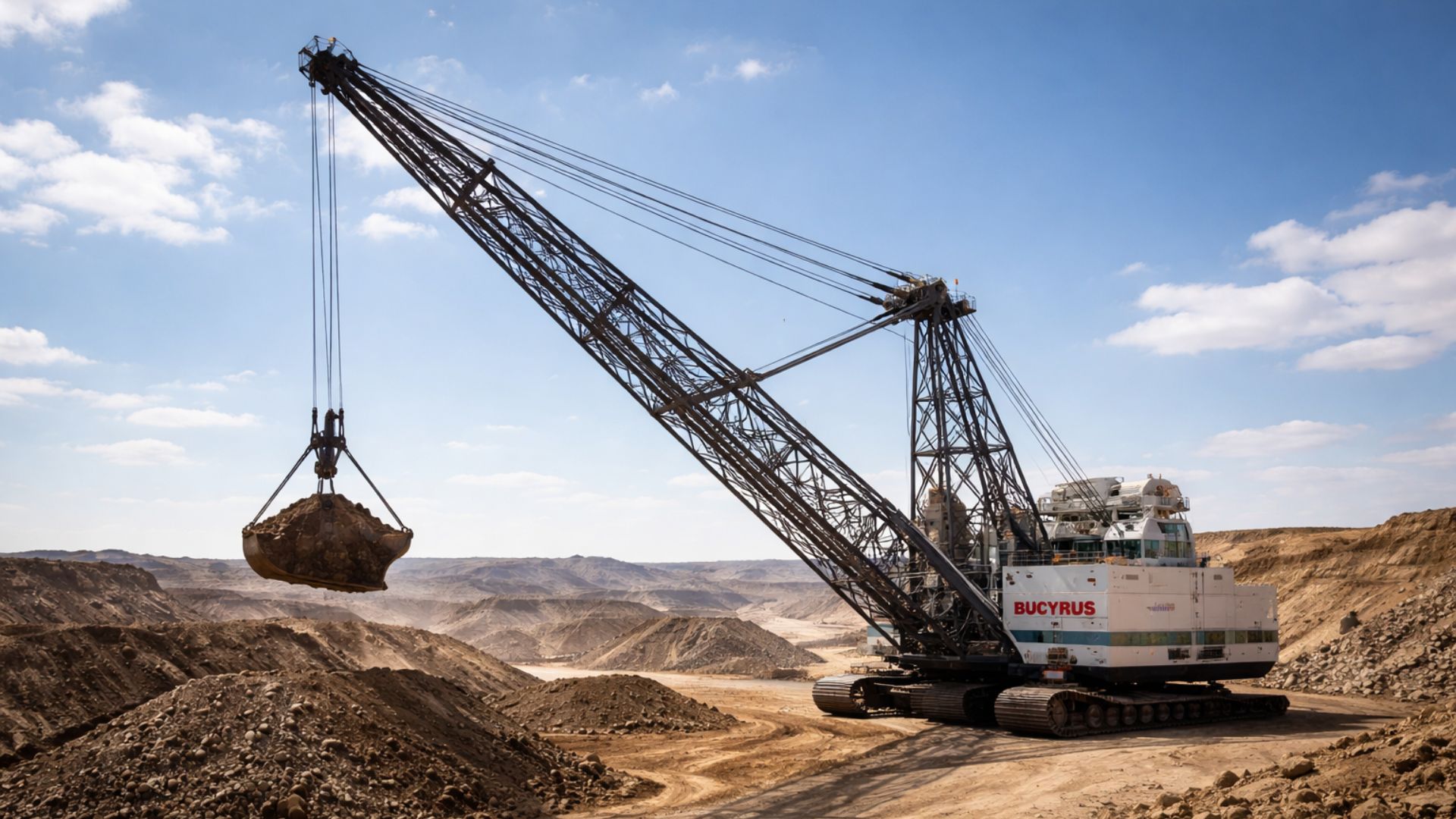

Giant of 1,628 Tons with 71-Meter Boom Sets the Pace of the Candiota Mine by Continuously Operating in the Removal of Overburden, Requiring Exclusive Electric Infrastructure, Permanent Maintenance, and Technology Upgrade to Maintain Coal Production in Rio Grande do Sul.
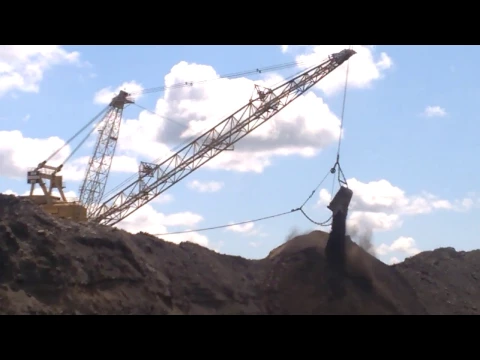
With 1,628 tons and 71-meter boom, the Bucyrus 1260W dragline is described as the equipment that defines the pace of the Candiota Mine in Rio Grande do Sul by continuously operating in the removal of overburden.
According to the Brazilian Mining Institute, the machine is one of the main assets of the Rio Grande Mining Company because its role in coal overburden removal “guides all the yield” of open-pit mining at the unit.
In practice, this stage precedes the removal of coal and conditions the rest of the production flow, as the mining front only advances after soil and rock with no economic value are removed in large volumes.
-
When Do Brazil and Japan Face Off in the World Cup?

-
Three-Year-Old Fulfills Dream of Joining Garbage Collectors in Brazil, Captivates Thousands Online with Heartwarming Video

-
Nikon Project Uses Dog’s Heartbeat to Capture Photos, Revealing What Truly Makes Dogs Happy

-
In Los Angeles, Young Adult Opts for Garage Living with Bed, Kitchen, and Bathroom to Avoid Rent, Highlighting Comfort and Organization Challenges in Compact Housing



When the dragline is in operation, the loading, transport, and preparation of the material follow the cadence it imposes, as the opening of extraction areas directly depends on the organized movement of these “mountains” of overburden.
Coal Overburden Removal and Dragline Operation
Unlike equipment that directly cuts the ground, the dragline operates with a bucket suspended by cables, launched and dragged over the ground to then be hoisted in repeated cycles throughout the shift.
This movement, combined with the rotation of the structure, allows the removal of overburden and its deposit in pre-planned piles, keeping the surroundings of the excavation point clearer and reducing the dependence on trucks circling around the cut.
The reach of the boom in this type of machine acts as a central operational factor, as it broadens the bucket’s sweep area and defines where the overburden can be placed safely without requiring constant repositioning.
The weight of the equipment relates to the need for stability under continuous stress, as cables, metal structures, and rotation systems operate under load for long periods and need to sustain repetition without losing performance.

Dedicated Electric Infrastructure and Continuous Operation
Behind its visible size from a distance, the dragline depends on infrastructure to continue working without interruptions, and the CRM itself reports that there are specific electric supply networks aimed at equipment like the Dragline 1260W.
The mention appears in an institutional report about a technical visit by students to the complex, indicating that energy distribution is planned to meet high demands and load variations typical of large mining machines.
In this scenario, the dragline ceases to be just an item in the fleet and becomes part of a system where energy, maintenance, and operation need to fit together, as any electrical fluctuation or unplanned stoppage directly impacts the yield of the mining operation.
While the equipment maintains the overburden removal routine, daily planning includes ensuring stable supply, anticipating interventions, and aligning teams, as continuous operation increases the impact of failures even in components considered auxiliary.
Modernization of Compressors and Operational Gains
The CRM detailed, in an institutional news report, an intervention on the Dragline 1260W involving the replacement of two compressors, swapping piston models Kellog A462TVX for Atlas Copco GA22+ screw compressors.

According to the report, the old equipment showed leaks and low efficiency, in addition to “frequently overheating,” which raised the heat in the compartment and increased noise, factors that also interfere with working conditions.
In the company’s description, the upgrade brought reduced energy consumption and internal noise, in addition to making parts replacement easier due to the availability of components in the market and offering an electronic panel with monitoring parameters.
This type of adjustment shows that the reliability of a dragline depends not just on a main set, as an auxiliary system that loses efficiency can raise temperature, accelerate wear, pressure stocks, and create bottlenecks in equipment that operates for long hours.
Parts, Cables, and Permanent Maintenance Planning
In addition to mechanical interventions, public records on the CRM’s institutional website indicate procurement processes aimed at the Dragline 1260W, with items associated with rotation systems and cables used in the context of open-pit mining.
The existence of these processes reinforces that continuous operation requires constant planning for replacement, as specific components work under high stress and need to be available to prevent maintenance downtime from turning into prolonged interruptions.
In operations of this scale, machine downtime affects not only the excavation of overburden, as coal discovery “paves the way” for subsequent stages, and any mismatch tends to spread throughout the operational chain.
Therefore, maintenance is usually treated as part of yield, not as an isolated event, as daily performance depends as much on wear control as on parts logistics and the ability to carry out repairs at the necessary pace.
Technology Upgrade and Digital Control

The dragline is also cited as the main equipment of the mine in a note published on the government portal of Rio Grande do Sul, referring to interventions such as refurbished motors, new buckets, and the replacement of analog components with digital technology.
The presence of this type of modernization indicates the attempt to keep control and monitoring systems updated in a machine that spans technological generations, without altering its central role of removing overburden to sustain the mining operation.
With digital resources, monitoring parameters tend to gain precision and traceability, but the goal remains the same: to ensure that repeated cycles of launching, dragging, hoisting, and rotation occur safely and predictably.
Still, the upgrade does not eliminate the dependence on robust infrastructure and trained teams, as continuous operation combines electric, mechanical, and operational demands that need to function together to avoid losing rhythm in the mine.
Environmental Recovery After Mining
Alongside production, the CRM states on its institutional environmental page that its current mineral production areas are licensed by the State Foundation for Environmental Protection and that the units maintain environmental monitoring routines.
The company also states that it adopts Plans for Recovery of Degraded Areas and describes typical stages after mining, such as topographic reconstitution, spreading of vegetative soil, soil correction and fertilization, and revegetation.
This set of procedures appears as the second layer of requirements for open-pit mining, as the removal of large volumes of material requires planning both to maintain production pace and to organize the subsequent scenario of the explored area.
By concentrating reach, weight, and operational responsibility in a single point of the process, the dragline becomes a sort of “landmark” of the routine, and the question remains: how does the mine reorganize its production when this equipment needs to stop, even for a few hours?