





 Portuguese
  English
  Spanish
  4 min of reading
  0 comments


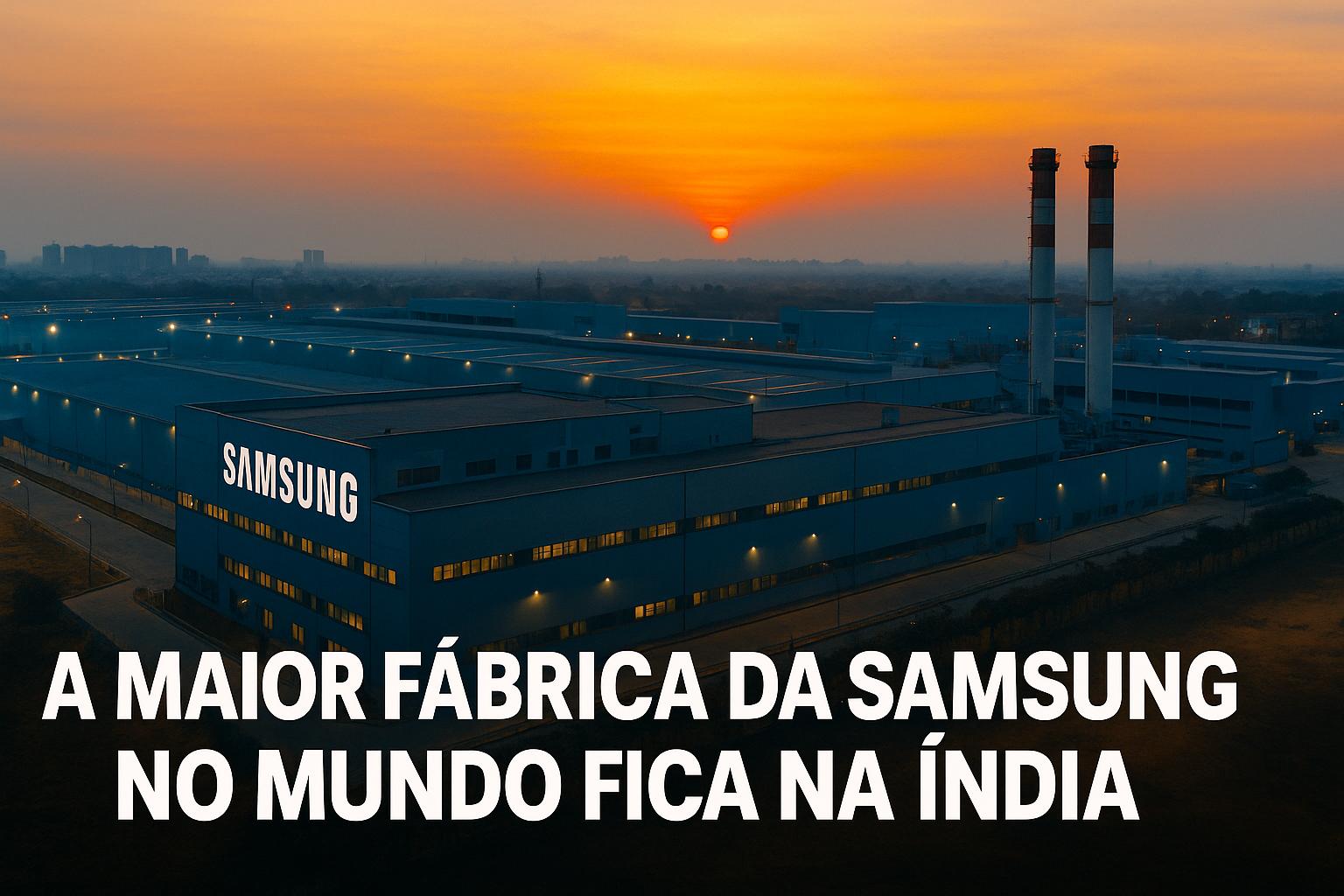
With 120 Million Cell Phones Per Year, Samsung’s Largest Factory in the World Transforms Noida, India, into a Global Tech Empire.
Few realize that the heart of Samsung’s global cell phone production is not in South Korea, but in India. Located in Noida, a city in the state of Uttar Pradesh, the plant officially inaugurated in July 2018 is considered the largest smartphone factory of Samsung in the world — a true industrial colossus symbolizing Asia’s technological advancement and the production power of the brand that dominates the global electronics market.
According to Reuters and Business Today, the factory occupies a total area of 35 acres (about 141,000 m²), operates on a continuous schedule, and has the capacity to produce up to 120 million units per year — equivalent to nearly 10 million cell phones per month. This scale is so vast that the facility alone can supply entire markets in Asia, the Middle East, Africa, and parts of Europe.
The Expansion That Consolidated India as a Tech Power
Samsung had operations in Noida since 1996, but decided to radically expand its presence to transform the site into a global export base.
-
A street cleaner who earns R$ 2,100 per month put her cell phone aside for a few minutes and returned to find a Pix transfer of R$ 203,000 mistakenly deposited into her account, an amount that, according to her, she wouldn’t be able to save even if she worked for a hundred years.

-
R$ 5,000 scattered on the street, a lost wallet, and an honest decision: the case in Goiás that moved even those who only read the story

-
Dissatisfied with seeing people sleeping on the street, a man named Ryan Donais started building small mobile homes so that homeless people can escape the cold, each equipped with a bed, running water, electricity, and heating.
-
ET in Paraná? After intriguing videos, mysterious sounds in the forest, and theories that dominated social media, the Brazilian Air Force reveals what its radars recorded and increases the mystery about the alleged UFO seen in Campo Largo.




The project, supported by the Indian government under the “Make in India” initiative, received an estimated investment of US$ 650 million, resulting in a monumental expansion of the former plant.
During the inauguration, Prime Minister Narendra Modi and South Korean President Moon Jae-in attended the ceremony, highlighting the economic and technological impact of the new facility, which created over 5,000 direct jobs and boosted an industrial ecosystem around the city.
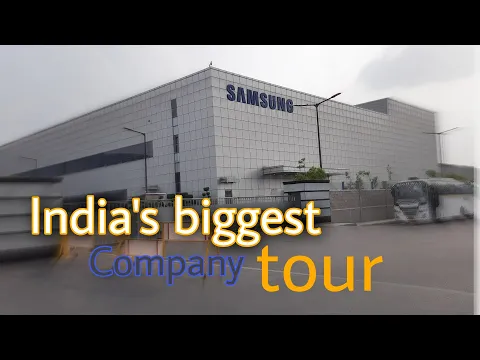

Today, Noida is recognized as one of the most dynamic tech hubs in the world, housing research centers, startups, and software companies that have grown alongside the presence of the South Korean giant.
Impressive Engineering and Industrial Scale
With production lines operating in three daily shifts, the factory is a living organism of engineering and automation. Thousands of workers, industrial robots, and digital control systems work in sync in a cycle that never stops.
The complex includes:
- Automated assembly lines with digital quality control;
- In-house testing and calibration laboratories for each batch of components;
- Robotized logistics systems that ensure real-time delivery of parts to the assembly line;
- In-house power generators and self-sustaining cooling systems.
Production ranges from entry-level models targeted at the emerging Asian market to premium smartphones like the Galaxy S and Fold series, exported to dozens of countries.
An Empire That Redefines the Global Industry
The impact of this factory goes beyond just technology. It has transformed Noida into an epicenter of innovation, with universities, research centers, and startups flourishing around the infrastructure created by Samsung.
According to the Economic Times India portal, the South Korean company has invested in technical training programs for local students and engineers, fostering the creation of a new talent ecosystem.
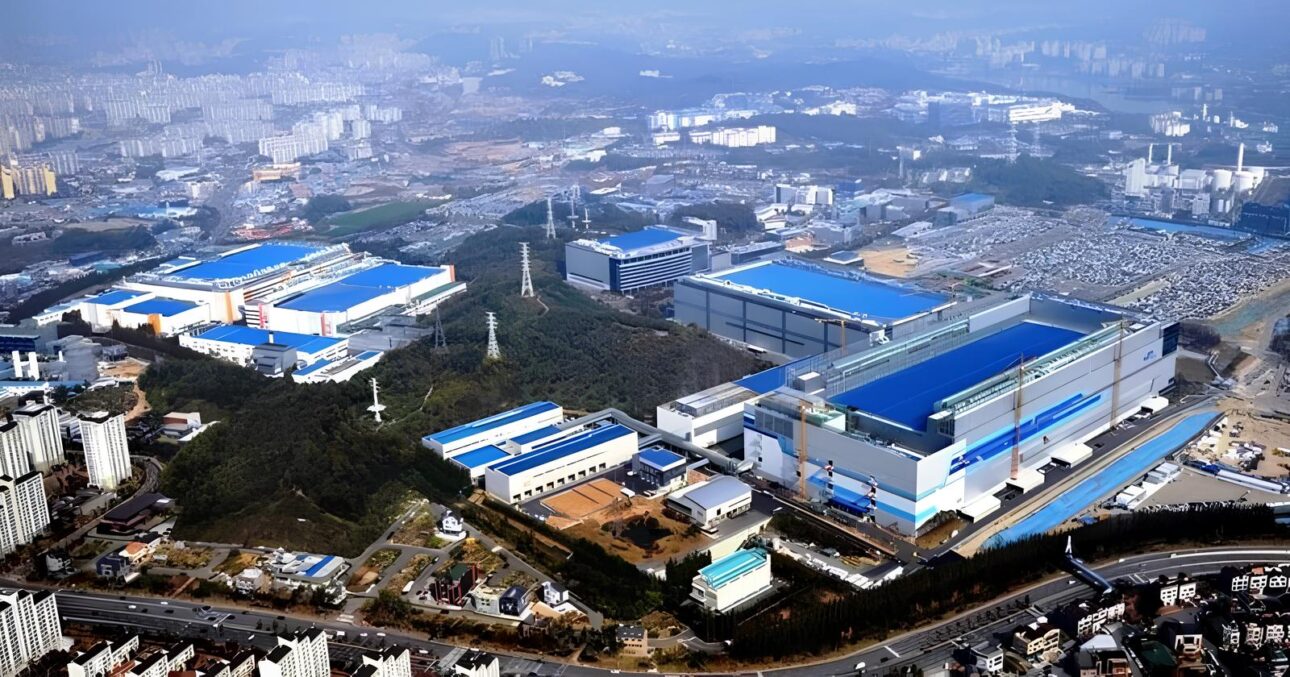
Moreover, the facility serves as a symbol of the global transition in the electronics industry, which has been shifting part of its production from China to countries like India, Vietnam, and Indonesia, in search of qualified labor and lower logistics costs.
Sustainability and Next-Generation Automation
Despite its colossal size, the factory was designed to be sustainable. The project includes water reuse systems, industrial waste treatment, and the use of solar panels for part of its energy consumption.
Additionally, the factory integrates technologies from the so-called “Industry 4.0”:
- IoT sensors monitor temperature, humidity, and machine vibration in real-time;
- Artificial intelligence optimizes the production flow;
- Autonomous robots transport components and finished devices along the assembly lines.
As a result, Samsung has managed to reduce failures, increase productivity, and lessen environmental impact — a differentiator that has made Noida a model of smart manufacturing.
The Global Impact of Production at Samsung’s Largest Factory in the World
With 120 million smartphones per year, the Noida factory represents nearly 20% of Samsung’s global production. Models manufactured there supply strategic markets in Africa, Asia, and Latin America, reinforcing India’s role as a central pillar in the brand’s international portfolio.
The site also houses the production of tablets and electronic components, transforming it into a complete integrated manufacturing center, something rare even among giants in the industry.
Beyond being an industrial plant, Samsung’s factory in Noida represents a shift in the axis of the global smartphone industry.
The dominance that was once concentrated in South Korea and China is now expanding into Indian territory, solidifying the country as the new giant of global electronics.
There, amid wide avenues and warehouses filled with conveyors and robots, Samsung has built not just a factory, but a city within a city — a tech empire that never sleeps.


-

1 person reacted to this.