






 Portuguese
  Spanish


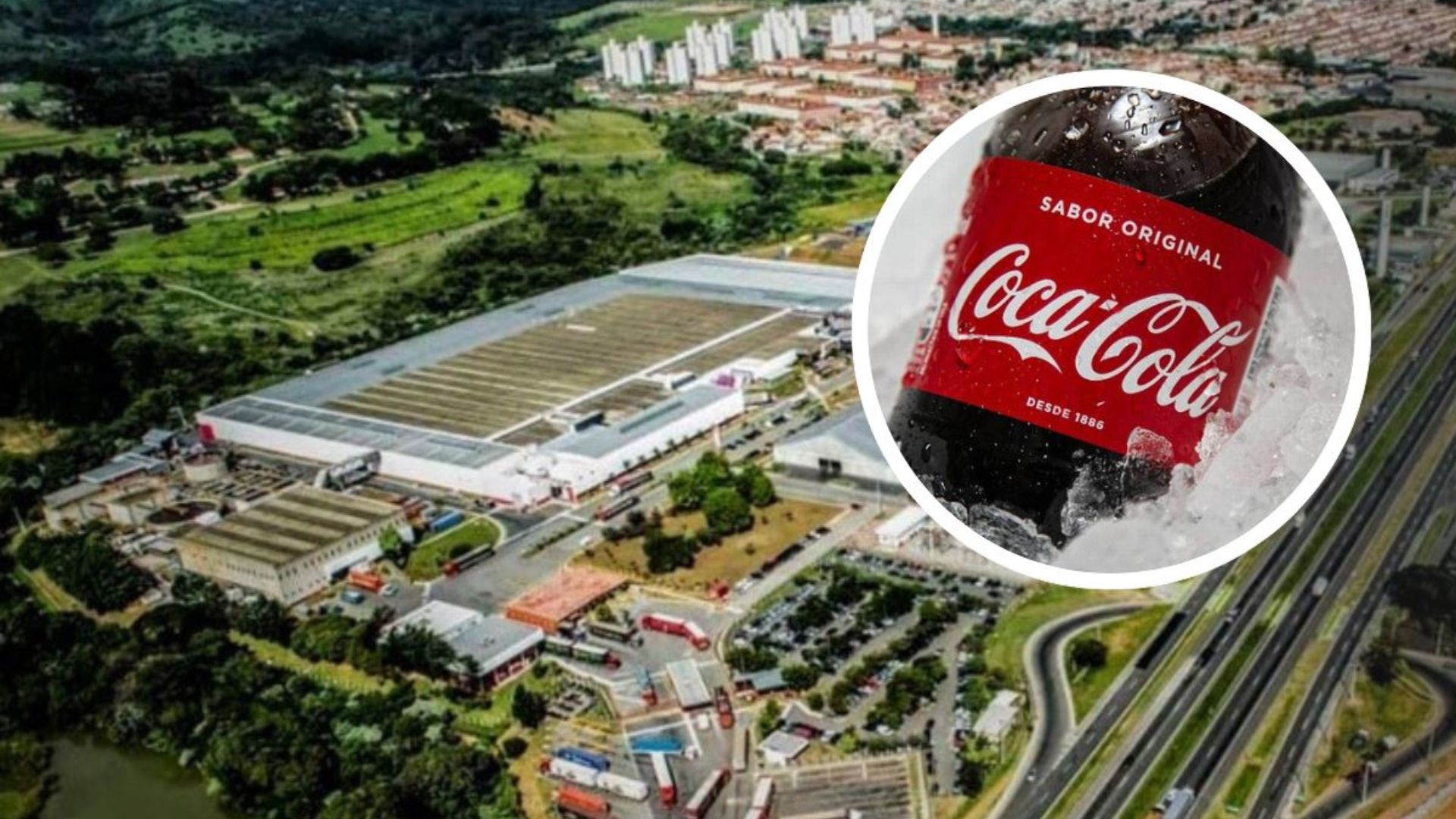


The Largest Coca-Cola Factory In Volume In The World Operates In Paulista Interior, Brings Together Thousands Of Workers And Drives A Logistic Chain That Supplies A Large Part Of The Southeast.
The largest Coca-Cola factory in production volume in the world operates in the interior of São Paulo.
Located in Jundiaí and operated by Coca-Cola FEMSA Brasil, the facility occupies about 190 thousand square meters, produces approximately 2 billion liters per year, and maintains continuous operation in shifts that ensure activity 24 hours a day.
Data from the City Hall and the company indicate that the plant is responsible for about 30% of national production of the bottler, mainly serving the state of São Paulo and parts of Minas Gerais.
History And Industrial Growth In Jundiaí
Inaugurated in 1993 and managed by Coca-Cola FEMSA since 2003, the plant has undergone expansions that resulted in new bottling lines, greater automation capacity, and more integrated logistic systems.
-
Latin America’s Deepest Subway Station Opens in Brazil, Featuring London-Inspired Trains and a Tunnel Under the Tietê River

-
4,000-Year-Old Stone Towers Discovered Across Sardinia, Puzzling Archaeologists About This Mysterious Civilization

-
Katie Stagliano’s 18 kg Cabbage at Age 9 Fed 275 People, Inspired Katie’s Krops, and Led to 100 Community Gardens in 32 U.S. States to Combat Hunger with Fresh Produce

-
Black Granite Sarcophagus Found in Alexandria Reveals Three Skeletons, Strange Liquid, and an Ongoing Archaeological Mystery in Egypt


Industry experts point out that the scale of the factory places it among the most robust operations of the Coca-Cola system in the world.
The unit currently operates with 16 bottling lines, equipped to produce different categories of beverages, such as soft drinks, teas, waters, and versions with and without sugar.
The conveyor belts transport thousands of bottles and cans per hour, organized by type of packaging and distribution destination.
The workforce includes more than 1,300 direct employees, in addition to outsourced teams in logistics, maintenance, industrial cleaning, and support services.

Information released by local authorities confirms the relevance of the factory in generating formal job positions.
Continuous Operation And Monitoring Technologies
The plant operates continuously, with staggered shifts that allow it to maintain the production pace throughout the day.
Industry reports describe that blowing, washing, filling, sealing, and labeling machines operate under technical monitoring and sensors that measure temperature, pressure, packaging integrity, and food safety variables.
According to engineers consulted in institutional materials, this set of controls reduces losses and standardizes the quality of the produced batches.
In addition to automation, the unit has its own infrastructure for process water, steam, and compressed air, as well as treatment systems that meet operational demands.
Energy supply includes an increasing participation of renewable sources, in line with Coca-Cola FEMSA’s public commitments to its environmental goals.
The company uses monitoring platforms that track consumption and efficiency in real-time.
Strategic Logistics And Regional Distribution

The strategic location of Jundiaí is frequently cited by industry representatives as one of the factors that enhance the competitiveness of the factory.
The municipality is close to the state capital and connected to highways such as Anhanguera and Bandeirantes, which facilitate the movement of cargo to distribution centers and retail networks.
The daily flow includes vehicles coming to unload supplies and trucks leaving loaded with pallets of products destined for different regions of the Southeast.
The logistics structure also attracts suppliers and service providers, increasing the city’s participation in large industrial chains.
Water Efficiency And Environmental Commitments
The Jundiaí unit is frequently mentioned in institutional reports for advancements in water efficiency.
The company reports significant reductions in water consumption per liter produced over the past decades, driven by industrial reuse, improvements in washers, and cooling systems and electronic monitoring of losses.
The plant also adopts targets related to energy, emissions, and waste, aligned with the environmental commitments made by Coca-Cola FEMSA.

The participation of renewable sources in the electrical matrix and circular economy actions are part of this set.
Total water consumption remains high due to scale, but environmental experts consulted by municipal authorities highlight that the indicator per liter produced is among the lowest in the sector in the country.
The Role Of The Factory In The Global Coca-Cola FEMSA Network
The Jundiaí factory is part of a network of dozens of industrial units and distribution centers operated by Coca-Cola FEMSA in several countries.
Corporate documents indicate that the company is the largest bottler in the Coca-Cola system in sales volume, with a global portfolio of over a hundred brands.
Within this context, the Brazilian plant serves as a reference in automation, traceability, and logistics processes.
Technicians from the company assert in public presentations that knowledge developed in Jundiaí guides practices applied in other units of the group.

Economic Impact And Professional Training In The City
The economic contribution of the factory is perceived in job creation, attracting suppliers, and the movement of services related to transportation, maintenance, and storage.
Professional qualification programs are conducted in partnership with institutions like SENAI, including courses focused on industry and logistics.
The company also maintains socio-environmental initiatives with schools and municipal bodies, aimed at environmental education and responsible water use.
These projects are part of the corporate strategy to connect industrial operations with permanent community actions.
With a consolidated presence for over three decades, the plant has become one of the main industrial landmarks in Jundiaí.
In light of this scenario, how might the productive structure established in the city influence future decisions regarding mobility, infrastructure, and regional development?




Com a água em redução drástica no planeta e a maior parte das empresas fazendo poço artesiano para reduzir mais ainda agua doce potável e sem contar no mal que faz pra saude com açúcar já faz mal imagina com adoçantes que é um veneno aff. e não agrega nada.
Até quando as pessoas irão tomar essa ****????
Vai acabar com a água potavel da cidade. Vejam por outros lugares onde a fabrica da Coca Cola esteve.