






 Portuguese
  Spanish


Researchers Develop New Fuel Cell with Performance Equivalent to Batteries: Advance Can Accelerate Use of Hydrogen Trucks
In a significant step towards sustainable mobility in cargo transport, researchers from the University of California, Los Angeles, announced the development of a new hydrogen fuel cell that exceeds expectations in durability and performance. The advance promises to transform the hydrogen truck market by making this alternative more viable for long-distance road transport without polluting emissions.
The highlight of the innovation is its unprecedented durability: the new fuel cell maintained its performance even after testing simulating over 90 thousand tension cycles, which is equivalent to years of continuous use under real road conditions. With an expected lifespan of over 200 thousand hours, the system far exceeds the current goal of the U.S. Department of Energy, which is 30 thousand hours.
Why Hydrogen Trucks Need Solutions Like This
Unlike passenger cars, long-distance trucks face specific challenges: they need to cover large distances with few stops, transport heavy loads, and meet strict deadlines. Traditional batteries, although efficient in electric cars, do not meet this profile well, due to long recharging times and excessive weight.
-
Apple Raises MacBook and iPad Prices as Memory Costs Surge by Up to 98%, Losing Edge Over Rivals and Highlighting AI Boom’s Impact on Consumers

-
China Establishes State Centers to Train Humanoid Robots, While the West Lags Behind with Makeshift Solutions
-
The Trap of Modern Technology: How Screen Overload and Digital Connections Can Impact Your Mental Health and Well-being
-
Wyoming Couple Grows Tropical Fruits Year-Round in -40°C Using Geothermal Greenhouse, Demonstrating Earth’s Heat Can Produce Oranges and Lemons in Snow Without Traditional Heating





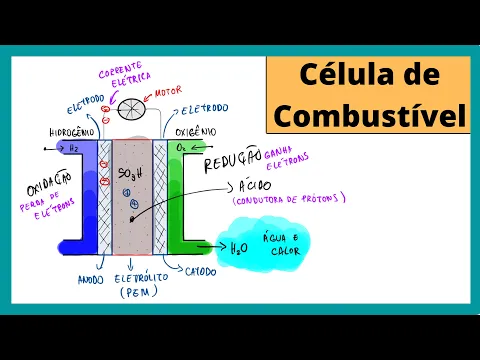

On the other hand, hydrogen fuel cells allow for quick refueling, similar to refueling with diesel, and are lighter than conventional batteries, reducing the energy consumption needed to move the vehicle. Emissions consist only of water vapor, making this an extremely clean option for heavy transport.
Another favorable point is that building a national hydrogen refueling infrastructure can be more economical than creating an extensive charging network for electric vehicles, which boosts the appeal of this solution in countries with large logistical territories, such as Brazil and the United States.
The Challenge: Improve the Catalyst Without Compromising Durability
Despite the advantages, the use of hydrogen fuel cells faces a technical obstacle: the chemical reaction that transforms hydrogen into electricity occurs slowly. To speed it up, platinum-based catalysts are used, which are highly efficient but costly and degrade over time — especially under the intense load variations required by trucks.
With the passage of usage cycles, the metal alloys present in these catalysts become leached (diluted or corroded), which reduces the efficiency of the cell and limits its lifespan.
The Solution Created by Researchers at the University of California
To overcome this challenge, the scientists led by Zeyan Liu developed a new durable catalyst architecture, incorporating ultrathin platinum nanoparticles within protective graphene bags. This structure protects the noble metal against degradation, maintaining high catalytic performance even under extreme conditions.
The coated nanoparticles were inserted into a porous structure made of a special carbon electrode — a derivative of Ketjenblack, known for its high electrical conductivity. This “particle within a particle” arrangement ensured long-term stability, preserving the energy efficiency of the fuel cell.
In accelerated stress tests, the system showed only a 1.1% loss in power — an extremely positive result, considering that losses of up to 10% are already considered excellent in this type of application.
New Fuel Cell Has Performance Equivalent to Batteries — With Much Less Weight
With an estimated power of 1.08 watts per square centimeter, the new fuel cell can match the performance of conventional batteries, which currently dominate the electric vehicle sector. The significant advantage is in weight: while batteries take up space and add extra load, the hydrogen cell is much lighter, improving energy efficiency and increasing the usable capacity of the truck.
The result is a more efficient, cleaner heavy vehicle with lower operational costs, as well as greater agility in refuels and less dependence on complex electrical networks.
The Role of Hydrogen in the Sustainable Mobility of the Future
Green hydrogen, when produced from renewable sources, has emerged as one of the most promising alternatives for the decarbonization of heavy transport. Unlike fossil fuels, it does not generate CO₂ emissions and can be stored and transported relatively easily, also being used in other sectors like energy generation, industry, and heating.
Furthermore, the growing adoption of hydrogen-based technologies promotes a circular economy, with waste reduction, energy reuse, and encouragement of innovation across entire production chains.
Hydrogen Advances as a Real Alternative to Diesel in Heavy Vehicles
The new fuel cell developed by the University of California marks a crucial advance in the search for viable solutions for long-distance mobility. With proven durability, performance equivalent to batteries, and structural advantages, the system presents itself as one of the most promising technologies for the future of hydrogen trucks.
If combined with a supportive policy for hydrogen production and refueling infrastructure, this innovation can accelerate the global transition to more sustainable and efficient cargo transport.





Gostaria em primeiro lugar em dar
Parabéns a universidade da Califórnia
E seus pesquisadores e cientista por
Está célula que pode fazer a diferença
Em termos de meio ambiente.
E um fato novo indiscutivelmente surpreendente em que precisamos
Viabilizar o mais breve possível.
O que não se pode fazer e sumcubir
A mais lobbies da indústria petrolífera. Nós estamos verificando
Vários países como este brasil sucumbir a corrupção de os mais
Variados tipos de lobbies como streaming educação farmaceuticoX
Saúde pública alimentação& doenças
Como se calar se no final do século
19 o Dr.Wilian Coley já observava
Uma remissão de um câncer de pescoço por febre ou ipertermia?
Nós estamos vendo a incidência
De câncer quase chegando aos
Níveis de doenças cardiovasculares
E a poluição não entra na conta fora
Alimentação estilo de vida muito
Menos genética;mais metabólica
Bom,se não dermos preferência a vida…