Portuguese
  Spanish


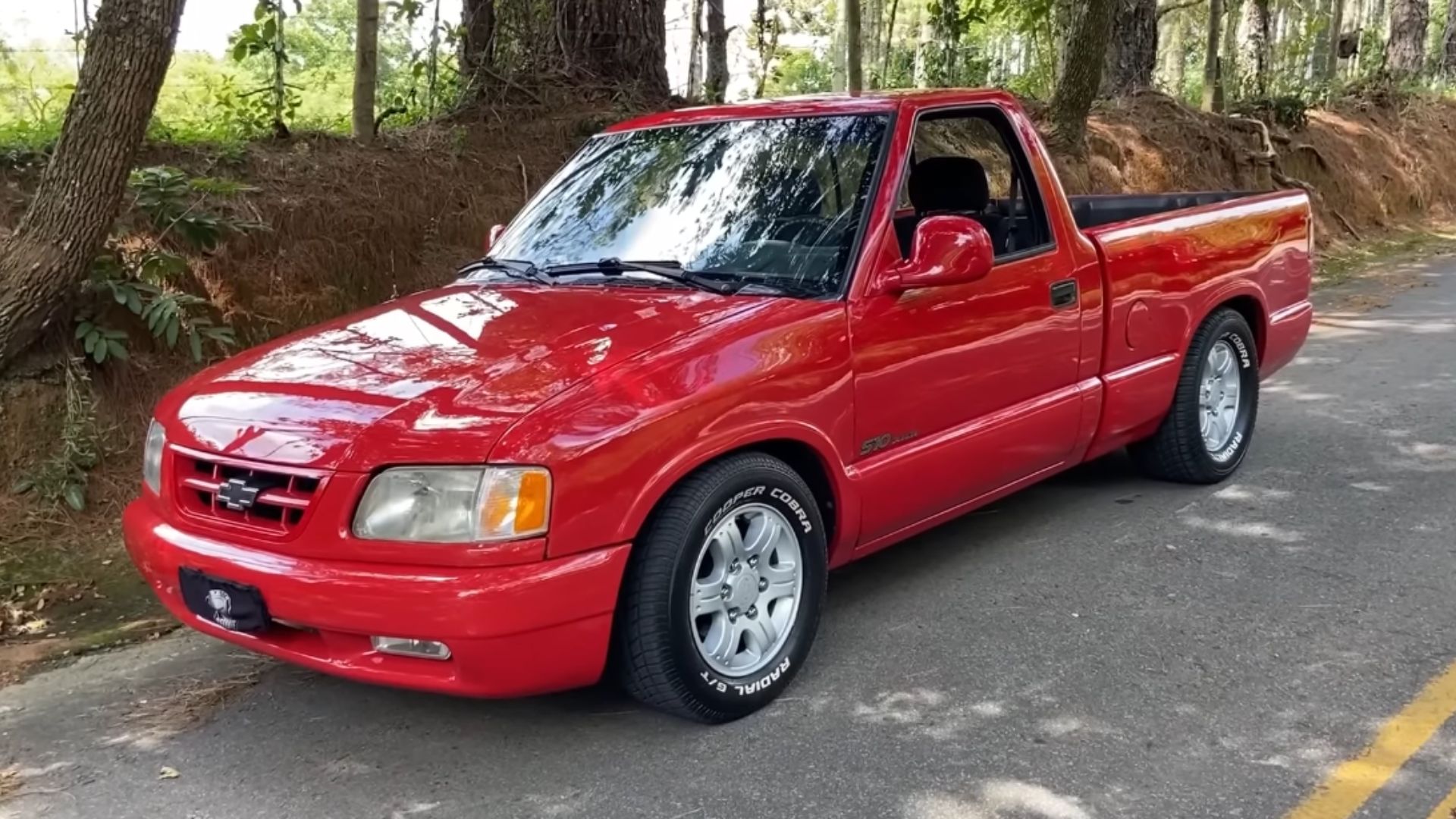


Launched in 1995, the S10 changed the Brazilian market by creating an unprecedented category, uniting urban comfort, load capacity, and mechanical performance, becoming a landmark of the national automotive industry
The Chevrolet S10 turns 30 years old as one of the most emblematic vehicles in the Brazilian automotive industry. Officially launched in 1995, it made history by becoming the first medium pickup truck manufactured in Brazil, inaugurating a segment that previously did not exist in the country. Since then, the S10 has not only survived fierce competition but has also remained relevant, modern, and competitive over three decades.
The information was originally disclosed by Quatro Rodas magazine, which closely followed each phase of the S10’s journey since its launch. According to records from the publication, the 1990s marked a period of profound renewal for Chevrolet in Brazil, with portfolio expansions and strategic bets that changed the market. It was in this context that the S10 was born, as a direct response to medium pickups arriving in the country through independent importers.
Interestingly, while in Brazil the S10 emerged as an intermediate model, in the United States it was considered a compact pickup. This difference is explained by the contrast between the markets: here, consumers were used to extremes, like the large Ford F-1000 and Chevrolet D20, or the small Volkswagen Saveiro, Ford Pampa, and Fiat Fiorino Pick-Up. Thus, the S10 arose precisely to fill this vacant space, offering a balance between size, comfort, and robustness.
-
1983 Chevrolet Runs Over 100,000 km Without Gasoline, Powered by Wood Chips, Reaches 125 km/h in Airport Test

-
Workshop Converts Giant Tractor Tire Tricycle into a Three-Wheel Drive Hybrid with 36,000-Watt Electric Motor Capable of Climbing Hills

-
Sales of Brazil’s Cheapest Electric Car Halted Before First Deliveries: E-Motors Suspends Emova Easy Due to Import Tax Increase and Rising Freight Costs

-
Nissan Discontinues Qashqai SUV Amid Cost-Cutting, Chinese Competition, and Product Line Review



The Birth of the Chevrolet S10 and the Revolution of Medium Pickups in Brazil


The national Chevrolet S10 was based on a redesigned North American generation from 1994, twelve years after the original model debuted. However, the Brazilian version received its own identity, with a unique, more sloped front, trapezoidal grille, and without the traditional chrome bars. Initially, the model was launched only with single cab, capable of carrying up to 750 kg of load, according to data from that time.
Under the hood, the S10 featured a 2.2-liter gasoline four-cylinder engine, derived from the Chevrolet Omega, delivering 106 hp at 4,800 rpm and 19.2 mkgf of torque at 3,400 rpm. An important milestone was the fact that the S10 became the first national pickup equipped with electronic fuel injection, still of the single-point type, something quite advanced for utility standards at the time.
In March 1995, Quatro Rodas reported that the model favored torque at low revs and stood out for its power steering, efficient brakes, and comfortable suspension, especially in urban use. A few months later, the lineup was expanded with the arrival of the 2.5 turbodiesel version with 95 hp and the Chevrolet Blazer, which would become one of the precursors of medium SUVs in Brazil.
The success was immediate. Until then, those looking for a pickup had to choose between large and uncomfortable vehicles or compact models with little presence and limited interior space. The S10 managed to unite the best of both worlds, offering respectable size, everyday comfort, and real work capacity.
Mechanical Evolution, New Cabins, and the Advancement of Competition

With the success of the S10, the competition quickly reacted. In 1996, Ford launched the Ranger, initially as an imported model, starting a rivalry that extends to the present day. In the same year, Chevrolet introduced the extended cab, which offered 37.2 cm additional interior space, enhancing passenger comfort.
Another major highlight was the introduction of the Vortec V6 4.3 engine, delivering 180 hp and 34.7 mkgf of torque. In tests conducted in October 1996, the model surprised with its low noise level, achieving the second best result in the magazine’s ranking, an unusual performance for a pickup of that size.
Despite this, in direct comparisons, the S10 2.2 faced difficulties against the imported Ranger, which had about 60 hp more. In December 1996, Quatro Rodas highlighted that the S10 surpassed its rival mainly on dirt roads, where its robustness and suspension setup made a difference.
In July 1997, Chevrolet introduced the double cab, consolidating the S10 as the most spacious pickup in the country at that time. Although it was possible to accommodate up to six occupants, comfort was considered limited for the front passengers, especially with three people in the front seat. Still, the model stood out for its versatility.
An example of this durability is the 1997 S10 Deluxe, owned by the Goiás businessman Anderson Xavier Gomes. Inherited from his father, the pickup has already surpassed 130,000 km and continues to be praised for its comfort, size, and safety. According to him, although the lack of multipoint injection is felt, the mechanical differential allows for transporting heavier loads without difficulties.
Updates, New Generations, and the Continued Presence of the S10 to This Day

Even with the advancement of competition and the arrival of new models in the market, the Chevrolet S10 has maintained its relevance. In 1998, the pickup began to offer a 4×4 version, and two years later, it received a new 2.8 turbodiesel engine with 132 hp, reinforcing its vocation for heavy-duty work.
The redesign of 2002 divided opinions, featuring a more angular front, larger grille, and almost flat fenders, contrasting with the smooth lines of the body. Still, the S10 continued to lead sales for several years. In 2007, the 2.4 flex engine with 147 hp was introduced, expanding the mechanical options.
In the 2009 lineup, the model received a more aggressive look, with a large fake air intake on the hood. In 2012, a new generation was finally launched, which underwent a facelift in early 2016 and another visual update in 2024, keeping the pickup aligned with current market demands.
The second generation of the Chevrolet S10 remains on sale in Brazil to this day, consolidating a rare trajectory in the national automotive market. Few vehicles manage to span three decades with such relevance, adapting to technological, regulatory, and consumer behavior changes.
Technical Specifications – Chevrolet S10 De Luxe 2.2 (1997)
Longitudinal front engine, 4 inline cylinders, 2,198 cm³, single-point electronic fuel injection, gasoline;
Diameter x stroke: 86 x 94.6 mm;
Compression ratio: 9.2:1;
Power: 106 hp at 4,800 rpm;
Torque: 19.2 mkgf at 3,400 rpm;
Manual transmission with 5 gears, rear-wheel drive;
Dimensions: 485 cm long, 170 cm wide, 170 cm high, 276 cm wheelbase;
Weight: 1,560 kg;
Independent front suspension with articulated arms; rear with rigid axle and leaf springs;
Front ventilated disc brakes and rear drum with ABS;
Tires 225/75 R15.
Performance – Test (December 1996)
Acceleration from 0 to 100 km/h in 15.48 seconds;
Top speed of 157.4 km/h;
Braking from 80 km/h to 0 in 30 meters;
Fuel consumption of 7.93 km/l in the city and 9.6 km/l / 9.02 km/l on the highway, empty and loaded;
Price in November 1996: R$ 22,930;
Price adjusted by IGP-M/FGV: R$ 202,297.