






 Portuguese
  Spanish


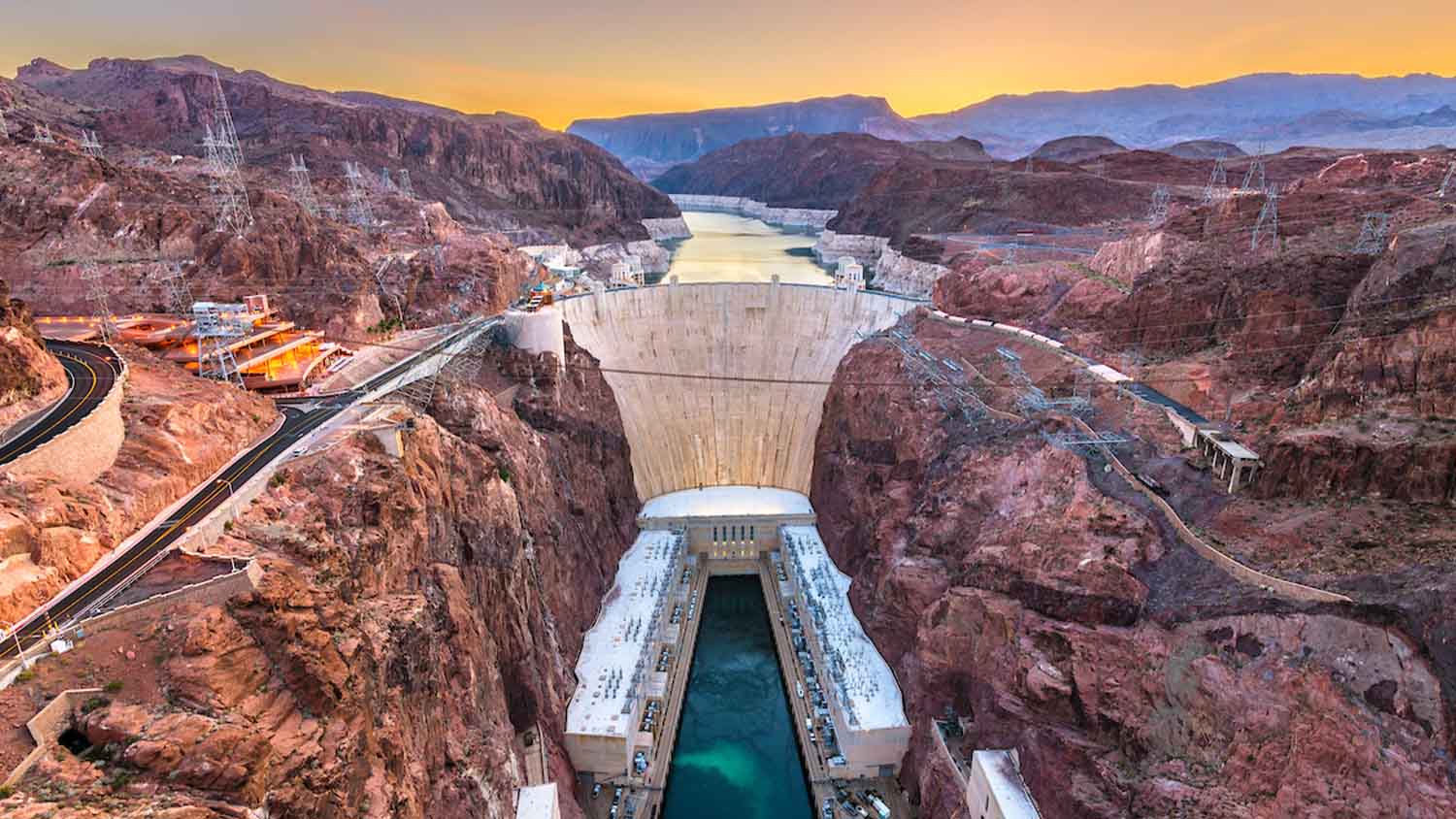


Built with 3.3 Million m³ of Concrete, the Hoover Dam Redefined Global Engineering and Created One of the Largest Water and Power Systems in the U.S.
Constructed between 1931 and 1936, during the Great Depression, the Hoover Dam became one of the greatest feats ever achieved by human engineering. Located on the Colorado River, at the border between Nevada and Arizona, it consumed 3.3 million cubic meters of concrete, enough to pave multiple times the 430 km that separate São Paulo and Rio de Janeiro, and forever changed the infrastructure, economy, and energy supply of the western United States.
Combining innovation, a massive workforce, and unprecedented logistics for the time, the project became one of the absolute landmarks of megaprojects in the 20th century.
3.3 Million m³ of Concrete: An Absolutely Colossal Volume
According to the U.S. Bureau of Reclamation, the agency responsible for the construction and operation of the dam, the Hoover Dam required:
-
Brazil’s Busiest Port to Triple Soybean Loading Speed with $1.1 Billion Investment in Paraná Terminal, Reaching 8,000 Tons per Hour

-
Cost of Installing Subflooring in 2026: The Importance of Proper Slope to Prevent Water Damage and Costly Repairs
-
New Offshore Borehole Mining Technique Extracts Lithium and Cobalt Without Damaging Ocean Floor
-
Vale Doubles Copper Drilling in Brazil’s Carajás, Plans to Drill 120 Kilometers of Rock by 2026


- 3.3 million m³ of concrete just for the main structure
- Another 850,000 m³ for the power plants and auxiliary structures
- Artificial cooling to prevent the concrete from taking 125 years to cure naturally
The total volume of concrete would be sufficient to:

- Build 32 stadiums the size of Maracanã,
- Erect a concrete wall 3 meters high for over 3,400 km,
- Construct a highway between SP and RJ repeatedly, with surplus.
The concreting was so colossal that it required two concrete plants on-site, something extremely rare for the time.
The Engineering Behind the Largest Arch Dam in the World
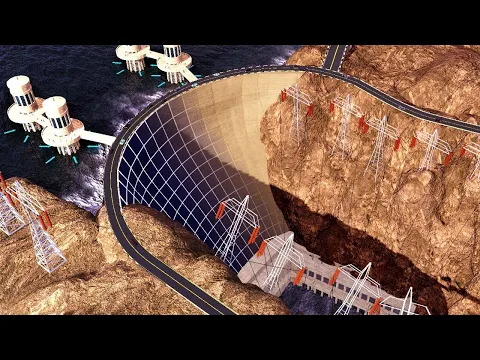
The Hoover Dam was the first megaproject to use internal cooling with metal tubes to speed up the curing of the concrete. Without this solution, the structure could take over a century to achieve stability.
The technical core of the dam includes:
- A curved wall 221 meters high,
- 200 meters thick at the base,
- Large turbines inside the power plant,
- Internal galleries that run throughout the structure for inspection and drainage.

The curve of the dam channels the force of the water against the canyon’s rock walls — a structural technique that became a global reference.
A Construction Site That Became a City
The construction mobilized over 21,000 workers, many of whom lived in camps created exclusively for the project. The heat reached 49 °C inside the canyon, necessitating shorter shifts and makeshift cooling systems.
Even facing:
- extreme temperatures,
- risk of landslides,
- logistics of materials almost impossible,
- and the need to build access routes before the actual project,
the teams managed to complete the project two years ahead of schedule, something unprecedented for a project of this scale.
The Gigantic Impact on the Economy and Development of the United States
The Hoover Dam is not just a megaproject it is a pillar that altered the economic geography of the American West. It:
- provides water for over 25 million people,
- feeds vast agricultural regions,
- generates hydroelectric power for three states,
- controls floods throughout the Colorado River basin,
- and made possible the growth of cities like Las Vegas, Phoenix, and Los Angeles.
Without the dam, the entire urban and agricultural dynamic of the southwestern U.S. would be completely different.
A Monument That Remains Unmatched
Nearly 90 years after its completion, the Hoover Dam continues to be:
- an icon of global engineering,
- a benchmark of logistics and construction,
- and a mandatory reference when discussing large-scale projects.
No contemporary project can replicate the symbolism of having consumed millions of cubic meters of concrete and altered the physical and economic landscape of an entire region.
The Hoover Dam is not just a project it is a testament to what human engineering is capable of when facing the impossible.


Parabéns Estados Unidos
Se fosse no Brasil seria o triplo do preço, para poder cobrir as propinas