






 Portuguese
  Spanish


Model Launched for Nearly R$ 300 Thousand Can Already Be Found in Online Ads for Just Under R$ 200 Thousand, Revealing Accelerated Depreciation in Less Than Two Years on the Market.
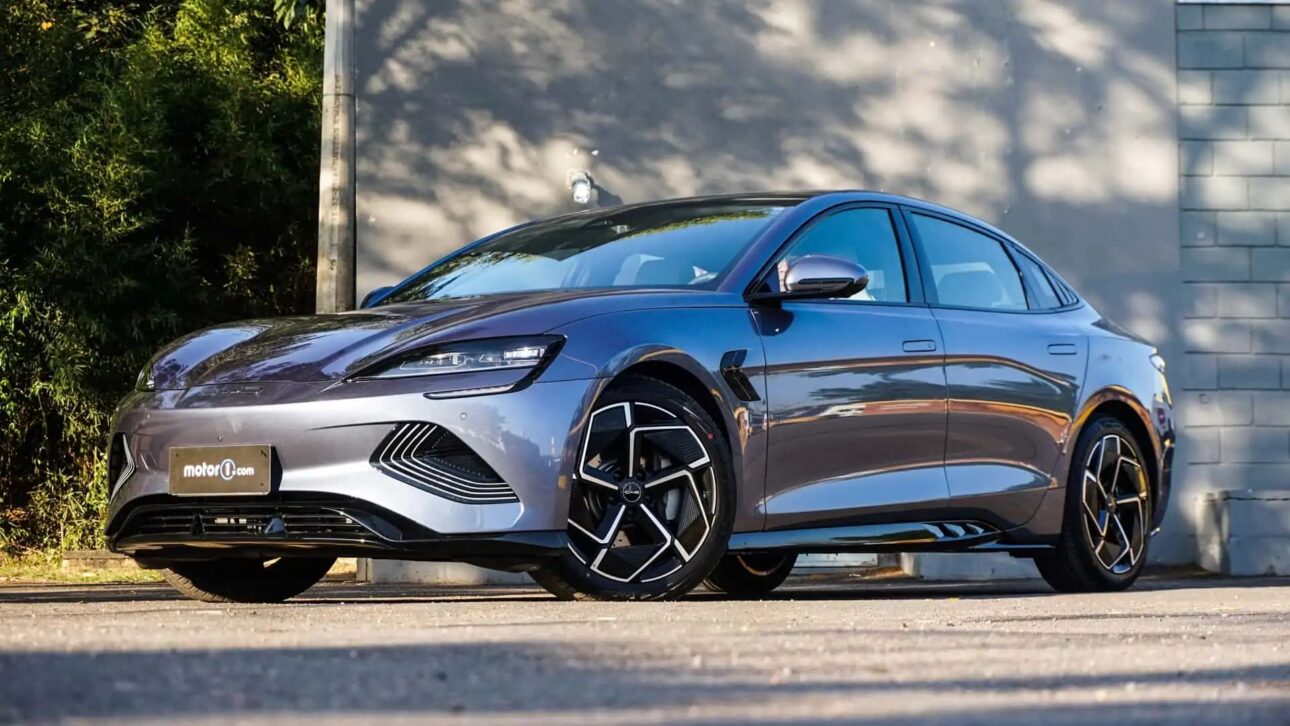
The 100% Electric Sedan from BYD, launched in Brazil with a starting price of R$ 296 thousand, is already being found in the used car market for R$ 196 thousand in online ads, a decline of nearly 34% compared to its launch price.
In the Fipe Table for September 2025, the model shows R$ 219,555 for the 2024 year, indicating a depreciation of about 26% from the launch price.
The combination of lower prices and ongoing warranty places the car among the opportunities for those looking for a used electric vehicle with high performance and extensive technological features.
-
2027 Toyota Corolla Cross Unveiled: New Design, Enhanced Fuel Efficiency, Reduced Maintenance Costs, Advanced Technology, Connected Services, and Up to 10-Year Warranty

-
Fiat Cronos Precision 2018: Affordable Sedan with Spacious Trunk and Reliable Maintenance
-
Volkswagen to Cut Production by 1 Million Cars by 2030, Reducing Jobs and Platforms, Focusing on More Profitable Models

-
Toyota Launches First 100% Electric Car in Brazil: bZ4X with 343 HP, All-Wheel Drive, 361 km Range, Priced at $419,990 BRL, Limited to 99 Units



Price of the BYD Seal in the Used Market
In the latest Fipe reference for the 2024 model year, the BYD Seal appears for R$ 219,555.
On classifieds platforms, however, ads are already appearing for R$ 196,000, some for low-mileage units.
The gap between Fipe and sellers’ asking prices indicates that market correction has gone beyond the average of the initial tables, a common phenomenon in recent releases that go through the first resale cycle.
Performance of the Electric Sedan


Even with the price drop in the used market, the product continues to deliver impressive numbers.
In the top configuration, with two electric motors (one on each axle), the combined power reaches 530 hp and the torque is 68.3 kgfm, with acceleration from 0 to 100 km/h in 3.8 seconds.
The Blade battery with 82.5 kWh forms the basis of the setup, and according to Brazilian standards PBEV/Inmetro, the declared range is up to 372 km per charge.
For urban use and regular road trips, this range tends to meet most daily commutes, especially when the owner has residential or workplace charging.
Dimensions and Interior Space
In terms of dimensions, the BYD Seal measures 4.80 m in length, 1.87 m in width, and 1.46 m in height, with a wheelbase of 2.92 m.
The trunk has a capacity of 400 liters, a volume compatible with the proposal of a large family sedan.
Inside, the design prioritizes ergonomics and finish with a good perception of quality, along with typical solutions found in the latest electric vehicles, such as a raised console and numerous shortcuts on the central display.
Standard Equipment and Technology
The equipment package is one of the commercial hooks for the model.
Among the safety and assistance features are eight airbags, stability and traction control, autonomous emergency braking, collision warning, cross-traffic monitoring, lane keeping and change assist, adaptive cruise control, and 360-degree camera.
For comfort and entertainment, the Seal features a 15.6” rotatable multimedia screen with Apple CarPlay via cable, a 10.2” digital panel, two wireless chargers, Dynaudio audio system with 12 speakers, panoramic sunroof, driver’s seat with electric adjustments in eight positions, steering wheel with four adjustments, LED headlights and taillights, and 19” wheels.
These features keep the technological proposition prominent compared to mid-size sedans and similar-sized electric vehicles.
Warranty and Maintenance of the BYD Seal
For owners and buyers of recent used models, the warranty remains a significant differentiator.
According to the current policy in the country, the traction battery has 8 years of coverage, with no mileage limit.
The electric motor and the controller have a 8-year or 200 thousand km warranty.
The component classified as the high-voltage system is covered for 5 years or 500 thousand km.
Additionally, the maintenance plan calls for revisions every 20 thousand km or 12 months, intervals that are more spaced than in combustion vehicles, which tends to reduce ownership costs over time.
Why Was the Depreciation So Rapid
Part of the explanation lies in the dynamics of the electric segment, which is still seeking a price equilibrium point in Brazil.
The constant arrival of new models, aggressive commercial campaigns, and the rapid evolution of technology pressure the values of used cars.
Additionally, the audience that buys electric vehicles tends to prioritize active warranties and software updates, which accelerates stock turnover in specialized stores.
These combined factors help explain why low-mileage units already appear well below the table and initial price.
What to Evaluate Before Buying a Used Seal
Although depreciation creates opportunities, responsible purchasing requires attention to specific items of an electric vehicle.
It is advisable to check the service history within the network, verify any software updates, and check the charging procedures adopted by the previous owner.
It is also worth inspecting the integrity of high-voltage components and requesting a report that certifies the battery’s condition, a practice that is becoming increasingly common in the EV retail sector.
With the warranty still in effect for the main components, any necessary adjustments tend to be covered by the warranty, as long as maintenance requirements have been met.
Cost-Benefit for Those Looking for an Electric Vehicle
Those looking for a sedan electric with sports performance find in the used BYD Seal a cost-benefit ratio that is hard to replicate in the same price range.
Performance remains high, the technology package is current, and the warranties for the battery and traction mechanisms remain valid for a substantial period.
For users who drive a lot, the official range meets daily needs with planned charging, and the more spaced revisions favor the wallet in the medium term.
With the difference between R$ 296 thousand at launch and R$ 196 thousand in ads, in addition to the R$ 219,555 from Fipe, the question remains direct: given this new price level, would you put a used electric like the BYD Seal in your garage?





Está totalmente dentro do percentual dos carros dessas categorias.
O melhor que já andei até hoje! Todos os carros desvalorizam! Reportagem tendenciosa
Só assim pobre igual eu consegui carro bom que caia mais pra ter logo um