






 Portuguese
  Spanish
  5 min of reading
  0 comments


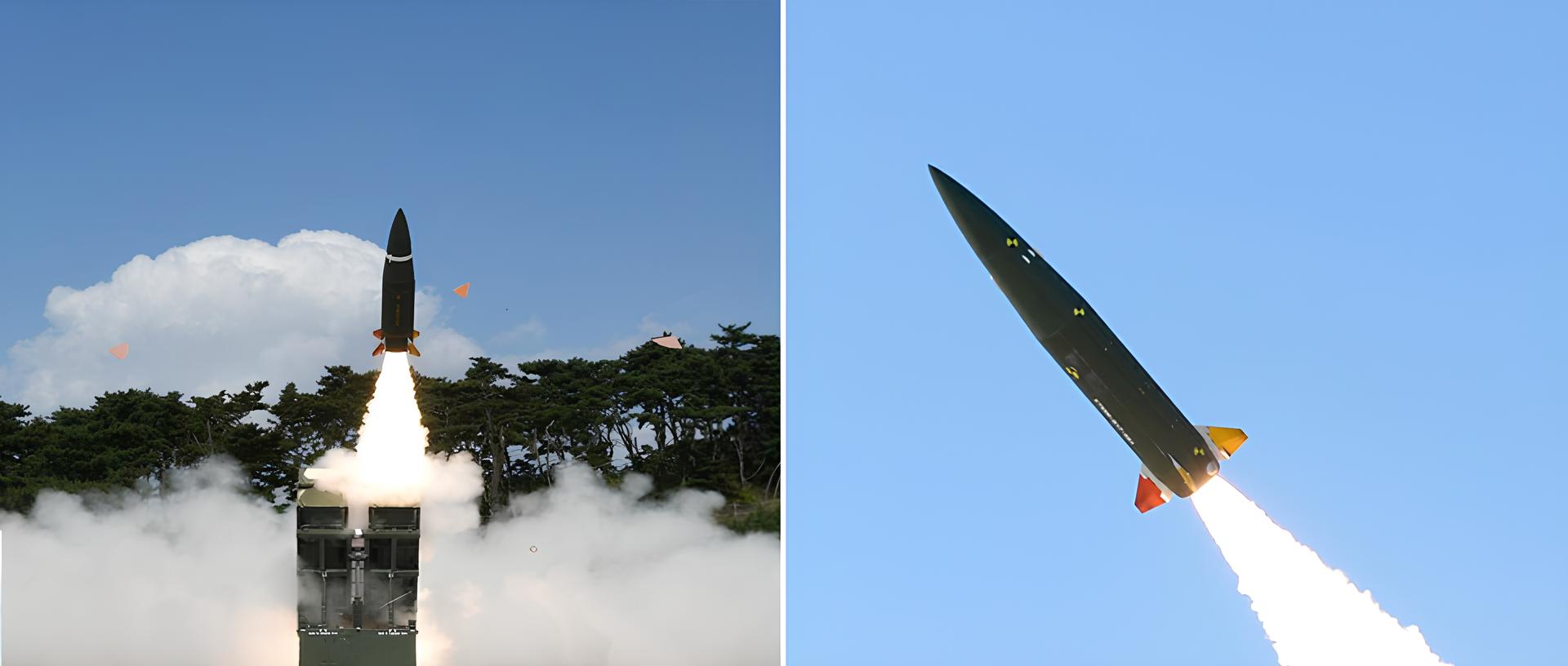
South Korean Missile of 300 Km and Penetrating Warheads Targets Underground Bunkers, Alters Strategic Balance with North Korea and Is Already Operational.
The Korean Peninsula is one of the most tense military scenarios in the world and also one of the least understood by outside observers. Unlike conventional conflicts, the strategy in the region revolves not only around tanks, ships, or fighter jets, but mainly about the ability to destroy or protect targets that most civilians would never see: tunnels, depots, command centers, factories, and silos hidden within mountains and underground. It is in this environment that the KTSSM-II emerges, the South Korean tactical missile designed to penetrate concrete, traverse layers of soil, and explode only after invading the structure, a type of weapon classified as “bunker buster”, traditionally used by major powers like the United States.
The central objective is not only to attack surface targets but to neutralize the most strategic element of North Korean defense: deeply buried and protected infrastructures.
A Weapon Thought Out for a Specific Type of War
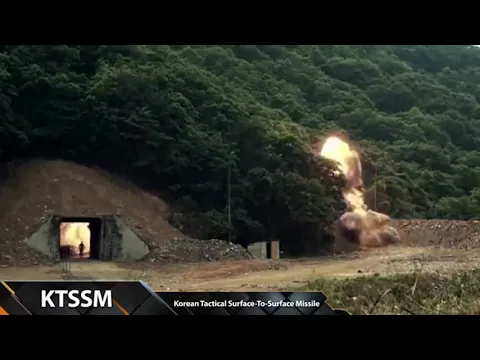

While other countries invest in anti-ship missiles, hypersonics, or ballistic vectors, South Korea develops systems designed almost specifically for its northern neighbor. This is not rhetoric; it is engineering applied to context. North Korea has thousands of underground structures distributed throughout its territory, a network that includes:
-
The military spaceplane that almost took the Cold War into orbit: Boeing X-20 Dyna-Soar was designed to re-enter above Mach 20, fly for up to 40 hours, land like a plane, and transform Titan rockets into a gateway to a new era of orbital warfare.

-
FAB bets on national drones and increases investments to strengthen the Brazilian aerospace industry

-
Six times, a luminous crescent the size of the Moon startled the Soviet sky at dusk: it seemed like a wave of UFOs, but it was a secret orbital weapon created to attack the United States via the South Pole and evade Cold War radars.

-
The United States government approved a potential sale of 100 portable Stinger anti-aircraft missiles to the Brazilian Army, in a package estimated at around 330 million dollars that still depends on negotiations between the two countries.



• Command and communication centers
• Ammunition and fuel depots
• Missile factories
• Heavy artillery shelters
• Tunnels interconnecting tactical positions
These systems are not peripheral; they are the heart of the regime’s strategy. Since the Korean War, Pyongyang operates under the principle that the underground is the last level of military survival. Not by coincidence, several Western military reports indicate that over 60 percent of the country’s infrastructure is buried or excavated in mountains.
The KTSSM-II is born to neutralize exactly this.
How a Penetrating Missile Works
The concept of penetration is simple to explain but difficult to execute. It is not enough to launch a missile and expect it to penetrate concrete. It is necessary to combine:
• High terminal velocity (to generate kinetic energy)
• Delayed warhead (that explodes after penetration)
• Impact-projected geometry
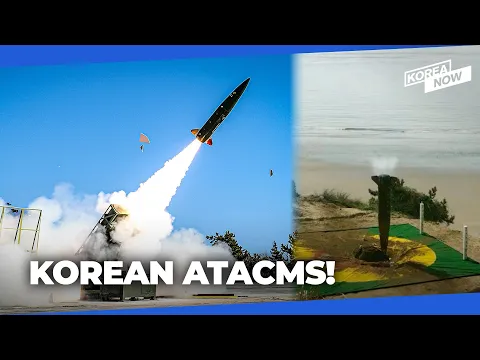
In the case of the KTSSM-II, military reports indicate that the missile uses penetrating warheads capable of breaking through layers of reinforced concrete and compacted soil before detonation. This type of system is comparable to Western “Deep Strike” and is similar in operation to American tactical missiles ATACMS when using similar warheads.
The design of the KTSSM-II also includes guided navigation, allowing the missile to hit a specific tunnel entrance, for example, or a ventilation opening, something that has historically been more efficient than simply hitting the top of a mountain.
300 Km Range and a New Tactical Map
A range of 300 km is not a random number. It allows South Korea to target practically any strategic target in the north without the air force needing to cross borders, reducing risks of immediate retaliation.
In practice, this means that the missile can be launched from protected regions in the south and still hit the following strategic military centers:
• Wonsan
• Pyongyang
• Hyesan
• Hamhung
This distance is sufficient to redefine the North Korean strategic calculation, as it forces the regime to reconsider whether its underground shelters are truly “unreachable”.
Why This Matters for Regional Stability
The Korean Peninsula is a curious case in which offense can function as a form of defense. The logic is as follows: if a country can neutralize bunkers and underground command centers, it reduces the risk of a prolonged and unpredictable war.
This is the principle behind the South Korean program: denying the enemy the capability to resist underground.
This also creates a relevant secondary effect: dissuasion, meaning to discourage hostile actions by raising the potential cost of aggression. Pyongyang knows that losing its underground centers means losing its capacity to survive an attack, and this type of perception weighs on political decisions.
National Technology and Strategic Independence
Another little-known point is that the KTSSM-II is part of a larger movement within South Korea: the self-sufficiency of precision military systems. For decades, the country was dependent on Western armaments, primarily from the United States. Today, that dependence is decreasing.
In addition to the KTSSM-II, South Korea is investing in:
• Locally developed fighters (KF-21)
• Submarines with ballistic missiles (KSS-III)
• National air defense systems
• Independent air-to-ground and air-to-sea missiles

This process places the country on par with technologically advanced states from a military perspective.
Regional Reaction and Strategic Silence
The development of the KTSSM-II has not attracted as much global attention as it should. In part, because it is not a hypersonic missile, and the media focuses its headlines on this type of system. In part, because the South Korean government itself maintains discretion about the exact specifications of the weaponry.
However, defense experts and military analysis organizations, such as the IISS (International Institute for Strategic Studies) and the CSIS (Center for Strategic and International Studies), monitor the advancement of the family of South Korean missiles as one of the most sophisticated ongoing programs in this part of the world.
Meanwhile, China, Japan, and the United States are closely watching. This is not alarmism. It is scenario monitoring: neighboring countries analyze how South Korea’s advancement might alter alliances, industrial competitions, and even export contracts.
From Theory to the Field: The Missile Is Already Operational
The most relevant point is that the KTSSM-II is not a prototype nor a canceled project. It is in the phase of real adoption and integration, being considered one of the future main pillars of South Korea’s attack capability.
This changes the status of the system. It ceases to be merely a technological curiosity and becomes a real and integrated vector, with practical consequences.
On the surface, the KTSSM-II is just another tactical missile with a range of 300 km. But it is enough to observe the context to understand its real weight. It was created to destroy what the adversary considers indestructible. It was designed to strike where the enemy considers safe. And it was developed to operate silently, without aircraft crossing borders and without air markings exposing strategic routes.
On a peninsula where the war has never ended, this type of technology does not only change the battlefield. It alters diplomatic calculations, redraws alliances, and forces North Korea to admit that the era of “protection guaranteed by the underground” may be coming to an end.







-

-

-

-

9 people reacted to this.