Portuguese
  Spanish


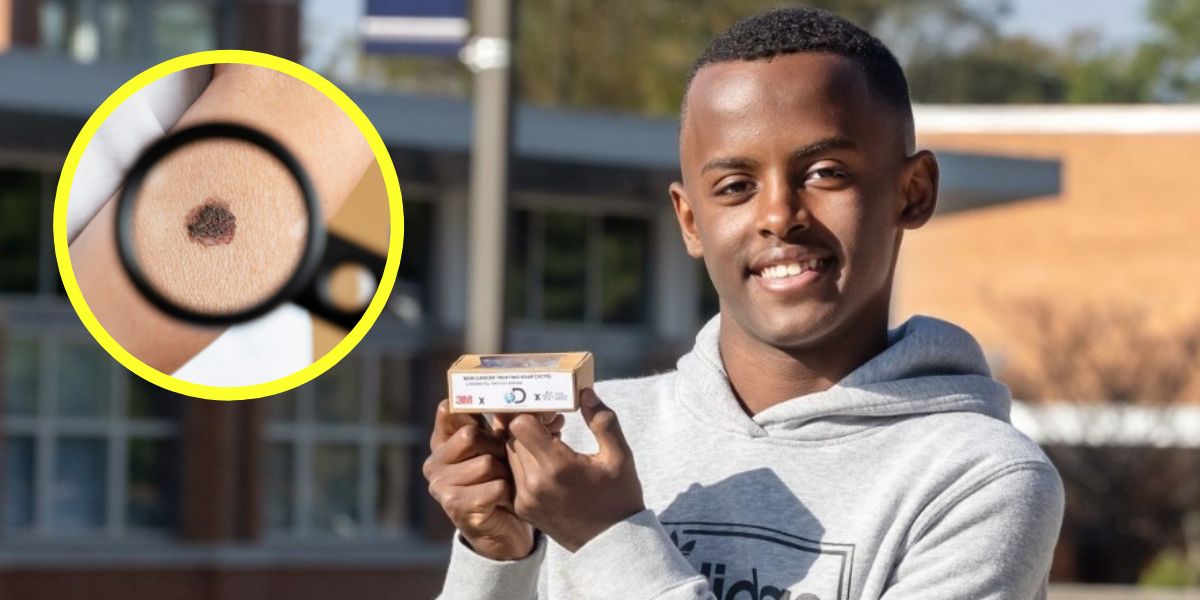

At 14, Herman Bekele Created a Soap That Promises to Treat Skin Cancer. The Invention Won International Awards and Could Revolutionize Accessible Medicine.
In October 2024, young Herman Bekele, a high school student in Virginia (USA), won the Discovery Education 3M Young Scientist Challenge, one of the most prestigious student science competitions on the planet. This achievement earned him international recognition and the title of “Kid of the Year 2024” by TIME, which highlighted his invention as one of the most promising of the year. The information source is confirmed by outlets such as UrbanGeekz and CNN, which have followed the project’s progress.
Bekele, son of Ethiopian immigrants, developed the prototype of an affordable soap with therapeutic properties aimed at the treatment and prevention of skin cancer, particularly in areas where access to conventional treatments is limited. The product combines organic compounds and nanoparticles capable of promoting cell regeneration and reducing the risk of mutations caused by sun damage.
The Idea Born from Empathy and Observation
In interviews with TIME and 3M, Herman explained that the inspiration for the project came from a personal memory: “I grew up seeing people exposed to the sun every day, working without protection. I always thought of something that could help those who have no access to doctors or hospitals.
-
Longest Solar Eclipse of the Century Will Turn Day to Night for Over 6 Minutes, Allowing Star Gazing; Won’t Recur for 156 Years

-
Brazilian Researcher Develops Protein Supplement from Tilapia Waste, Combining Innovation and Sustainability with Economic Potential

-
Women in São Paulo Unknowingly Tracked by Coin-Sized Tags Hidden in Cars and Belongings, Raising Stalking Concerns
-
Near a $750 million AI data center in Brazil, a resident’s well runs dry, leaving her unable to afford the $25,000 needed for repairs.


” This concern led him to study principles of cell biology, medicinal chemistry, and nanotechnology, applying everything he learned in a simple yet potentially revolutionary experiment.
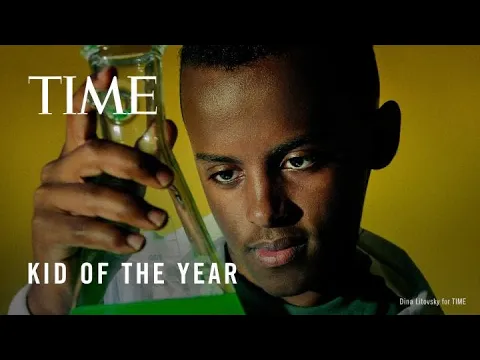

Herman’s soap works based on plant-derived compounds and zinc oxide nanoparticles, capable of acting as a protective barrier and therapeutic agent.
During initial tests, a significant reduction in inflammation and faster regeneration of epidermal cells was observed, simulating an effect similar to that of topical medications used in dermatological treatments.
From School Laboratory to Global Recognition
The project started in his public school science lab and quickly gained attention among teachers and researchers.
After months of adjusting the formula and methodology, Herman presented his creation at the 3M Young Scientist Challenge 2024, sponsored by the technology multinational 3M. Among thousands of participants from various countries, his invention was deemed the most promising due to its ability to combine simplicity, low cost, and humanitarian impact.
With the award, Bekele received a scholarship of US$ 25,000 and support from 3M scientists to refine the product on an industrial scale.
The goal is to make it an affordable solution, costing less than US$ 10 per unit, and distribute it in vulnerable communities in Africa and South Asia, where skin cancer is underdiagnosed and rarely treated.
The Impact and Future of Herman Bekele’s Discovery
Experts consulted by CNN Health and Forbes Science state that Herman Bekele’s creation, although still in the experimental phase, represents a notable advance in the search for low-cost therapies.
If clinical tests confirm the product’s efficacy, it could become the first soap with proven preventive and therapeutic action against skin cancer.

The scientific community has watched the young inventor’s progress with enthusiasm. According to researcher Dr. Michael Davis from the National Institute of Biomedical Imaging and Bioengineering, “Herman’s proposal is promising because it combines green chemistry with regenerative medicine. He thought of something that many labs with millions of dollars have not even explored.”
Besides academic recognition, the project has opened doors to invitations to scientific conferences and talks on youth innovation. Herman plans, with the support of 3M, to start a phase of supervised clinical trials in 2025 and is already working on a liquid version of the product with enhanced dermal absorption.
From a Student Dream to a Potential Medical Milestone
Herman Bekele’s journey is a living proof that curiosity, when guided by empathy and purpose, can lead to advancements capable of changing lives.
The young man who started with a simple school experiment is now about to transform the concept of affordable and sustainable treatment in public health.
His story is a reminder that the future of science can emerge from the purest ideas and the hands of those who have not yet reached university.