Portuguese
  Spanish




Largest Base in Antarctica Depends on a Single Annual Ship to Maintain Supplies, Organize Industrial Meals, and Sustain More Than a Thousand People Isolated in an Environment of Extreme Light and Permanent Cold.
At the largest scientific base in Antarctica, keeping more than a thousand people fed depends on a single maritime convoy per year, on supplies planned to withstand 12 months of isolation, and on a cafeteria that continues to operate even when the sun does not set.
At McMurdo Station, which houses the largest permanent community on the continent, food arrives mostly frozen or dehydrated and is treated as infrastructure as strategic as fuel, runway, or communication systems.
McMurdo Base and Its Logistical Role in Antarctica
Located at the southern tip of Ross Island, McMurdo is managed by the National Science Foundation as the main logistics hub for the United States Antarctic program.
-
Stingless Bee Honey from Brazil Can Cost Up to $120 a Liter, Surprises with Flavors of Wood, Citrus, and Even Cheese

-
Woman Claims to Have Spotted a Technical Pattern in Recent FIFA Tournaments, Predicts Possible World Cup Winner
-
Chevrolet Offers Chance to Win a 2026 Sonic RS for Free via WhatsApp
-
Earthquake vs. Tsunami: Which Causes More Destruction and Why One Can Be Even More Dangerous


Official documents describe the station as the largest base on the continent, with a capacity of around 1,200 to 1,400 people at the peak of the austral summer, between October and February, when researchers, technicians, and support teams concentrate in the area.
During this time, the site also serves as a transit point to the South Pole and other research fields, which increases the impact of any supply failure.
Annual Resupply Operation

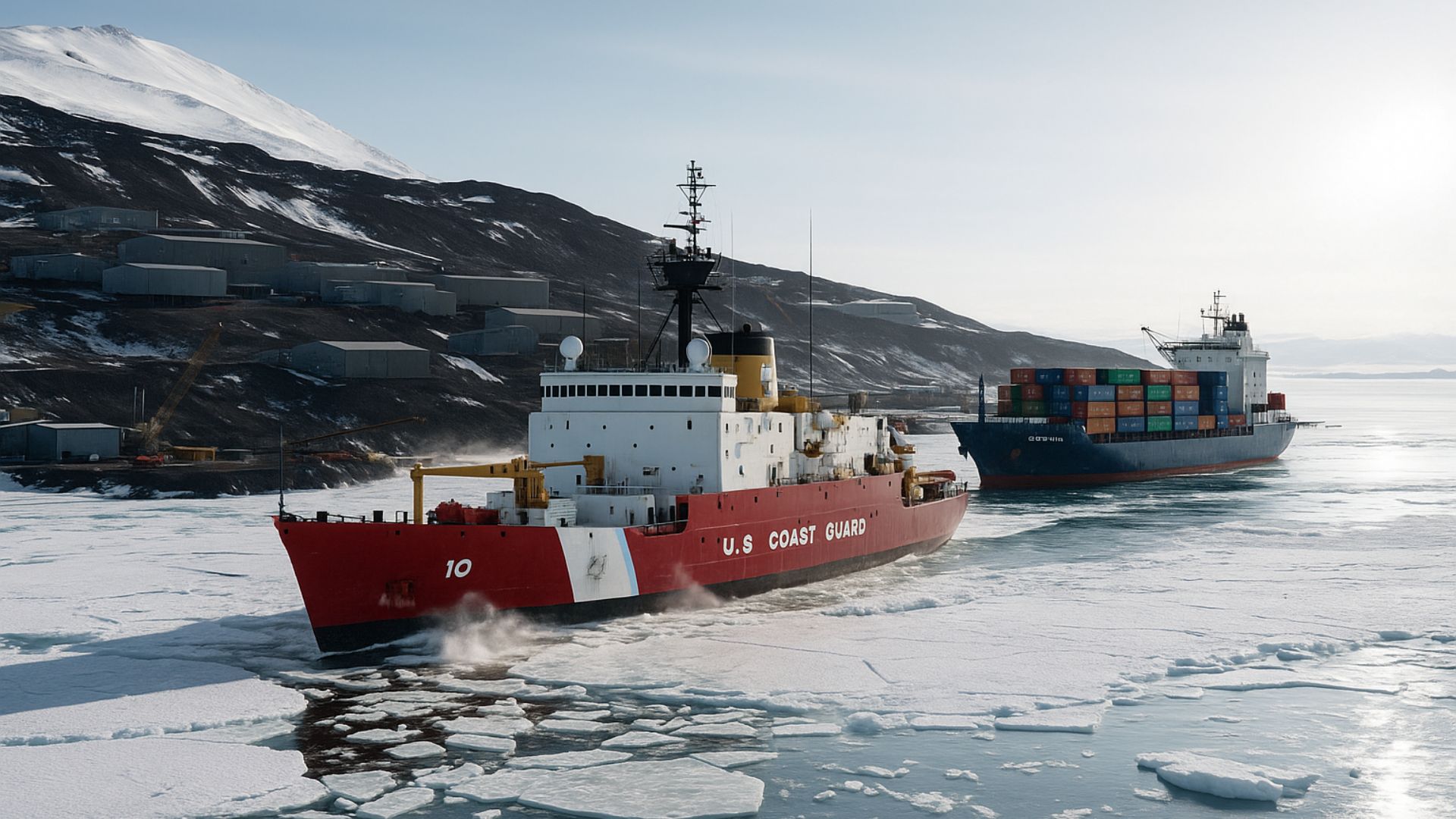
(Image: USCG ship cutting ice at the entrance to McMurdo base harbor)
The entire system revolves around an annual resupply by sea.
Once a season, typically between December and February, an icebreaker from the U.S. Coast Guard opens a channel to the cove that serves as the port for the base.
Then, a container ship chartered by the Military Sealift Command arrives as part of an integrated operation known as Operation Deep Freeze, responsible for bringing most of what will be consumed over the following year to Antarctica.
During different seasons, freighters such as the MV Ocean Giant have left U.S. ports carrying thousands of tons of supplies.
Official communications from the Navy and NSF describe this cargo as “a year of equipment and supplies” for McMurdo, including food, parts, vehicles, construction materials, and scientific equipment.
In one of the recent operations, the Ocean Giant unloaded about 6,000 tons of supplies, primarily frozen and dried food that will be consumed over up to 12 months.
Military reports indicate that this volume accounts for about 80% of what the station needs to maintain occupancy throughout the year, while another tanker ship, on a separate mission, brings fuels for heating, power generation, and aircraft.
If the convoy cannot complete the journey due to ice, hull, or maintenance issues, documents indicate that the base may be forced to reduce the number of people on-site, directly impacting the number of scientific projects in operation.
How Supplies Are Organized

(Image: aerial view of McMurdo base, with modular houses and ice around)
As soon as the containers leave the ship, the food changes status: it ceases to be in-transit cargo and becomes part of the strategic supply of the station.
Accounts from members of expeditions to Antarctica, combined with public presentations about McMurdo’s infrastructure, mention a large building used almost exclusively for storing a year’s worth of food, with refrigerated rooms and storage dominated by frozen products.
This pattern is also described in educational materials about the region, which indicate that large bases often receive, in a single batch, the entire volume of food planned for the period between two successive summers.
What Arrives at the Station and How It Is Consumed
The logic of these supplies follows a simple rule: the more resistant to time, the better.
Encyclopedias and guides about McMurdo report the annual arrival of large quantities of canned goods, grains, pasta, flour, powdered milk, and other long-lasting dry foods that form the core of the menu.
Perishable products, such as fruits, vegetables, and some types of fresh meat, arrive in smaller quantities, primarily transported by cargo planes or included in specific containers that cannot freeze.
A small greenhouse installed at the station provides vegetables on a limited scale and is described by researchers as more of a psychological benefit than a nutritional one.
Reports from scientists and staff reinforce that “fresh food is almost never available”.

(Image: MV Ocean Giant next to the ice pier of McMurdo, with stacked containers)
In daily life, the rule is to consume meats, pasta, vegetables, and fruits in the form of frozen or dehydrated products, prepared in large quantities by the kitchen staff.
When a batch of “freshies” arrives, the distribution turns into a small event, precisely because of its rarity.
This scheme also appears in Antarctic programs from other countries, with menus largely based on frozen or canned products and occasional support from fresh vegetables when the weather allows access by sea or air.
The Galley and the Feeding Routine
In the day-to-day operations of the station, all this planning culminates in the central cafeteria, the galley, located in building 155.
The same building houses dormitories, stores, a barber shop, and part of the basic services, appearing in official documents as the main meeting point for the community.
Almost everyone passes through there at least once a day.
The service is cafeteria-style, with lines and a variety of hot dishes and fixed options like soups, cereals, and coffee.
There is no charge for meals, but internal notices request that people serve only what they will actually consume as a way to prevent waste.
Accounts from former employees compare the atmosphere to a large university cafeteria, with several service lines and pizza available practically all the time.

(Image: containers and cranes in operation at McMurdo Station dock)
In the kitchen, the operation is treated as industrial production.
A cook describes a team responsible for four daily services: breakfast, lunch, dinner, and the “midnight lunch”.
Behind the scenes, the work extends to the so-called “pot room,” a dishwashing room without windows, with oversized utensils to serve hundreds of people.
Consulting firms in industrial kitchen projects estimate that the station needs to plan for about 1 million meals per year, across the different seasons.
This volume requires cyclical menus of 30 to 35 days, repeated to maintain predictability and compatibility with the available stock.
Job postings for sous chefs mention tasks such as coordinating the use of fresh vegetables, adjusting flavors, safely repurposing leftovers, and monitoring preparation and storage temperatures.
Extreme Light and Its Impact on the Cafeteria’s Operation
The light conditions also shape the cafeteria’s routine.

(Image: McMurdo Station viewed with Mount Erebus in the background and the ice surrounding)
The region enters a period of continuous light between the end of October and February, with the so-called midnight sun.
During this period, the galley operates under permanent brightness: the “midnight lunch” is served with clear skies for teams returning from the field or technical areas.
The scenario reverses during the polar night, from approximately April to August, when the sun does not appear, flights are restricted, the population decreases, and the station relies exclusively on the planning done in summer.
Food as Critical Infrastructure
In documents from the U.S. Antarctic program, food appears as critical infrastructure, alongside fuel, air logistics, and communication.
Reports indicate that ensuring McMurdo’s supply is one of the most sensitive missions of the icebreaker fleet and support ships, as the failure of a single operation can reduce research capacity throughout the region.
The National Science Foundation itself describes the station as a cargo distribution center for the South Pole and other bases, which means that part of the supplies also sustains teams in transit.