





 Portuguese
  English
  Spanish
  4 min of reading
  11 comments


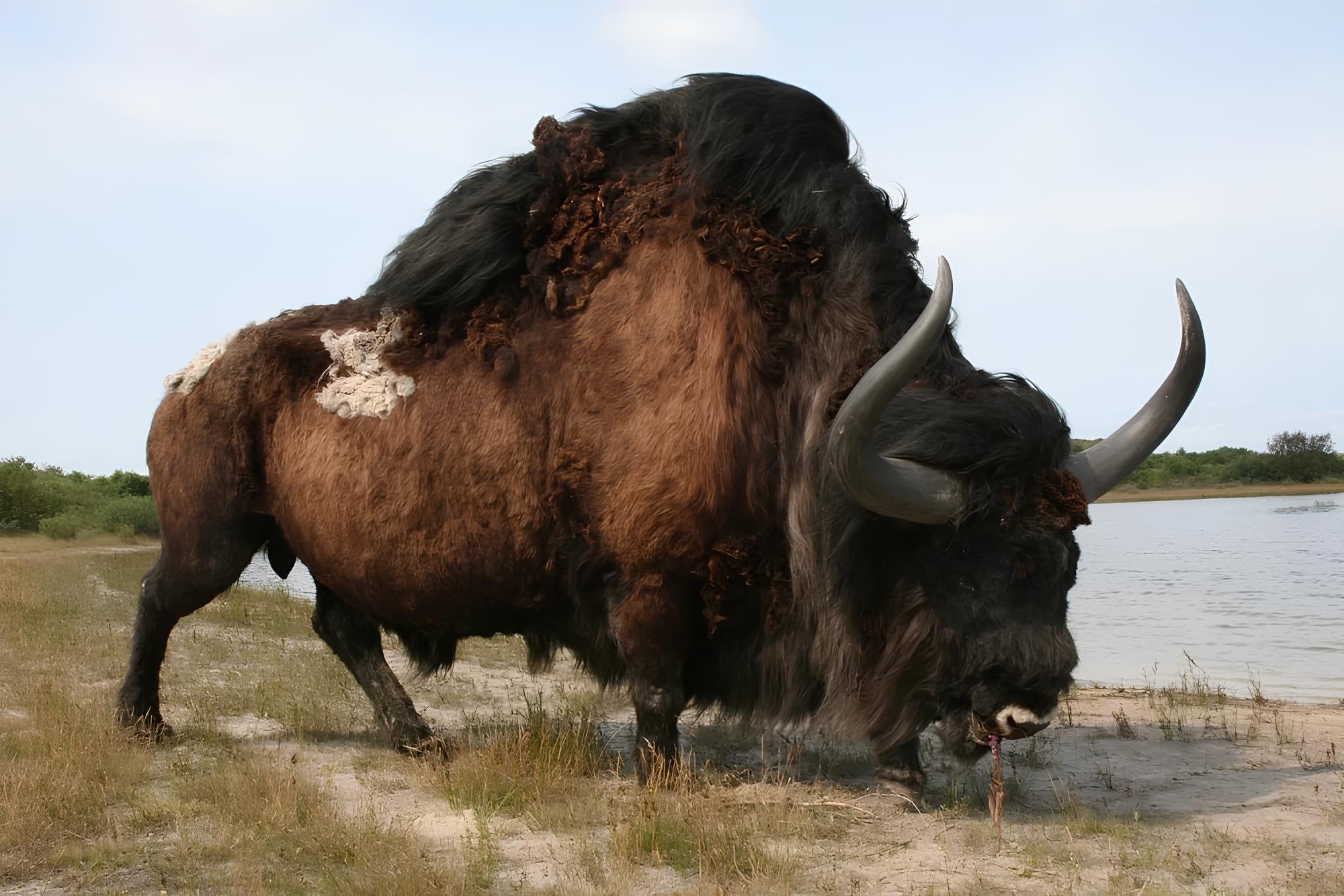


Bison Latifrons Was The Largest Bison That Ever Existed: Up To 2 Tons, Giant Horns, And A Decisive Ecological Role In The Pleistocene Megafauna.
When talking about bison, the most common image is that of the modern American bison crossing the plains of the United States. But this current species represents only a “scaled-down version” of a true prehistoric colossus. The Bison latifrons, extinct about 20,000 years ago, was the largest bison that ever walked the Earth, surpassing not only modern bison but also most known domestic cattle.
This animal lived during the Pleistocene, a period marked by the presence of gigantic megafauna, such as mammoths, giant ground sloths, and large felids. Within this extreme scenario, Bison latifrons occupied a dominant position among terrestrial herbivores.
Dimensions That Redefine The Concept Of “Giant Cattle”
The data obtained from well-preserved fossils indicate impressive numbers, even by prehistoric standards. Bison latifrons could reach between 1.7 and 2 meters at the shoulder, a body length close to 4.5 meters, and an estimated weight between 1,800 and 2,000 kilograms.
-
In the Xinjiang desert, China erects a giant chemical plant over 390 billion tons of coal, deploys 300 driverless trucks to work nonstop, and uses robotic arms that swap batteries in 6 minutes to reduce dependence on oil.

-
The spaceplane that promises to take off from a runway, reach orbit with up to five people, return in just 48 hours, and repeat 100 missions per vehicle: the Radian One aims for on-demand operation in 90 minutes and attempts to turn the “Holy Grail” of space aviation into commercial reality.

-
The Galaxy A27, Samsung’s new affordable mid-range device, is getting closer to hitting the market after receiving FCC certification in the United States, with a launch expected in the second half of 2026. According to leaks, its specifications include a Snapdragon chip and a 50 MP camera.

-
Larger than any rocket ever launched, the Sea Dragon was designed to emerge from the ocean like a burning skyscraper, standing 150 meters tall, 23 meters in diameter, and weighing over 15,000 tons: Aerojet’s monster would place 550 tons into low orbit and seemed too big even for NASA’s plans.





For comparison, many modern beef cattle rarely exceed 900 to 1,000 kg. Even giant breeds, bred through intensive genetic selection, fall far short of the body mass of this extinct bison.
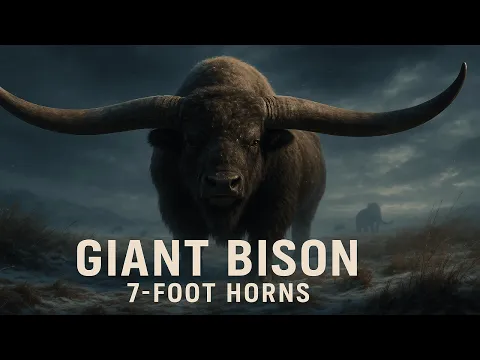

The most impressive detail, however, was not just the weight. The true “business card” of Bison latifrons was its colossal horns, which reached 2.1 meters from tip to tip, the largest span ever recorded in a bovine in history.
Giant Horns: Defensive Weapon And Symbol Of Power
The horns of Bison latifrons were not merely ornamental. They had a clear function of defense against large predators, such as American lions and giant wolves, and were also used in disputes between males during the breeding period.
Unlike the modern bison, whose horns are relatively short and curved, Bison latifrons had long horns that opened more laterally, creating a “zone of exclusion” difficult for any attacker to cross.
In practice, a predator needed to calculate its attack very well. A direct hit from these horns could cause fatal injuries, making healthy adults practically immune to solitary attacks.
Direct Comparison With The Current American Bison
The contrast between Bison latifrons and Bison bison, which still exists today, helps to understand the scale of size loss over time.
The modern American bison can reach 1.9 meters in height and weigh up to 900 or 1,000 kg in exceptional males. The Bison latifrons practically doubled that mass and also had horns more than twice as large.
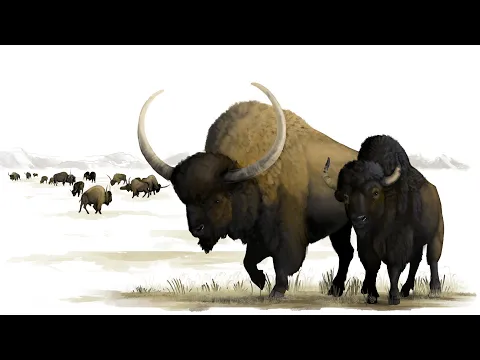
This reduction was not random. It is linked to climate changes, reduced availability of extensive pastures, and later, human pressure on large herbivores.
The Ecological Role Of The Largest Bison In History
More than just a large animal, Bison latifrons was an ecological engineer. Its size and behavior directly influenced the landscape. By moving in large groups, it kept areas open, controlled excessive growth of woody vegetation, and stimulated the emergence of young, more nutritious pastures.
This chain effect benefited dozens of other species, from small herbivores to large predators. The presence of Bison latifrons helped structure entire ecosystems, maintaining the balance between forest and open fields.
Its extinction caused profound changes in the environmental dynamics of the regions where it lived, altering vegetation patterns and forcing adaptations in various species.
Why Did Bison Latifrons Disappear?
The extinction of Bison latifrons occurred at the end of the Pleistocene, a period marked by rapid climate changes and human expansion in the Americas.
The combination of gradual warming, reduction of vast pastures, and human hunting created an unfavorable scenario for an animal that depended on large territories and a great food supply.
Smaller species, like the modern American bison, were able to adapt better to more fragmented environments and external pressures, surviving to this day.
What The Largest Bison Teaches About Natural Limits
Bison latifrons shows that nature once produced herbivores much larger than those we see today, without any human intervention or artificial selection. Its size was a direct result of millions of years of evolution in rich environments with few energy limits.

At the same time, its extinction reveals how ecological balances are fragile. When climate, habitat, and external pressure change simultaneously, even the largest and strongest cannot survive.
A Giant That Surpassed Modern Cattle
While current cattle are shaped for productivity, feed efficiency, and adaptation to controlled systems, Bison latifrons represented the extreme opposite: brute strength, resilience, and territorial dominance. It did not need fences, feed, or human management. Its body was the very tool for survival.
Even today, no domestic cattle bred for meat or show comes close to the combination of height, weight, and span of this prehistoric bison.
Bison latifrons was not just the largest bison that ever existed. It was a symbol of the peak of terrestrial megafauna, when the scale of life surpassed any modern standard. Comparing it to current cattle illustrates how much ecosystems have changed — and how the very notion of “large animals” has been diminished over time.
In the face of this extinct giant, the question remains: are we prepared to understand the real impact of the loss of species that shaped the planet solely by their presence?


Typical of most info and articles on google, misinformation and bs. Went extinct 20 years ago. Have you hired low IQ somalians as editors?
Bison Latifrons went extinct between 20k and 30k years ago!!
Not 20 years ago! 🤦♂️
You need a new editor. Or, you just need an editor. Let me know if I can help.