





 Portuguese
  English
  Spanish
  4 min of reading
  6 comments


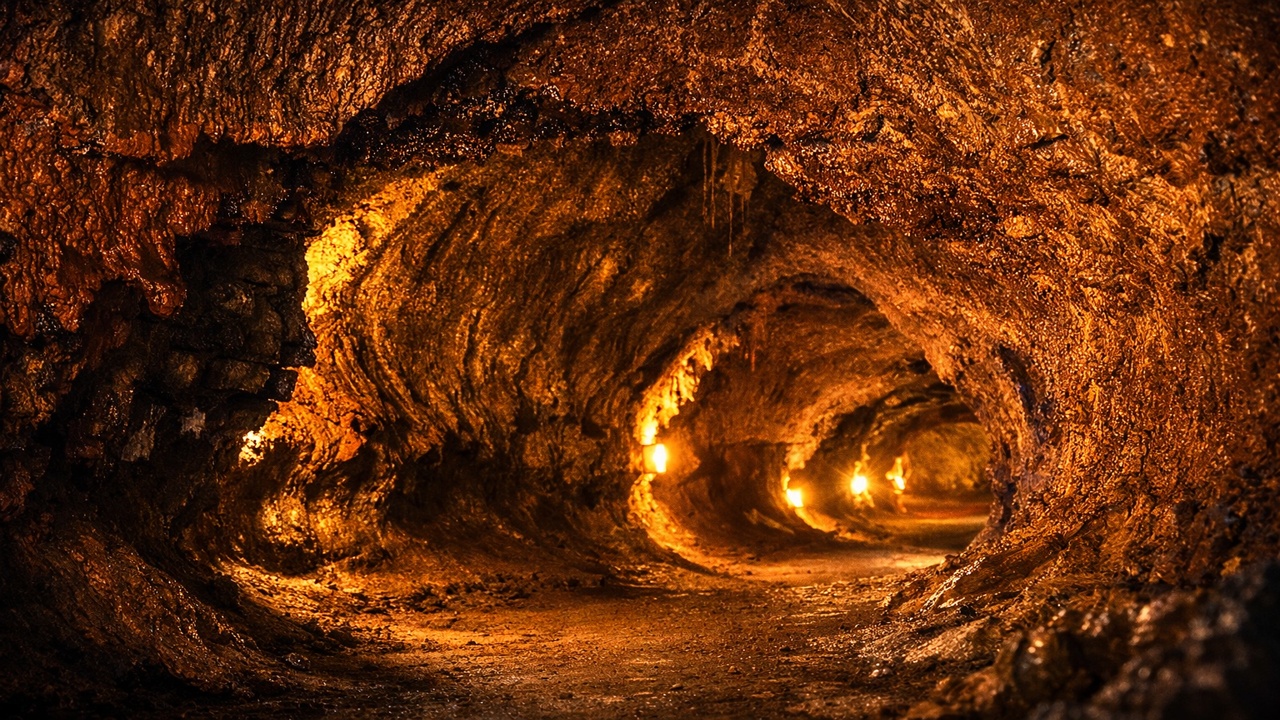


Lunar Lava Tubes With Up to 500 M Diameter, Kilometers in Length and Stable Temperature Emerge as the Largest Natural Shelters Ever Identified off Earth.
For decades, the Moon was seen as a dead, dry, and hostile celestial body, marked only by craters, dust, and extreme temperature variations. However, recent observations made by space missions have revealed something that completely changes this perception: immense underground lava tubes, with dimensions comparable to large works of human engineering, hidden just below the lunar surface. These natural structures not only impress with their size, but also with their surprisingly stable internal conditions, placing them at the center of discussions about future habitats beyond Earth.
Unlike the lunar surface, exposed to intense radiation, constant impacts from micrometeorites, and brutal thermal fluctuations, the interior of these tubes offers a protected, predictable environment that is, in many ways, more “habitable” than any other location ever identified outside our planet.
What Are Lunar Lava Tubes


The lava tubes formed billions of years ago when the Moon still exhibited intense volcanic activity. Flows of basaltic lava cascaded across the surface, solidifying first at the outer layers. The interior continued to flow until the magma completely drained, leaving behind empty tunnels, supported by solid rock walls and ceilings.
-
Amid the United States’ economic blockade, China delivers 15,000 tons of rice to Cuba as part of a 60,000-ton donation personally approved by Xi Jinping. The package includes 80 million dollars and solar panels for hospitals.

-
For around 200 reais, anyone can buy a kit and have a chip implanted between their fingers to replace cards, keys, badges, and even medical information in case of a hospital emergency.
-
A 600-meter hill in the interior of Santa Catarina hides a volcanic past of almost 600 million years. The Morro do Garrafão in Corupá may have been an ancient extinct volcano, and science now confirms what the residents have always suspected.
-
Family has lived for over 50 years without electricity and running water at home in the South of Minas, 10 minutes from the city, improvising light, bath, and water while facing a lack of basic resources and awaiting property regularization.



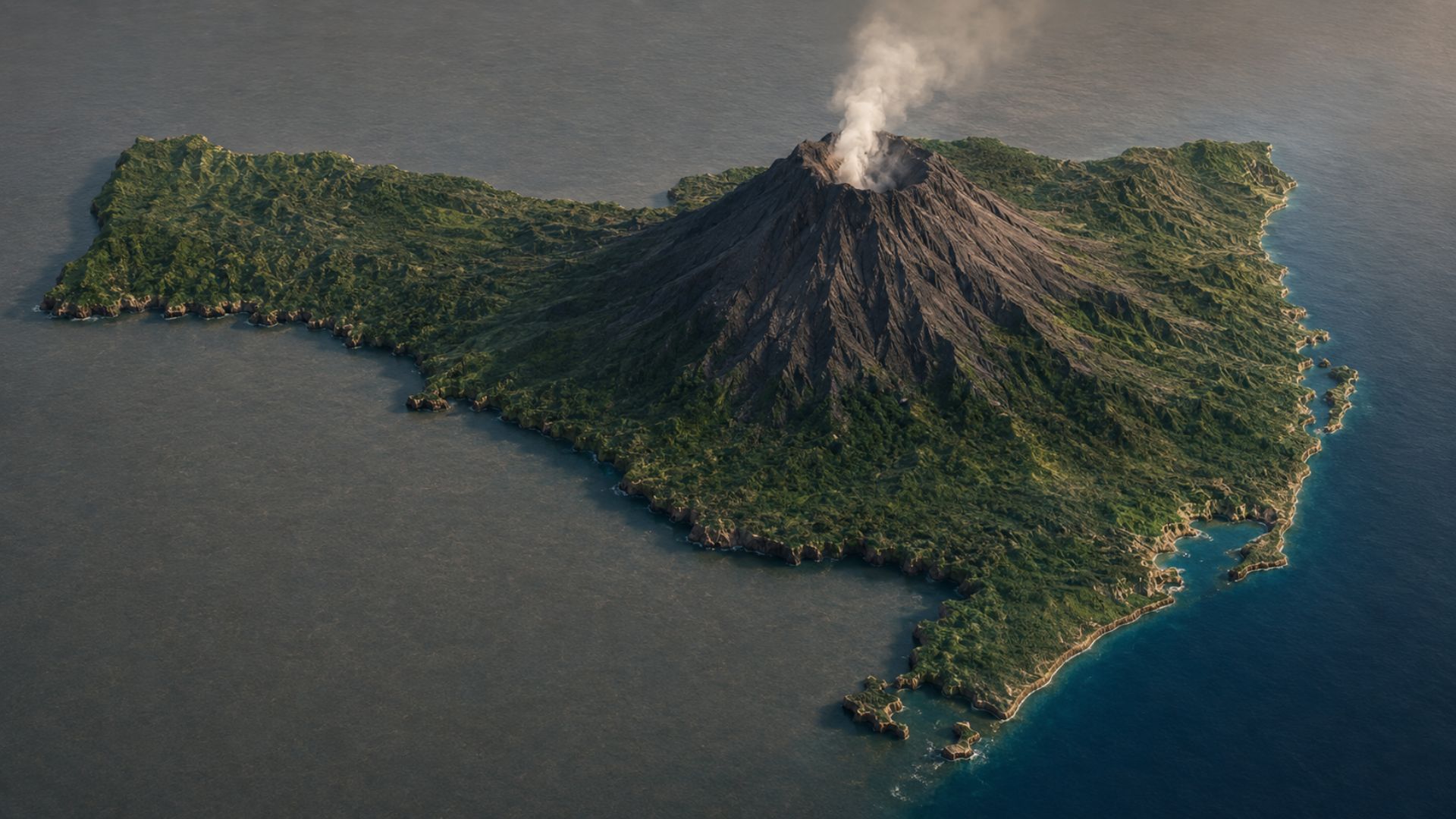

On Earth, similar structures exist in volcanic regions such as Hawaii and the Canary Islands. The difference is that, on the Moon, lower gravity and the absence of erosive processes have allowed the formation of much larger and more stable tubes than any natural cave on Earth.
Dimensions That Defy Imagination
Data obtained through radar and geological modeling indicate that some lunar lava tubes may reach up to 500 meters in diameter, wide enough to accommodate entire neighborhoods or structures equivalent to large sports arenas.
In terms of length, conservative estimates point to tens of kilometers in length, with the possibility of even larger systems that have not been fully mapped.
In certain cases, the entrances identified on the surface — known as lunar “pits” — reveal depths between 130 and 170 meters, indicating voluminous caves just below the crust. More recent models suggest that some tubes may reach hundreds of meters of internal height, something that cannot be maintained naturally on Earth without structural collapse.
A Natural Shield Against Radiation and Impacts
One of the greatest obstacles to human presence beyond Earth is cosmic and solar radiation. On the lunar surface, the lack of atmosphere and magnetic field exposes any structure to dangerous radiation levels over time.
The lava tubes naturally solve this problem. The rocky ceiling, with dozens of meters of thickness, acts as a effective shield, blocking:
- ionizing radiation
- energetic solar particles
- micrometeorites that constantly strike the surface
This protection makes the tubes much safer locations than any base built directly on the lunar surface.
Surprisingly Stable Temperature
Another noteworthy aspect is the thermal behavior. While the lunar surface varies from approximately 127 °C during the day to about −173 °C at night, the interior of the tubes exhibits impressive stability.
Indirect measurements indicate internal temperatures close to 17 °C, with minimal variation over time. This thermal balance drastically reduces the need for complex heating or cooling systems, making any human presence or technological operation much more viable.
Spaces Larger Than Any Space Station
Compared to current space stations, like the ISS, lunar lava tubes represent a significant leap in scale. While the International Space Station has limited internal volume and relies on constant maintenance, a single lunar tube could offer internal space equivalent to several underground cities, without the need for heavy excavation.
This completely changes the paradigm of space exploration. Instead of building habitats from scratch in a hostile environment, humanity could occupy ready-made natural structures, gradually adapting them to human needs.
Why These Tubes Attract the Interest of Space Agencies
Agencies like NASA, ESA, and JAXA already recognize lava tubes as strategic locations for future crewed missions. They offer, at the same time:
- natural protection
- thermal stability
- large internal volume
- lower energy cost for maintenance
Additionally, proximity to the surface facilitates access to resources such as regolith, possible ice deposits in shaded regions, and materials for construction.
Implications for Human Presence Beyond Earth
The existence of these tubes redefines the concept of space colonization. Instead of small exposed bases, the future may involve protected underground settlements, with modular infrastructure, controlled agriculture, and closed life support systems.
These environments would also be ideal for:
- long-term scientific laboratories
- observatories protected from interference
- logistical centers for deeper missions into the Solar System
The Moon would cease to be just a temporary destination and would start to function as a permanent support point.
A New Look at Seemingly Inhospitable Worlds

The most fascinating thing is that this discovery is not limited to the Moon. Similar structures may exist on Mars and other volcanic bodies in the Solar System, greatly expanding the number of potentially habitable locations beyond Earth.
What once seemed a barren desert is now seen as a world with hidden natural architecture, capable of protecting life, technology, and human presence for long periods.
A Space Ready, Awaiting Exploration
Lunar lava tubes show that space is not just a place to be conquered with brute force and extreme engineering. In some cases, nature has already quietly built the largest shelters off Earth, just waiting to be discovered and understood.
More than scientific curiosity, these caves represent a shift in mindset: perhaps the future of space exploration lies not on the exposed surface, but just below it.










e na Terra também tem muitos desses túneis , ???
Interessante. Mas, quando estes túneis foram descobertos? E quanto tempo levaram para elaborar a teoria de sua formação? Alguma coisa não está bem sincronizada aí…
Para mim, isso não é novidade. Há muitas moradas no Universo. Jesus, quando esteve aqui na Terra, há 2.000 atrás, falou para seus discípulos que haviam muitas moradas na casa(universo) do Pai. Então, isso não é novidade.