Portuguese
  Spanish


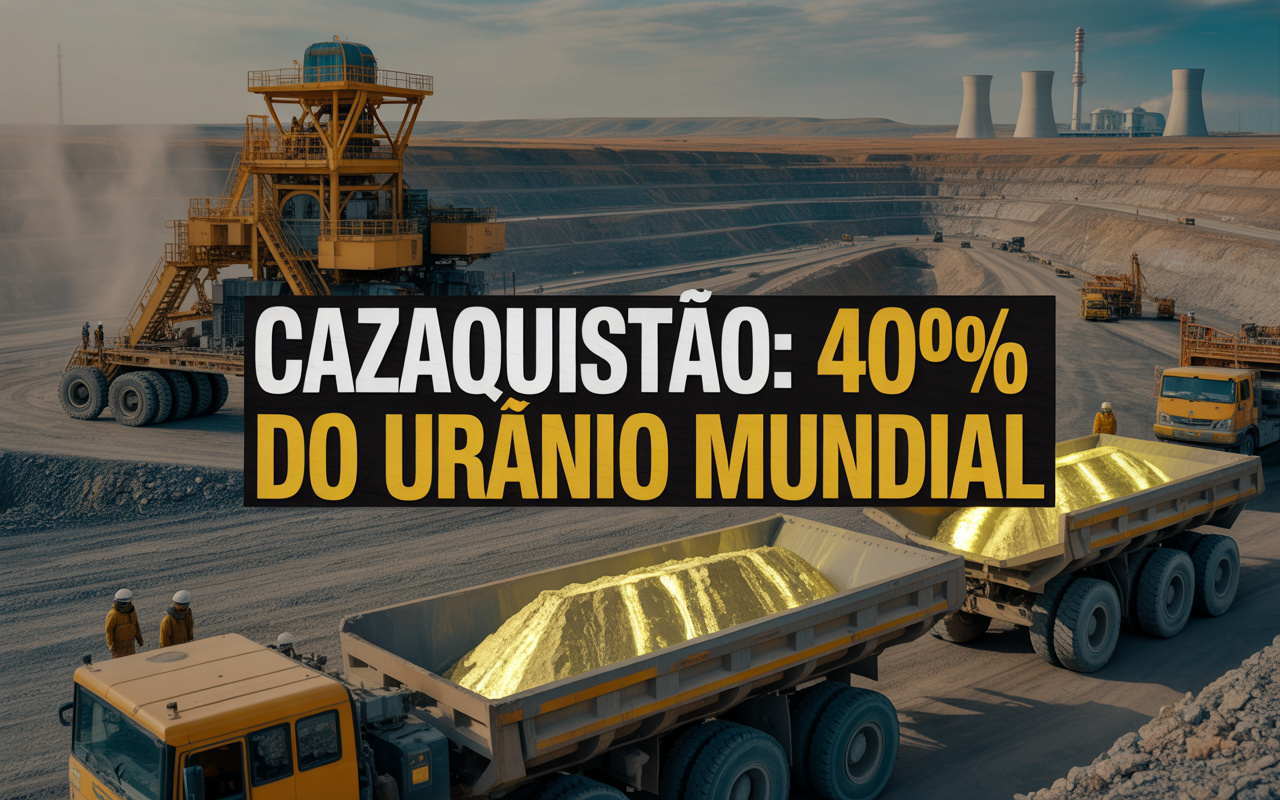


Responsible for About 40% of the World’s Uranium, Kazakhstan Supplies Nuclear Plants in Dozens of Countries and Plays a Central Role in Global Energy Security.
Uranium rarely makes the headlines in daily life, but it quietly supports an essential part of the modern world. Nuclear plants provide steady energy for entire economies, ensure energy security during crises, and are viewed as a key piece in the transition to low-carbon matrices. At the center of this global machinery is a country not often associated with energy power in popular narratives but absolutely dominant behind the scenes: Kazakhstan.
Today, about 40% of all the uranium produced on the planet comes from Kazakh territory. Practically, this means that nearly four out of every ten nuclear reactors in the world rely directly or indirectly on what is extracted from the country’s underground. This concentration is not just an industrial statistic: it makes Kazakhstan one of the most sensitive nodes in global energy security, with a direct influence on Europe, the United States, China, and much of Asia.
What Explains Kazakhstan’s Supremacy in the Global Uranium Market
Kazakhstan’s leadership starts with geology. The country hosts some of the largest and most accessible economically exploitable uranium reserves in the world, concentrated mainly in sedimentary regions in the south and center of the territory.
-
4,000-Year-Old Child’s Skull Unveils Ancient Burial in 7,500-Year-Old Norwegian Rock Shelter, Impressing Archaeologists

-
Norway Defeats Brazil in World Cup but Invests Billions to Preserve the Amazon, Strengthens Amazon Fund, and Joins Brazil in Leading Global Effort Against Tropical Deforestation

-
Denmark Constructs Its Largest Breakwater with 175 Concrete Blocks and World’s Largest Excavator to Combat 8-Meter Waves, at a Cost of $156 Million

-
Swedish Company Develops Offshore Wind Turbine That Eliminates the Need for Cranes and Simplifies Maintenance



International estimates indicate that Kazakhstan holds 15% to 20% of the known global reserves, a level higher than that of traditional mining powers like Canada and Australia.

But geology alone does not explain dominance. The decisive differentiator lies in the extraction method. Kazakhstan was a pioneer in industrially scaling in situ leaching (ISR) mining, a system in which chemical solutions are injected underground to dissolve uranium directly in the aquifers, allowing for its recovery without open-pit mining.
This method reduces costs, accelerates production, and allows mines to operate for long periods with less visible physical impact.
As a result, the average production cost of Kazakh uranium is among the lowest in the world, making it highly competitive even in depressed price scenarios. This advantage has allowed the country to maintain or even increase production while competitors reduced operations during downturns.
The State Company That Sustains Global Dominance
At the center of this structure is Kazatomprom, the state-owned company responsible for the majority of national production. Today, the company is recognized as the largest producer of uranium on the planet, surpassing any competing country on its own.
Its operational model combines state control, international partnerships, and long-term supply contracts, a formula that ensures predictability for both the Kazakh government and buyers.
These contracts are established with operators of nuclear plants in Europe, Asia, and North America, often with terms that exceed a decade. In a sector where disruptions can mean blackouts or energy crises, the stability of Kazakh supply has become a strategic asset in itself.
Why Kazakh Uranium is Vital for Europe, the USA, and Asia
Global dependence on Kazakhstan has especially increased following the geopolitical reconfiguration of the energy sector. European countries seeking to reduce carbon emissions maintain or expand their nuclear fleets.
The United States, despite having its own reserves, imports the majority of the uranium it consumes. China, in turn, is conducting the largest nuclear expansion program in the world, with dozens of new reactors planned or under construction.
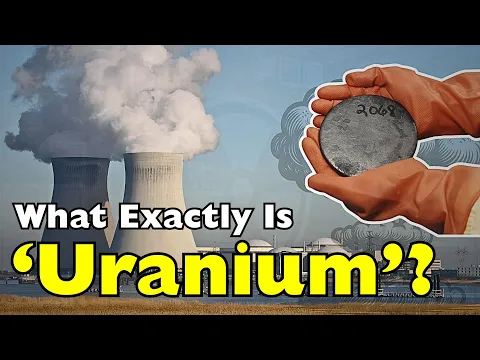
In this context, Kazakhstan has become a cross-supplier, capable of serving rival political blocs simultaneously. This gives the country a delicate but extremely powerful position: it does not just control a resource but the pace of operation of a significant part of the world’s energy infrastructure.
Energy Security, Climate, and the Silent Role of Uranium
The advancement of Kazakh uranium occurs alongside the revaluation of nuclear energy as a climate solution. Nuclear reactors offer continuous generation, without direct carbon emissions, something that intermittent sources like solar and wind cannot guarantee alone.
For many governments, nuclear energy has stopped being just an option and has become a pillar of the energy transition.
This further increases Kazakhstan’s relevance. As new reactors come online, the need for stable nuclear fuel contracts grows. The country not only meets current demand but is positioned to benefit from future decades of nuclear expansion, especially in Asia.
A Discreet Power, but Difficult to Replace
Unlike oil, the uranium market does not allow for quick substitutions. Reactors are designed for specific types of fuel, enrichment chains are rigidly regulated, and changes in suppliers require years of planning. This makes Kazakh dominance particularly robust.
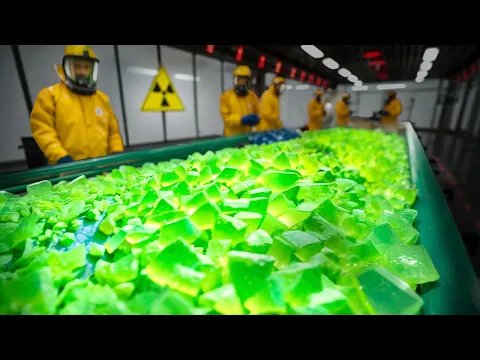
Even if other countries ramp up production, it will take a long time to dilute the nearly 40% share that Kazakhstan holds today. In practice, this is a structural power, not a cyclical one.
What’s at Stake Going Forward
The future of Kazakh uranium involves risks and opportunities. Geopolitical tensions, environmental issues, and the need to diversify logistical routes are on the radar of governments and investors.
Still, all indications suggest that the country will continue to be a key player in global energy security for decades.
While public debate focuses on oil, gas, and renewable energies, Kazakhstan continues to operate behind the scenes, sustaining reactors, stabilizing power grids, and exerting a silent yet decisive influence on the functioning of the modern world.