Portuguese
  Spanish


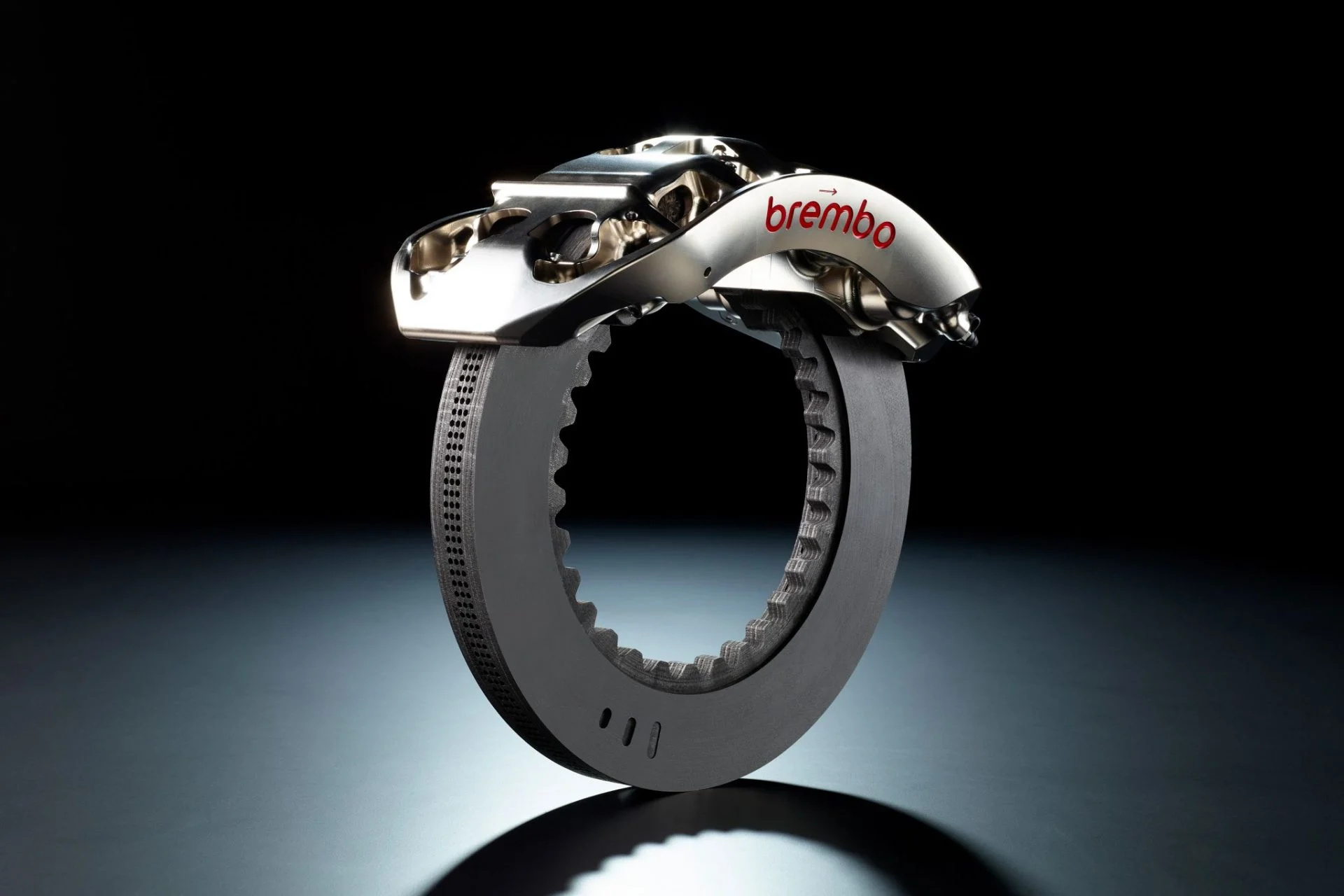


With Carbon-Carbon Discs and a Cost Over US$ 300 Thousand, the Bugatti Bolide Has the Most Expensive Brake System in the World.
In regular cars, the brake system is a wear item. In the Bugatti Bolide, it is an extreme engineering masterpiece, designed to operate under conditions close to those of Formula 1, with costs that exceed the value of many entire high-end vehicles. The Bolide was not created to tolerate error, improvisation, or economy. It exists to operate at the absolute limit of physics, and its brakes clearly reflect this.
Why the Bugatti Bolide Requires an Out-of-Scale Brake System
The Bugatti Bolide was conceived as an exclusive track hypercar, with over 1,600 hp, drastically reduced weight, and extremely high speeds on short straights.
In such a car, braking is not just about deceleration. It is converting absurd kinetic energy into extreme heat, repeatedly, without failure.
-
End of an era in Brazil: beloved sedan by Brazilians is discontinued despite having a 2.0 engine with 151 hp, CVT transmission, 466-liter trunk, and up to 650 km of range.

-
New Law Proposal in Brazil Could Heavily Penalize Drivers: Dangerous Overtaking May Become a Serious Offense with Fines Increased Tenfold and a 12-Month License Suspension; Update on 2026 Progress

-
Electric Revolution: Watts W125 Motorcycle Offers 160 km Range, 90 km/h Speed, and Affordable Price Starting at $3,000
-
General Motors Replaces Over a Thousand Workers with 50 Cobots at Electric Vehicle Plant, UAW Union Criticizes Move Amid Industry’s Automation Push


Carbon-Carbon Discs: Technology That Comes from Formula 1
Unlike the carbon-ceramic discs used in “normal” supercars, the Bolide uses carbon-carbon discs, an even more extreme material.
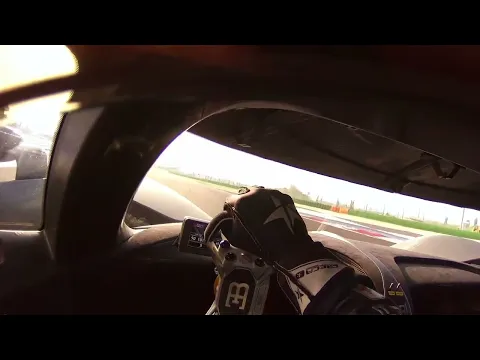

This type of disc:
- supports temperatures above 1,000 °C,
- provides maximum friction only when hot,
- practically does not deform under continuous stress.
It’s the same principle used in Formula 1 cars, where the brake must function at the absolute limit for consecutive laps.
Custom Calipers, Designed Not to Flex
The calipers of the Bugatti Bolide are not adapted parts from other models. They are exclusively designed for this car, with a focus on structural rigidity.
Manufactured with special alloys and custom engineering, they must:
- apply extreme force without flexing,
- maintain uniform pressure distribution,
- withstand violent thermal cycles.
Any micro-flexing would compromise braking at high speeds.
Why Replacing the Set Can Cost Over US$ 300 Thousand
The amount over US$ 300 thousand is not for a single part, but for the complete set:
- carbon-carbon discs,
- exclusive calipers,
- high-precision auxiliary components,
- highly specialized labor.
Furthermore, production is extremely limited, which prevents any economies of scale.
Maintenance That Requires a Race Team and Procedure
In the Bugatti Bolide, brakes are not “swapped out.” They are managed.
Inspection and replacement require:
- technicians trained directly by Bugatti,
- specific tools,
- procedures similar to those of racing teams.
No regular workshop is capable of handling this system.
Short Lifespan, But Intentional
Another shock for those used to regular cars: the discs are not made to last long. They are made to perform at their peak, and that’s it. In intense track use, the lifespan can be short, and this is acceptable within the proposal.
Here, wear is not a defect. It is a direct consequence of operating at the limit.
Carbon-Carbon Brakes:
- do not work well cold,
- require high temperatures to achieve ideal friction,
- are uncomfortable for urban use.
For this reason, this system does not exist in street cars, not even the most expensive ones. The Bolide does not attempt to please. It serves a specific function.
The Cost as a Natural Filter
The high cost of the brakes also acts as a natural barrier. Only owners who understand the real cost of operation enter this universe.
The Bugatti Bolide is not a car that you “own.” It is a car that you maintain as an ongoing project.
For comparison purposes:
- US$ 300 thousand is equivalent to multiple complete supercars,
- or decades of maintenance of a regular car.
In the Bolide, this only covers the brake system.
When Braking Costs More Than Accelerating
The Bugatti Bolide houses the most expensive brake system in the world because it was created without compromises. With carbon-carbon discs, custom calipers, competition-level maintenance, and a replacement cost over US$ 300 thousand, it represents the point where braking becomes as complex as accelerating.
It is the definitive proof that, at the absolute top of automotive engineering, even stopping costs a fortune.