Portuguese
  Spanish


Brazil and China Announce Billion-Dollar Investment in a Wind Energy Megaproject. Discover All the Details About the New Wind Complex Tanque Novo, Located in Bahia.
Brazil and China strengthen their strategic relationship with the inauguration of an energy megaproject in Brazil. With a billion-dollar investment, the Wind Complex Tanque Novo, located in Bahia, starts operation with a capacity of 180 MW, reinforcing the commitment of both countries to renewable energy. In this article, you will learn the details of this significant partnership and how it will boost the energy sector in Brazil.
Inauguration of Wind Energy Megaproject Between Brazil and China
The 180 MW Wind Complex Tanque Novo built by the subsidiary of China General Nuclear Power Corporation (CGN) in Brazil, CGN Brasil Energia e Participações SA, began on November 25, 2021, in Tanque Novo, Bahia, and was officially put into operation in May 2023.
With a billion-dollar investment, the wind energy project has set a new milestone for clean energy cooperation between Brazil and China, creating economic and social benefits for the local community. The megaproject successfully introduced the supply chain of Chinese wind turbines into the Brazilian new energy market while supporting the export of products from 24 other Chinese companies throughout the supply chain.
-
Brazil filled the Northeast with wind turbines but now faces the side effect of 705 giant blades reaching the end of their lifespan by 2032 just in Rio Grande do Norte, while the world projects 43 million tons of waste by 2050.

-
Brazil has filled the Northeast with wind turbines, but now it faces the side effect of 705 giant blades reaching the end of their useful life by 2032 just in Rio Grande do Norte, while the world projects 43 million tons of waste by 2050.
-
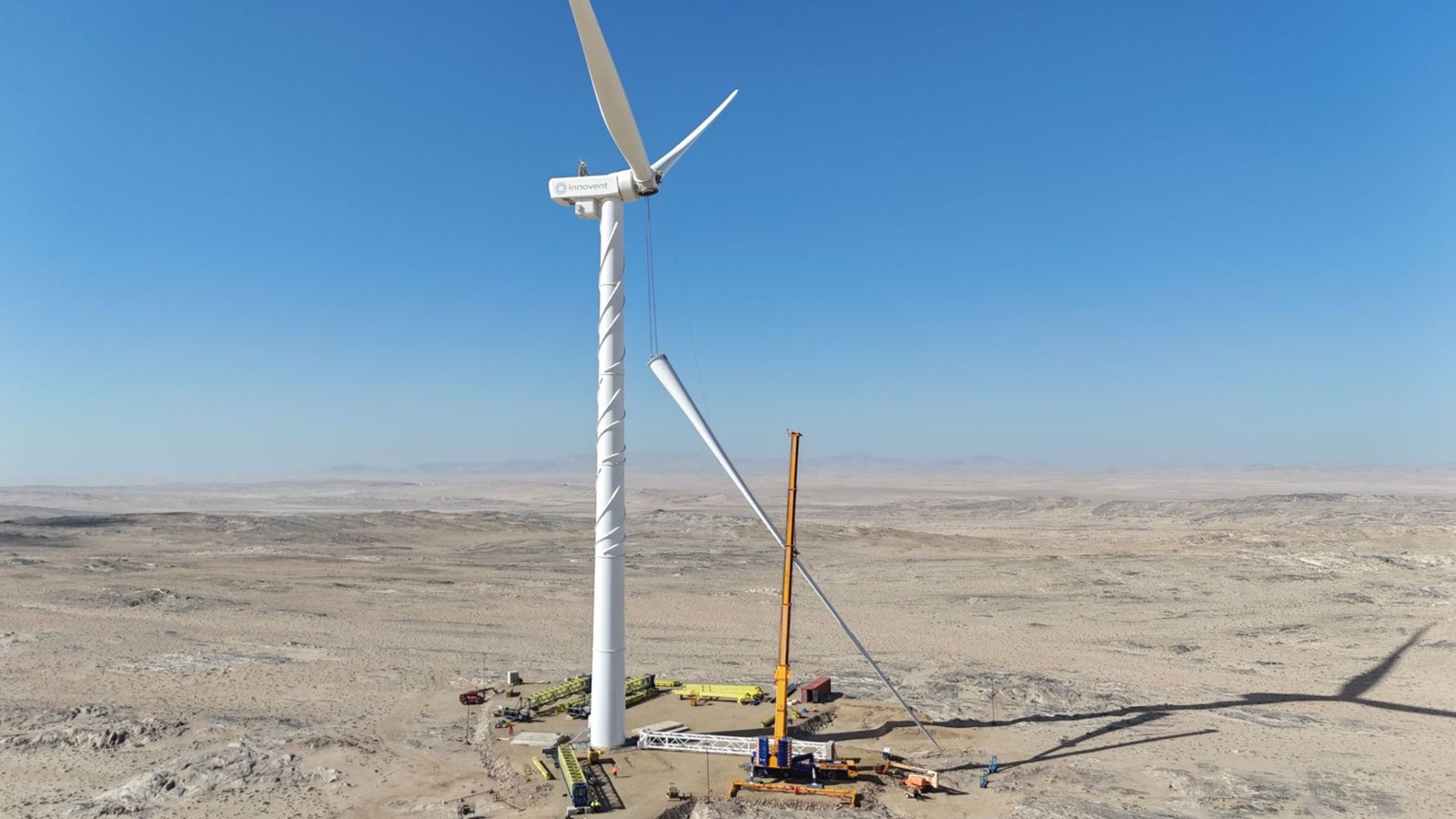
Wind farm in Namibia will have wind turbines assembled without giant cranes and is expected to avoid 200,000 tons of carbon dioxide per year when it becomes operational.

-
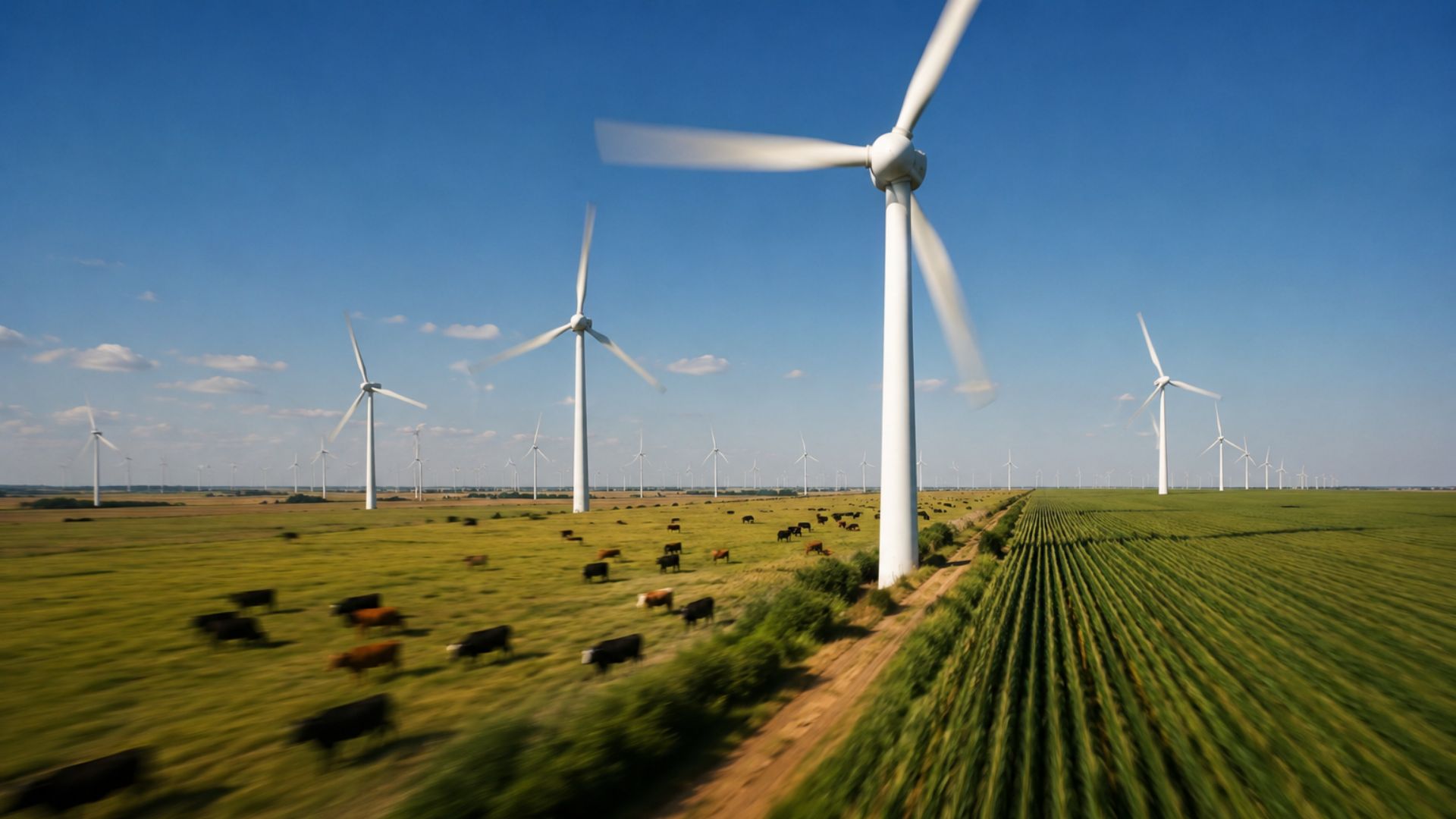
Taller than the Statue of Liberty, thousands of wind turbines are being planted in the middle of U.S. fields, creating two-story farms where corn and soybeans grow below while the wind turns into electricity above.


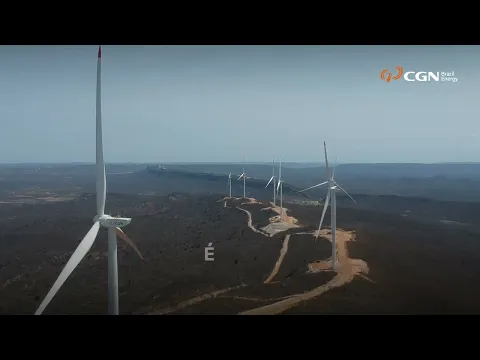

The Wind Complex Tanque Novo is the second greenfield built by CGN Brasil in the country and includes 40 wind turbines, all manufactured in China, and they are the largest of their kind in South America. The expectation is that the project will generate 720 million kWh of wind energy per year, available for 430 thousand Brazilian homes and will reduce 650 thousand tons of carbon dioxide emissions per year, equivalent to reforesting 1,800 hectares of forest.
Bahia Government Comments on Partnership Between Brazil and China
According to the governor of Bahia, Jeronimo Rodriguez, at a ceremony in Salvador celebrating the completion of the Wind Complex Tanque Novo, the goal is to achieve greater synergy with investments in science, technology, and innovation to create an environment where Brazil not only imports Chinese technology but also establishes a partnership.
The director of development at CGN Brasil, André Martini, emphasized his confidence in the partnership between Brazil and China in the wind energy sector. The megaproject, which received billion-dollar investments, united the advantages of both countries that established wind turbines in the semi-arid region of northeastern Brazil, created almost 1,000 jobs, paid taxes, and made investments in the area, and brought advanced technologies and products from China.
Martini states that there is a partnership with local communities in terms of social programs throughout the construction of the project. The aim is to promote local sustainable development to benefit the communities and he believes there will be a legacy for future generations that goes beyond wind energy generation and tax payments.
Other Investments Through the Brazil and China Partnership
The legacy mentioned by Martini refers to the New Energy Education Base that CGN Brasil will build in Tanque Novo, which will focus mainly on wind energy sciences and will consider solar energy and other scientific knowledge.
With an area of approximately 1,000 square meters, the base will consist of a new energy science museum, a physical display area, a video center, and an exhibition hall, among other facilities.
According to Ambassador Zhu Qingqiao, the Wind Complex Tanque Novo and the educational base are examples of the transformation and upgrading of the accelerated cooperation between Brazil and China, as well as the innovative practice of Chinese companies taking the initiative to fulfill their social responsibilities and integrate into Brazilian society.