






 Portuguese
  Spanish
 4 min of reading
  0 comments


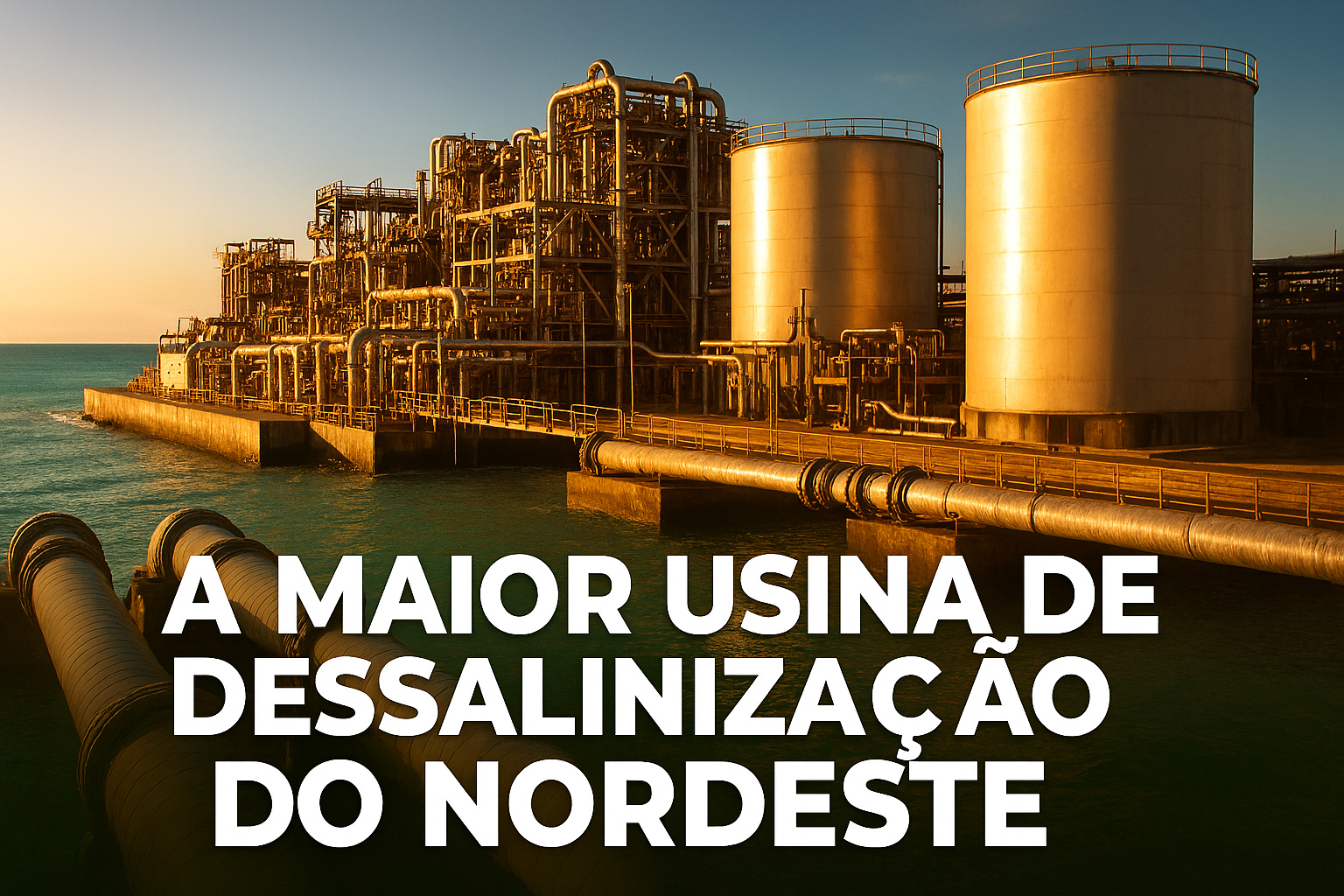
With an Investment of R$ 3.1 Billion and a Capacity of 1 m³/s, the Desalination Plant in Fortaleza Will Provide Water to 2 Million People and Will Be the Largest in the Northeast.
Ceará is about to inaugurate one of the most emblematic projects in the country in the water supply sector: the desalination plant in Fortaleza, a project valued at R$ 3.1 billion and conducted by CAGECE (Ceará Water and Sewage Company) in a public-private partnership with the consortium Águas de Fortaleza SPE. When completed, the structure will be the largest desalination plant in the Northeast and the first large-scale in Brazil, with the capacity to produce 1 cubic meter of water per second, equivalent to 86 million liters per day, a volume sufficient to meet 2 million residents of the Fortaleza Metropolitan Region.
A Structural Response to the Water Crisis in the Semiarid Region
The project was born from a context of severe scarcity. Between 2012 and 2018, Ceará faced one of the longest drought periods in its recent history. The dependence on reservoirs and surface water sources jeopardized the supply of the capital and neighboring cities.
The solution came with a long-term plan from the state government to diversify the water matrix. The plant, by using seawater as an alternative and permanent source, represents a milestone of water independence for the northeastern semiarid region.
-
Bolivian Female Construction Workers Form Association to Combat Discrimination and 38% Pay Gap in the Industry

-
Near Amsterdam, residents buy land and discover they must also build streets, manage drainage, handle waste, and grow food on half their plot.
-
Brazil’s WEG to Open New Factory in China by 2027, Expanding Production of Large Rotating Electric Machines and Low to Medium Voltage Motors in Rugao

-
Chinese Shipyard Secures $1 Billion in Orders for Low-Carbon Container Ships Amid Global Fleet Renewal Efforts


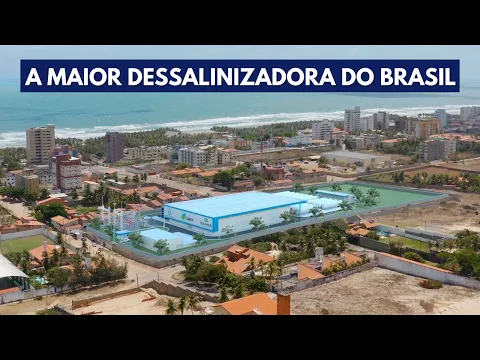

The plant will be built in the Praia do Futuro neighborhood, on an area of 90,000 square meters. The process will use reverse osmosis technology, in which seawater passes through semipermeable membranes capable of retaining salts and impurities, resulting in drinking water within the standards required by the Ministry of Health.
The system will be powered by electricity from the Enel Ceará grid, and studies are already evaluating the possibility of integrating renewable sources, such as solar and wind, to reduce the carbon footprint of the process.
Unprecedented Scale and Technology in the Country
With a daily production equivalent to 35,000 water trucks, the Fortaleza plant will be responsible for 12% of the total volume of water consumed in the Metropolitan Region.
The project includes a 14 km pipeline to carry treated water to the Sabiaguaba reservoir and connect it to the existing system. The operation will be fully automated, with digital control of pressure, salinity, and flow in real-time, ensuring energy efficiency and sanitary safety.
The structure also incorporates a reference environmental solution: the brine diffusion system, which returns the brine to the ocean in a dispersed manner, minimizing the ecological impact on marine life. The environmental impact study was conducted by the State Secretary of the Environment and received a favorable opinion from IBAMA.
Investment and Job Creation
The investment of R$ 3.1 billion is the result of a public-private partnership with a duration of 30 years, with R$ 500 million directly invested in the construction phase and the remainder allocated for operation and maintenance. The project engages more than 2,000 direct and indirect workers, in addition to generating opportunities in engineering, transportation, and services.
During the peak construction phase, the expectation is that 60% of the workforce employed will be local, reinforcing the regional economic impact. According to CAGECE, the project is part of the Ceará Water Security Program, which provides for long-term actions to ensure quality water by 2050.
Fortaleza as a Model of Water Innovation
When operational, the desalination plant will place Fortaleza on the global map of cities investing in resilient water infrastructure.
The model follows international references such as Ashkelon (Israel), Carlsbad (USA), and Al Khobar (Saudi Arabia), regions that also faced severe water scarcity and found desalination to be a sustainable solution.
Experts emphasize that the Northeast, due to its proximity to the coastline and the accumulated experience in water resource management, can become the main desalination hub in Latin America. The state government’s goal is for the project to serve as a technical foundation for future plants in cities like Natal, Recife, and Maceió.
A New Milestone for the Semiarid Region
The advancement of the Fortaleza plant represents more than an engineering project; it symbolizes a historic turning point in how Brazil confronts water scarcity. In a region marked by cyclical droughts and dependence on reservoirs, the initiative inaugurates an era of water security and technological innovation.
If the Northeast has learned to coexist with drought, now the challenge is to transform it into an opportunity, and the desalination of Fortaleza is the first concrete step in that direction.
The combination of technology, investment, and integrated management promises not only to mitigate the effects of droughts but also to position Ceará as a global reference in water solutions for arid climates.





Be the first to react!