Portuguese
  Spanish


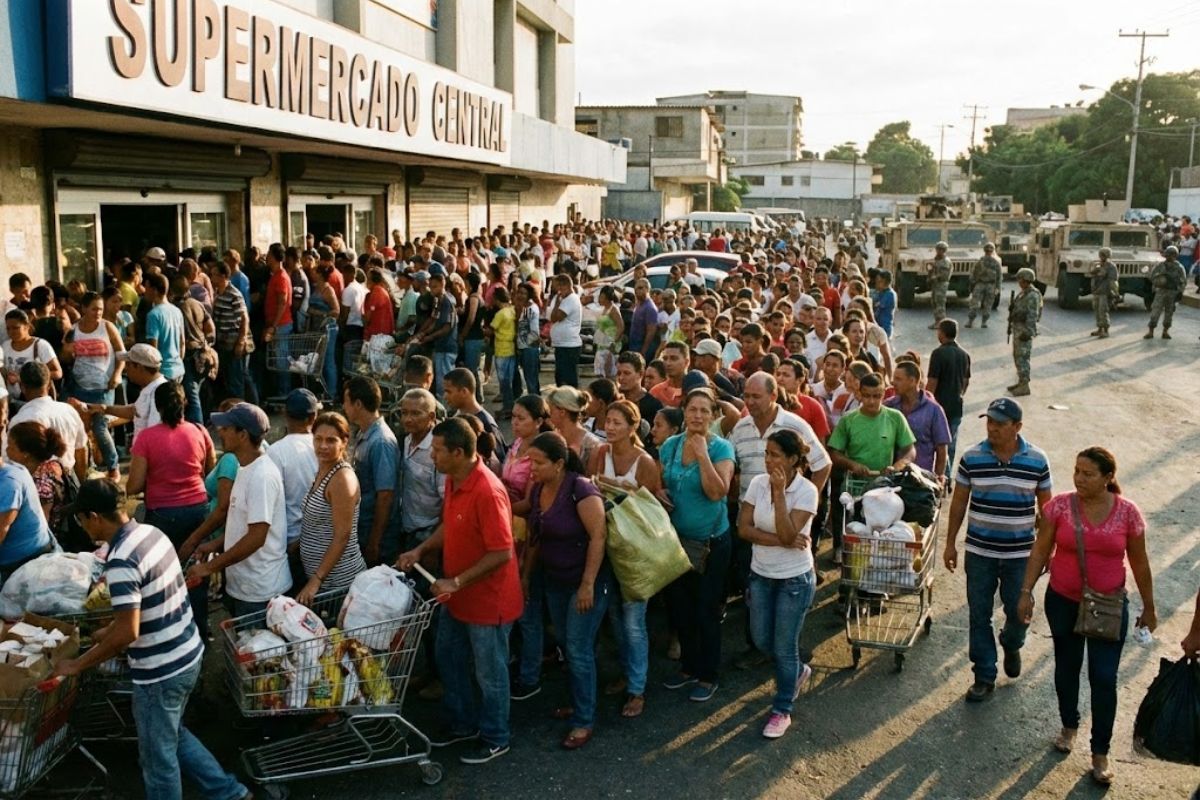


Hours After The US Operation That Captured Nicolás Maduro And Cília Flores, Venezuelans Lined Up In Supermarkets In Caracas. The Streets Were Deserted, But The Fear Of Shortages Rekindled Memories Of 2017. Amid Uncertainty, The GDP Crisis And Hyperinflation Haunt The Capital Of The Country.
In Caracas, Venezuelans reacted with urgency and caution after a US operation led to the capture of Nicolás Maduro and first lady Cília Flores. Still on the morning when the streets were deserted, lines began to grow outside supermarkets, driven by the fear of shortages and political uncertainty.
The fear does not come from nowhere: In 2017, many Venezuelans reported experiencing long lines and constant scarcity. And, in the last decade, the country faced a drop of 80% in GDP, along with four consecutive years of hyperinflation, a history that comes back to memory when the scenario abruptly changes.
What Happened In Caracas In The Hours That Followed
According to reports from the ground, the capital began the day with deserted streets after the operation that resulted in the capture of Nicolás Maduro and Cília Flores. Hours later, the situation changed: Venezuelans began to concentrate in supermarkets, forming lines.
-
Couple Sold Their Home to Save Business, Now Run Platform Handling $180 Million Monthly and Managing Over 51 Million Listings

-
Brazil’s 2026 Tax Refund: Record 9.58 Million Filers in Largest Payout Ever, But a Key Detail on Priority Recipients Draws Nationwide Attention

-
Itaú Alters Hybrid Work Model, Increasing Office Days from 2028, Prompting Employees to Adjust to New Routine
-
Facing Labor Shortage, Japan Plans to Invest $34 Million to Attract Foreign Workers in Construction, Healthcare, Industry, and Commerce




The motivation described is direct and instinctive.
The fear of shortages appears as the immediate trigger, especially at a time of transition and uncertainty about who will take control of the country.
Why The Fear Of Shortages Escalates So Quickly
One of the testimonies summarizes the behavior: the person states that it is “basically instinct” after years of scarcity.
The account states that they spent six years living with product shortages and almost constant lines, which means that, at any sign of instability, restocking becomes a priority.
In practice, the items mentioned as daily necessities are simple: eggs, flour, and meat.
The statement shows that Venezuelans were not seeking luxury but trying to secure the basics before the situation worsened.
Memories Of 2017 Return To The Center Of The Debate
The comparison with 2017 appears explicitly in the material. One testimony states: “I think we are going back to 2017,” recalling that in that year it was necessary to stand in long lines, feeling of collective exhaustion.
Another phrase reinforces the emotional weight: “I think this is the last line I will stand in,” alongside a plea for “whoever takes control” to end the cycle of weariness.
What is evident is that, for many Venezuelans, the line has become a symbol of a time that no one wants to repeat.
The Economic Crisis Behind The Panic
The text describes that Venezuela, with 30 million inhabitants, has undergone an unprecedented economic crisis during Nicolás Maduro’s government.
The central data point is the magnitude of the shock: the GDP fell by 80% in a decade.
Moreover, the ground reports indicate that the country experienced four consecutive years of hyperinflation, a factor that erodes confidence in supply and prices of any product.
This history helps explain why Venezuelans respond so quickly to signs of political rupture.
What Venezuelans Say In The Lines
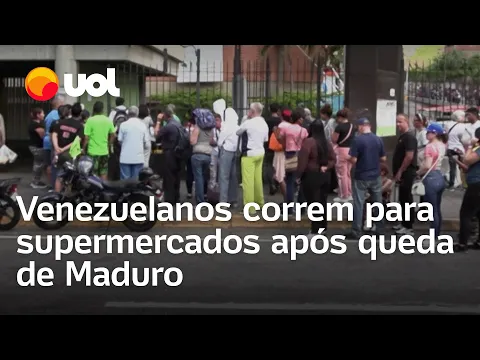

The testimonies highlight two points at the same time: necessity and exhaustion. On one hand, the urge to buy “whatever is necessary.”
On the other hand, the weariness with “so many things we don’t like,” indicating accumulated social fatigue.
In your opinion, are Venezuelans reacting out of rational precaution or from real trauma of 2017 that still dictates the country’s behavior?