Portuguese
  Spanish


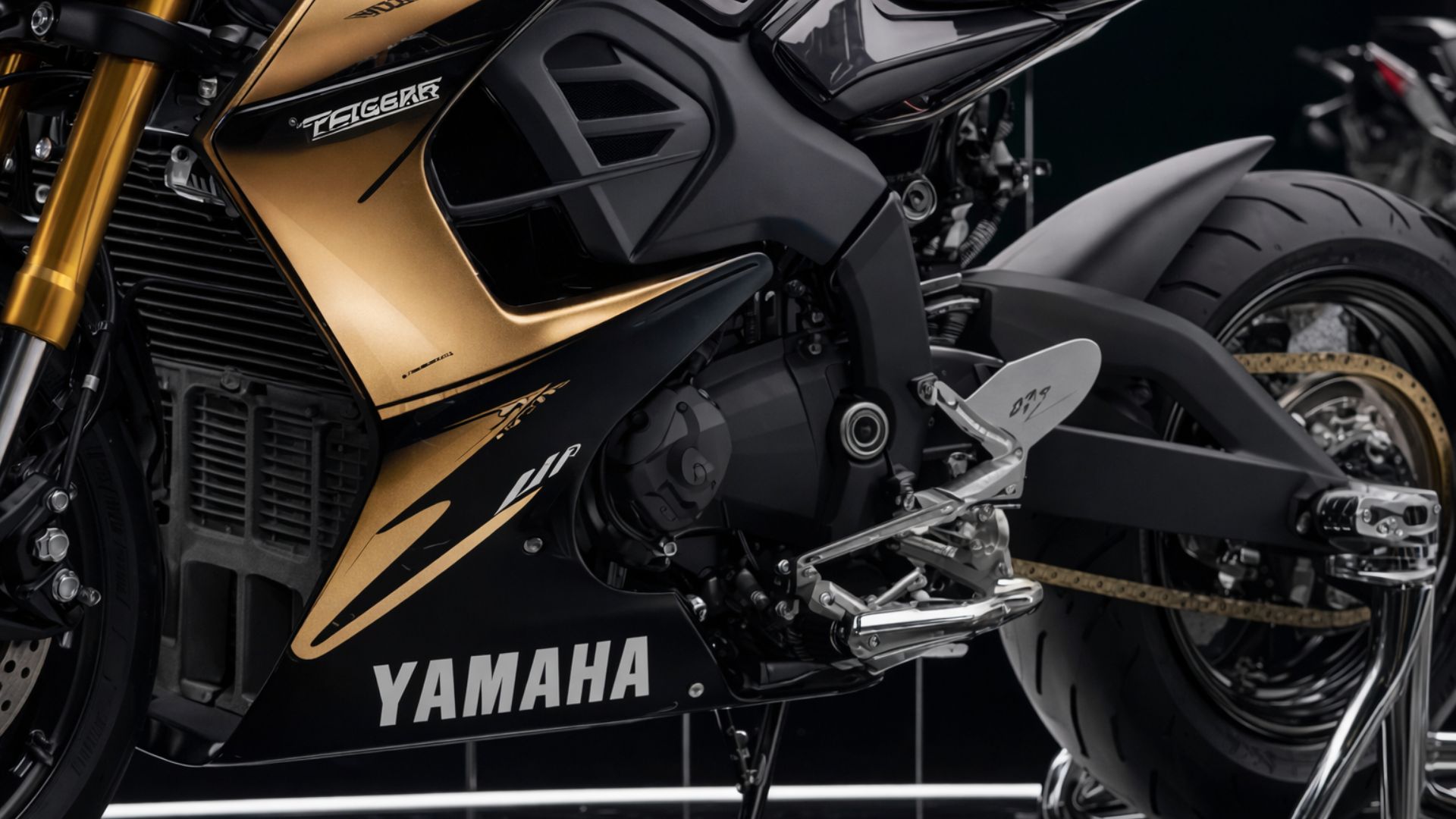


Speculated Return of the Yamaha RX 180 Rekindles Affective Memory and Debate About Urban Mobility in Brazil.
In recent weeks, publications have started to point to the possible return of the Yamaha RX 180 to the Brazilian market with a proposal that combines affective memory and a modern technical package.
Despite the buzz, there is no official announcement from Yamaha in Brazil confirming a relaunch, launch date, price, or complete technical specifications of the model.
Still, the topic has gained traction because it touches on a sensitive point in national motorcycling.
-
Toyota Corolla Hybrid Achieves 17.5 km/l in City with Self-Charging System and Regenerative Braking, Offering a Spacious and Quiet Ride Without Needing a Plug

-
Land Rover Issues Recall for Airbag Connector Fault Affecting 250,857 Vehicles in the US, Alerting Drivers in Brazil for Official Notice

-
Brazilian Electric Motorcycle Once Promised 180 km Range and Affordable Price, Now Faces Uncertain Future Amid Delays and Manufacturer’s Bankruptcy
-
Chery Stockman 2026 Unveiled: Larger Than Toyota Hilux, Featuring Unique Plug-In Hybrid Diesel Engine, 3.5 Ton Towing Capacity, and 1,000 kg Payload to Challenge Traditional Off-Road Trucks


It concerns the memory of light, simple, and striking motorcycles that dominated the streets in the 1980s, a period when visual identity and everyday use walked hand in hand.
In this scenario, the RX 180 established itself as a reference for urban style, associated with a time when designs had a more evident personality and less standardization among brands.
Why The Name RX Still Sparks Interest In The Brazilian Market
In Brazil, the original RX 180 is marked by its compact size and agile behavior, in addition to its two-stroke engine and maintenance considered simple for the standards of the time.
There are also historical records linking the model to institutional use, such as adoption by motorcycle patrol units in the early 1980s.
By reviving the RX acronym, Yamaha could simultaneously connect with distinct audiences.

While some motorcyclists recognize the emblem immediately from personal experience, another generation grew up in a more standardized market and tends to value products with a clear visual identity.
This movement helps explain why the discussion is not limited to the return of an old motorcycle.
In practice, the debate involves the possibility of a current project using a historical name to capture attention in a segment dominated by urban motorcycles, where consumption, ergonomics, and maintenance costs weigh as much as style.
Retro Visual And Urban Identity Stand Out In Projections
According to descriptions replicated on different websites, the RX 180 would have lines inspired by the past, but without fully reproducing the design of the original motorcycle.
In these projections, elements such as voluminous fuel tank, a sportier language, and a headlight with contemporary signature appear, composing a retro look designed for urban use.
Even so, without official images, catalog, or public presentation from the manufacturer, any design detail remains in the realm of projected and possible.
Moreover, part of the material circulating mixes informative texts with conceptual art and renderings from third parties, increasing the risk of confusion between a real product and illustrative creations.
Engine, Brakes, And Electronics Emerge As Central Points
The same publications attribute to the alleged new RX 180 a set with single-cylinder engine around 180 cm³, four-stroke, equipped with electronic fuel injection and a power close to 20 hp.
Six-speed transmission and ABS brakes, at least on the front wheel, are also mentioned as part of the expected package.
If this set is confirmed, the RX 180 would occupy an intermediate range in the Brazilian market.
It would be above the more common 125 and 150 models for urban commuting, but still below larger models used more frequently on highways.
In practice, this positioning would indicate a motorcycle aimed at the city, with some additional performance margin, provided that weight, ergonomics, and suspension align with the proposal.
On the other hand, it is essential to separate what makes technical sense from what is officially documented.
No secure record from Yamaha Motor do Brasil was found validating engine displacement, power, presence of ABS, type of clutch, or list of standard equipment.
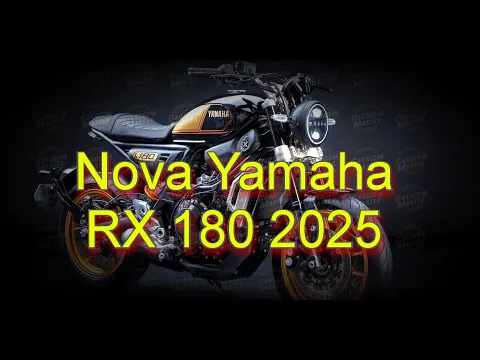

Autonomy Grabs Attention, But Without Confirmed Data
In various texts on the subject, autonomy emerges as one of the main selling points.
So far, however, there are no public and verifiable numbers on tank capacity, homologated consumption, or estimated range.
Since autonomy depends on variables such as weight, engine calibration, riding style, and measurement method, any value disclosed without a primary source tends to generate noise.
In the case of the old RX 180, historical references bring specifications characteristic of the period.
These data, however, do not serve as a direct basis for a modern model, especially given changes in engines, emissions, and equipment.
Current Requirements Make Return More Complex
One of the reasons for speculation around classic names lies in the change of the regulatory environment.
Today, new motorcycles must meet emissions and safety requirements that did not exist in the 1980s.
This scenario forces manufacturers to adopt solutions such as electronic fuel injection, catalyst, and, in many cases, assisted braking systems.
Therefore, the discussion about the return of the RX appears more tied to the reactivation of a name than to the simple resurrection of an old product.
There are records that the brand has publicly talked, in other markets, about the possibility of resurrecting the RX family with a completely new proposal.
Audience Profile And Commercial Challenges
If the RX 180 arrives in Brazil with the set attributed to it, the potential audience tends to be divided into three large groups.
In this scenario, experienced motorcyclists interested in reconnecting with a familiar acronym, beginners looking for their first motorcycle with a striking visual identity, and professional users who need something beyond the basics are represented.
Still, the buying decision in this segment usually depends on objective factors.
Price, dealership network, maintenance costs, insurance value, and parts availability weigh as much as the presented visual proposal.
As these points have not yet been officially confirmed, the debate remains open.
If Yamaha opts to turn the RX 180 into a real and competitive product in the country, the challenge will be to deliver personality, efficiency, and safety supported by clear numbers and transparent communication.