





 Portuguese
  English
  Spanish
  3 min of reading
  0 comments



Solar Energy and Bioenergy Drive the Creation of Green Jobs in Brazil, Which Already Total 1.3 Million Positions and Stands Out in the Global Energy Transition Context.
The advancement of solar energy in Brazil has stopped being just an environmental bet and has become one of the main engines of the job market.
In 2024, the renewable energy sector reached a historic record worldwide, with 16.6 million direct and indirect jobs, according to the International Renewable Energy Agency (Irena).
In this scenario, Brazil has gained prominence. The combination of solar energy with bioenergy has placed the country in third place among the largest global employers in renewables, with about 1.3 million jobs.
-
The era of solar panels attached to roofs is beginning to change with transparent glass that generates energy while keeping the view unobstructed, and perovskite photovoltaic windows already tested in offices in Japan promise to transform entire facades into invisible power plants without blocking light or altering the appearance of buildings.

-
The era of silicon alone in solar energy comes to an end with the arrival of perovskite, a material that captures a broader light spectrum, is applied as a thin film, and, together with silicon, reaches a theoretical limit of 45% efficiency in tandem modules.

-
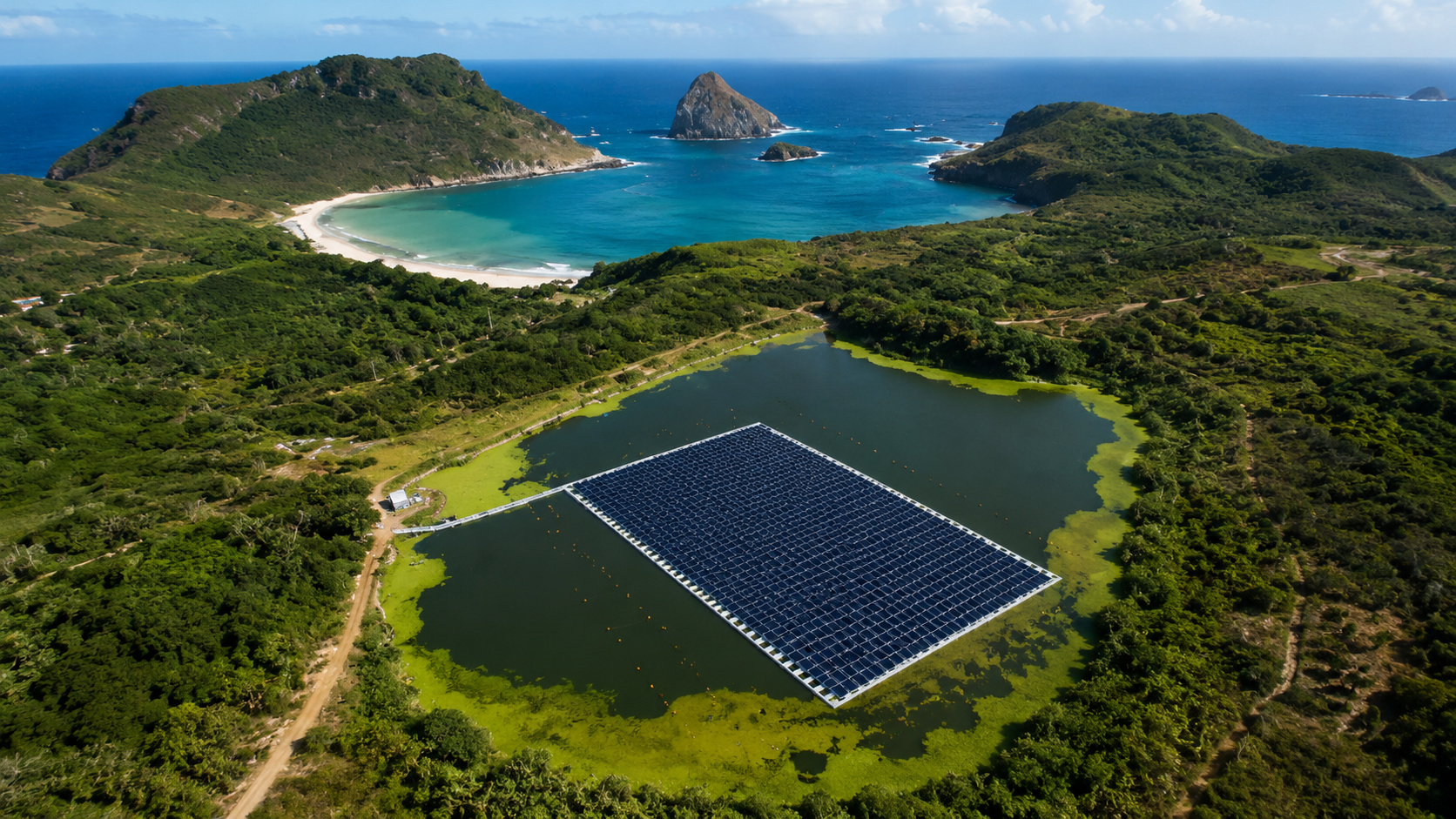
Fernando de Noronha begins unprecedented energy transformation with a R$ 350 million solar plant that promises to replace diesel generation and change the island’s sustainable future by 2027.
-
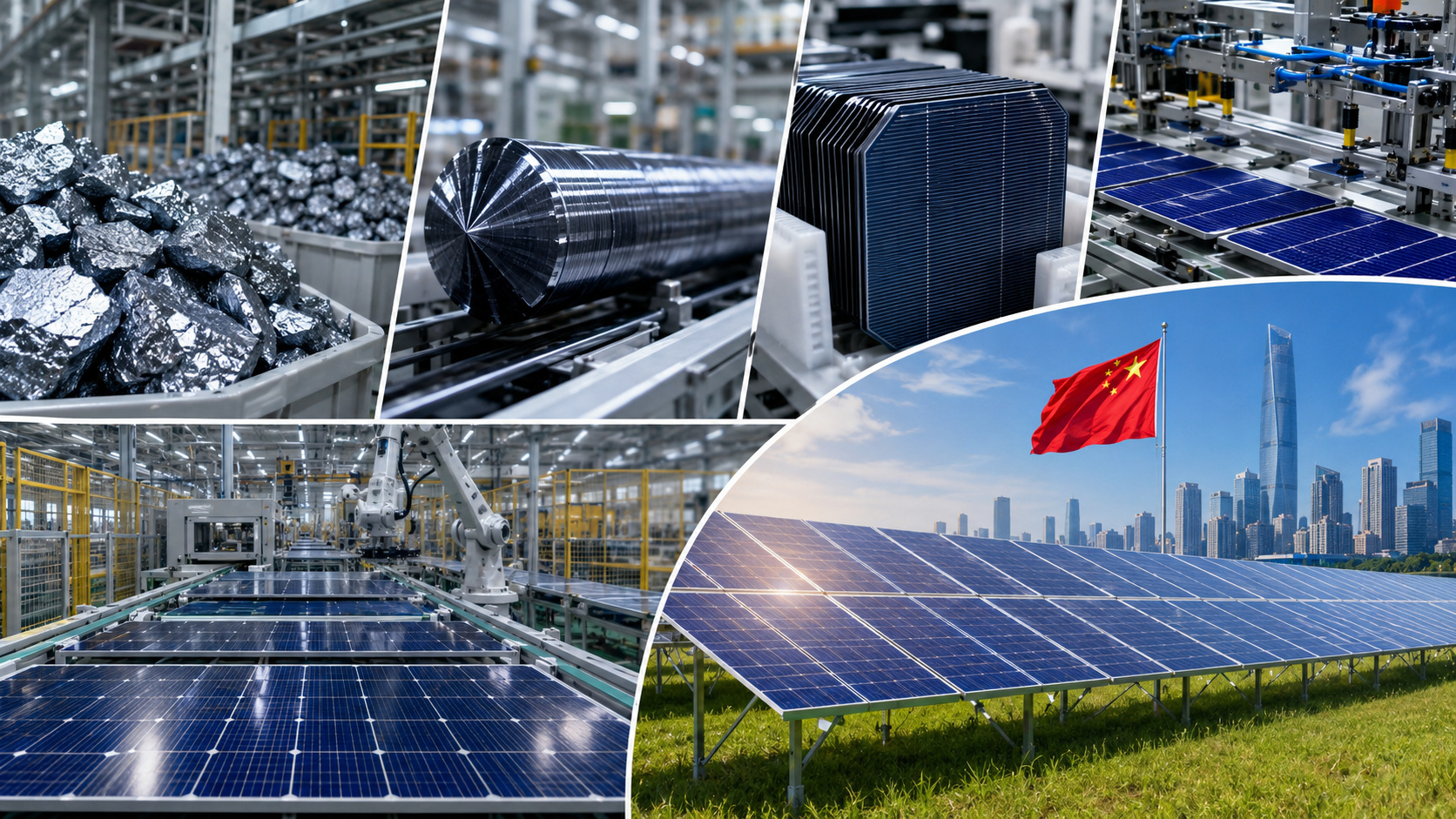
While Europe and the United States rush to save their own solar chains, China already dominates more than 80% of the global manufacturing of solar panels and has turned the sun into an industrial machine controlled by Beijing that is redefining the global energy transition.


The result shows how the energy transition is already changing the real economy and the lives of millions of people.
At the same time, this accelerated growth raises debates about public policies, import tariffs, and the country’s ability to train professionals to meet this new demand.
Solar Energy and Green Jobs
Worldwide, solar energy is far ahead in job creation. In 2024, the source accounted for 7.2 million jobs, more than 40% of all work related to renewables. After that come biofuels, hydropower, and wind energy.

This movement follows the pace of new installations. Just in 2024, 582 gigawatts of renewable capacity were added worldwide, bringing the total to 4,443 GW.
The more plants come online, the more workers are needed to manufacture, install, and maintain the systems.
However, the distribution of these jobs is unequal. China accounts for about 44% of the global renewable workforce, driven by large-scale equipment manufacturing. Therefore, several countries have begun imposing tariffs to protect the local industry.
Brazil Grows but Depends on Imported Equipment
While solar energy advances in Brazil, the country still heavily relies on products from abroad. In 2024, 22.3 gigawatts of photovoltaic modules were imported, an increase of 25% compared to the previous year.
The national industry mainly focuses on assembling kits. There are few manufacturers of modules, inverters, and trackers.
Nevertheless, the expansion of solar projects remains strong, driven by demand from residences, businesses, and small enterprises.
This model helps spread jobs across the country, as the installation of solar systems occurs in thousands of cities, not just in large plants.
Solar Energy and Bioenergy Dominate the Job Market
According to Irena, Brazil installed 15.2 gigawatts of new photovoltaic capacity in 2024, the largest volume ever recorded. Almost two-thirds of this growth came from distributed generation, especially on residential rooftops.

This type of project requires more labor, as it involves technical visits, customized projects, and local maintenance. Therefore, solar energy has become one of the largest sources of green jobs in the country.
Meanwhile, bioenergy continues to lead in total workforce volume. The sugar-energy sector recorded 751,377 positions in 2024. Even below the peak of 2008, when it reached 1.3 million, the segment remains a pillar of the renewable market.
Challenges of Qualification and Technology
Irena herself warns that the growth of jobs does not keep pace with the increase in installed capacity. This happens due to automation, economies of scale, and even bottlenecks in the electrical grid.
The report states that “despite record capacity additions, job growth has been moderated by economies of scale; by automation and other forms of technological innovation; by excess capacity in equipment manufacturing; and by bottlenecks in the electrical grid, which have led to electricity generation cuts.”
In this context, professional qualification becomes one of the biggest challenges for solar energy and other renewables in Brazil.








-

-

-

-

5 people reacted to this.