






 Portuguese
  Spanish
  4 min of reading
  0 comments


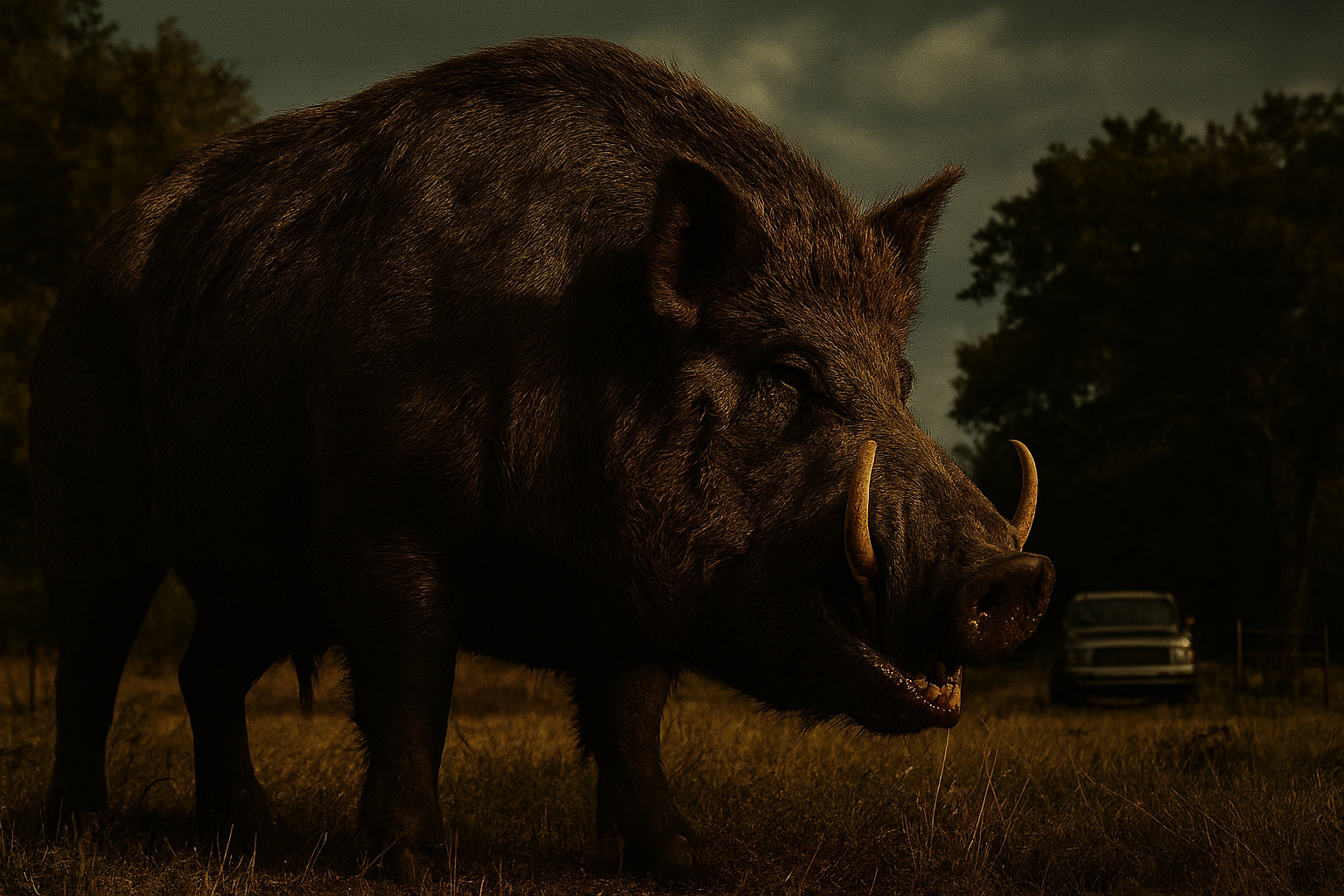
Hogzilla Was a Feral Pig Shot in 2004 in Georgia, Measuring Up to 2.4 Meters and Weighing Over 360 Kg, That Became a Legend and Exposed the Uncontrolled Spread of Hybrid Wild Boars.
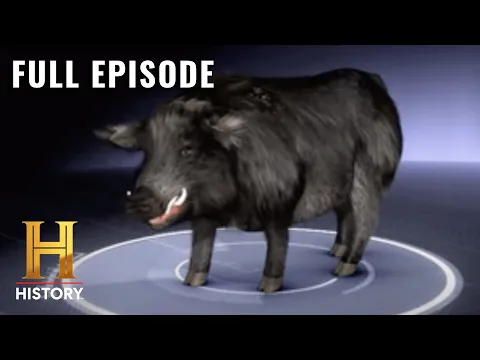
On June 17, 2004, an animal shot during a hunt in the southern part of Georgia, near the town of Alapaha, entered history with a nickname that quickly spread worldwide: Hogzilla. The case drew attention not only for its unusual size but also for the series of exaggerations, corrections, investigations, and controversies that transformed a local incident into an international phenomenon.
Hogzilla was not a domesticated farm pig, nor an animal prepared for exhibitions or records. It was classified as a feral pig, a result of the crossbreeding between European wild boars and domesticated pigs that returned to the wild, a phenomenon increasingly common in the southern United States.
Who Eliminated Hogzilla and Where the Incident Occurred
The animal was killed by Chris Griffin, on a rural property associated with owner Ken Holyoak, in the Alapaha region. After the shooting, photos of the body began to circulate, accompanied by impressive accounts of its dimensions. Shortly thereafter, the carcass was buried, which fueled even more doubts and public interest.
-
In Matopiba, soybeans have replaced rice and beans, and traditional Cerrado communities that used to grow their own food now have to buy it, while pesticides from neighboring farms reach the springs.

-
Foreign tree planted to combat drought invades more than 1 million hectares of the Caatinga, encroaches on riparian forests, and turns an old solution for the semi-arid region into a silent threat to biodiversity.

-
Invasive weed that withstands extreme heat advances with climate change, threatens crops on several continents, and raises a global alert about a silent plant capable of dominating soils, suffocating native species, and reshaping entire ecosystems.
-
While other coffees escape the American tariff hike, Brazilian instant coffee is excluded, raising an alert in the sector and may become up to 37.5% more expensive in the United States.


The combination of striking images, exaggerated figures, and the initial absence of technical measurements created the perfect environment for the legend to emerge.
The Initially Released Measurements and Why They Were Incorrect
In the first days after the incident, reports surfaced claiming that Hogzilla was nearly 4 meters long and weighed over 450 kilograms. These figures were repeated by media outlets and quickly went viral. However, they had not been obtained through standardized scientific methods.
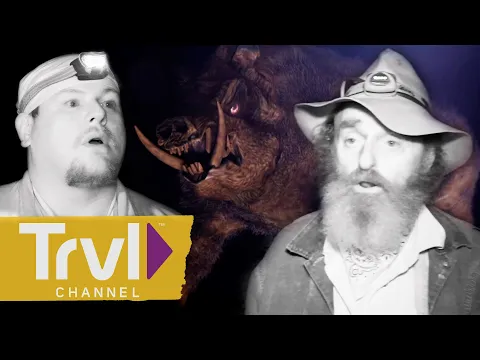

The lack of official weighing and measurements at the time of the shooting opened the space for subsequent revisions.
Months later, the case underwent more thorough analysis. The carcass was located, exhumed, and measured using more reliable methods. The conclusions indicated that Hogzilla had an estimated length of between 2.25 and 2.44 meters and an approximate weight of 360 kilograms, which is equivalent to about 800 pounds.
These figures are significantly lower than those initially reported, yet they still place Hogzilla among the largest feral pigs ever documented in the United States. Even after the correction, the animal continued to be classified as an extreme specimen outside the normal range for the species.
Why Did Hogzilla Grow So Much?
Hogzilla had ideal conditions for exceptional growth. As a feral pig, it was not subject to early slaughter, feed control, or typical genetic selection found in pig farming. Instead, it lived for several years in an environment with an abundance of food, absence of adult natural predators, and genetic crossings favorable to size increase.
The crossbreeding with European wild boars contributed to a more robust bone structure, extended growth, and dense musculature, characteristics that profoundly differentiate these animals from domesticated farm pigs.
The Controversy Over Wild Life or Enclosed Breeding
Even after the confirmation of the real measurements, a new discussion arose. Experts began to question whether Hogzilla had lived completely free or if it had spent part of its life in an enclosed area, with easy access to food.
Indications such as hoof wear and body patterns raised the hypothesis that the animal may have been partially raised in a controlled environment before becoming feral.
This uncertainty does not invalidate the case but reinforces the hybrid and complex nature of the phenomenon.
Why Hogzilla Cannot Be Compared to Big Bill
From a technical and historical perspective, Hogzilla is not comparable to Big Bill, the Largest Domesticated Pig Ever Recorded. Big Bill was raised in a controlled environment, officially weighed, and documented as a result of directed genetic selection.
Hogzilla, on the other hand, was a wild or semi-wild animal, with no official weighing at the time of slaughter, a product of random crossings and growth without human management. It belongs to the category of extreme wild animals, not to agricultural record holders.
Confusing these contexts compromises historical accuracy.
What Hogzilla Revealed About Feral Pigs in the United States
The case gained greater dimensions because it exposed a structural problem. It is estimated that millions of feral pigs currently live in the United States, spread across dozens of states. These animals cause billion-dollar damages to agriculture, contaminate water resources, attack domestic animals, and transmit diseases.
Hogzilla became a visual symbol of this uncontrolled spread, demonstrating how far these hybrids can go when there is no effective population management.
A Giant That Became an Environmental Alert
More than just a curiosity or legend, Hogzilla served as a warning. It illustrated how the crossbreeding of domesticated and wild species, combined with a lack of control, can produce extreme individuals with real impacts on the environment and rural economy.
It was not just a large animal. It was a concrete example of ecological imbalance.
Hogzilla never entered history as an absolute record but as a symbol. While Big Bill represents the limits of controlled human breeding, Hogzilla represents the limits of uncontrolled wild growth without intervention.
Between the pen and the forest, it revealed what happens when domestication, abandonment, and nature mix uncontrollably and why this goes far beyond a curious story.





-

-

-

-

-

-

16 people reacted to this.