






 Portuguese
  Spanish


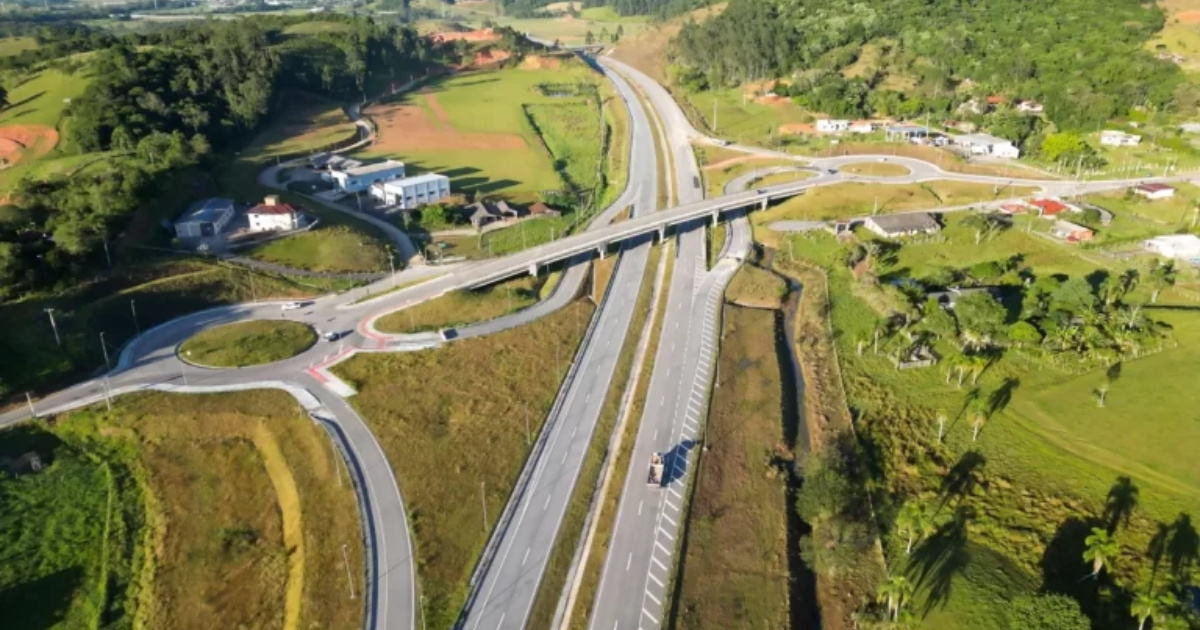


Billion-Dollar Project Redesigns Mobility in the Metropolitan Area, Reduces Heavy Traffic on BR-101, Concentrates Large-Scale Engineering Solutions, and Begins to Influence Logistics, Road Safety, and Debates on the Maintenance of Strategic Highways in Southern Brazil.
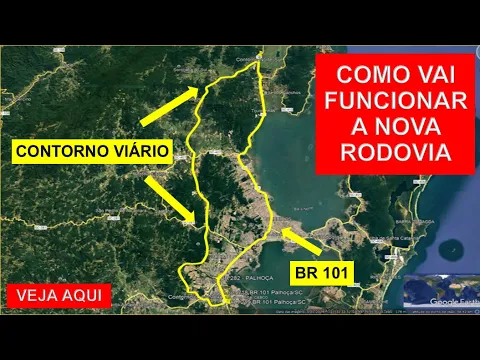
With an estimated investment of R$ 3.9 billion and 50 kilometers of dual lanes, the Greater Florianópolis By-Pass began operations in August 2024 with the promise of reducing long-standing traffic bottlenecks on BR-101 and reorganizing vehicle flow in the metropolitan area of the Santa Catarina capital.
The structure crosses Biguaçu, São José, and Palhoça and has numbers that help explain why the project has become a national reference in road engineering and logistics.
Besides its scale, the highway has returned to the center of public debate due to maintenance interventions already occurring early in full operation.
-
Goodbye to old tiles: renovation technique without construction transforms bathrooms in a few hours, eliminates debris, and reduces costs with coverings using special paints, high-resistance adhesives, and modern finishes that completely renew the space.

-
Goodbye to the traditional clay brick: Indian startup transforms burnt straw into a carbon-negative brick that costs half, insulates better, and even removes CO2 from the air.

-
A Japanese governor single-handedly stalled the construction of the world’s fastest train for nine years, and only now has he agreed to allow a tunnel excavated at a depth of 1,400 meters.

-
A 180-meter ship with a deck the size of a football field was christened to carry 25,000 tons of giant energy modules around the world.


This movement is common in high-standard roads, but it reignites discussions about planning, road safety, communication with drivers, and the ongoing maintenance costs of megaprojects in continuous use.
New Route Changes Traffic Dynamics on BR-101
The by-pass was designed to divert long-distance traffic, especially trucks, from the most congested urban section of BR-101 in Greater Florianópolis.
In practice, the expectation is to better separate local trips typical of those circulating within the cities from road transport that merely crosses the region.

When passing traffic encounters roads with a strong presence of urban entrances and exits, the risk of slowdowns and accidents increases.
By offering an alternative route away from the more urban axis, the by-pass aims to reduce conflicts between heavy vehicles and everyday travel, as well as provide greater predictability for cargo transport connecting Santa Catarina to the rest of the country.
Another effect observed with the opening of a road of this scale is the redistribution of traffic at access points.
Instead of resolving everything immediately, such a project tends to shift vehicle volumes to certain points, necessitating adjustments in signaling, monitoring, and, in some cases, specific interventions over time.
Structure Features Bridges, Tunnels, and Environmental Solutions
The By-Pass comprises 50 kilometers of dual lanes, forming an express corridor outside the main route of BR-101 in the region.
In the set of special structures, the project includes four double tunnels and seven double bridges, in addition to accesses via intersections and underpasses that connect the new road to strategic points in the vicinity.
There are also 25 wildlife crossings planned, designed to allow wildlife to cross the highway at specific locations.
This measure seeks to reduce wildlife collisions and mitigate environmental impacts in an area marked by uneven terrain, wetlands, and stretches of preserved vegetation.
From a construction standpoint, the volume of earth movement and the use of concrete in special structures help gauge the project’s scale.
Federal agencies linked to infrastructure and sector regulation have indicated high numbers in both material and technical complexity for the set of tunnels, bridges, and overpasses.
A Project That Spanned Decades Before Coming to Fruition

The discussion about a by-pass route for Greater Florianópolis dragged on for years before materializing.
The project spanned government changes, technical revisions, environmental licenses, and contractual rebalancing.
Projects of this scale often face hurdles due to expropriations, environmental conditions, and the need to maintain traffic flow on an already saturated highway during the execution period.
Work fronts gained a more consistent pace in the past decade, despite going through phases of interruption and resumption.
Meanwhile, the BR-101 continued to concentrate urban and transit traffic, a scenario that made the project even more visible to residents, transporters, and frequent users of the highway.
The inauguration in August 2024 marked the opening of the corridor to traffic and solidified the by-pass as the new transportation axis in Santa Catarina.
Since then, the highway has been incorporated into long-distance routes, logistical planning, and the daily routines of those commuting between municipalities in the metropolitan region.
Closures and Maintenance on Drivers’ Radar
Even after the recent opening, maintenance interventions have already entered the operational calendar.
One of the most notable points was the announcement of a total closure of the bridge at kilometer 27 in São José, in the Forquilhas neighborhood.
The closure began on a Sunday, January 17, with an expected duration of about 30 days.
The concessionaire informed that the deadline could be extended based on technical needs, and provisional detours would be implemented to maintain circulation.
Driver experiences in such situations vary according to traffic volume, adherence to alternative routes, and the effectiveness of temporary signage.
In total closure projects, the clarity of signs, panels, and operational guidance directly influences the perceived impact on traffic.
Although closures cause disruptions, preventive and corrective interventions are part of the lifecycle of highways, especially in new structures that are entering a pavement and device accommodation phase.

Logistics, Road Safety, and Continuous Operation Challenges
The main expectation associated with the by-pass is to reduce conflicts in the urban section of BR-101 and improve road transport fluidity.
The region concentrates industrial hubs, intense tourist circulation, and connections to ports and distribution centers.
On high-traffic highways, small variations in average speed and crossing time can translate into significant logistical gains over the month.
These effects appear in fuel consumption as well as in delivery predictability.
On the other hand, performance in road safety does not solely depend on the existence of an alternative route.
Enforcement, traffic education, timely maintenance, and incident response capacity remain determining factors.
In a highway with tunnels, bridges, and overpasses, monitoring, incident response, and emergency signage gain weight in risk management.
Another recurring point in public debate is the ongoing maintenance costs of the infrastructure.
The billion-dollar investment focuses attention on delivery, but daily operation requires budgeting, planning, and transparency to maintain the road’s standards over the years.
Projects of this scale ultimately become references for future endeavors.
They show how infrastructure can reorganize regional mobility, while also exposing the challenges of keeping such a highway operational without repeating the historical bottlenecks of BR-101.
With the By-Pass now integrated into the traffic and logistics map in Santa Catarina, how will governments, the concessionaire, and users manage, moving forward, the costs and discipline necessary to maintain a project of this scale?


Sim, a conclusão e inauguração do Contorno Viário da Grande Florianópolis (BR-101/SC) ocorreram no governo Lula, em 9 de agosto de 2024. Embora planejada há mais de uma década, a obra foi finalizada com cerca de R$ 3,9 bilhões em investimentos federais, sendo considerada a maior obra rodoviária do Brasil.
Até melhorou no aspecto do trânsito de veículos pesados, mas continua um caos os engarrafamentos. Tem que analisar o que está acontecendo, pois a vários trechos entre Palhoça até Itajaí em que simplesmente ficam com kms de filas.
OBRA DO GOVERNO LULA, O MELHOR PRESIDENTE E ESTADISTA DA HISTÓRIA. ACORDEM PRA REALIDADE E SAIAM DA BOLHA DAS MENTIRAS DOS **** DA FAMILÍCIA BOZONÓQUIA.