Portuguese
  Spanish


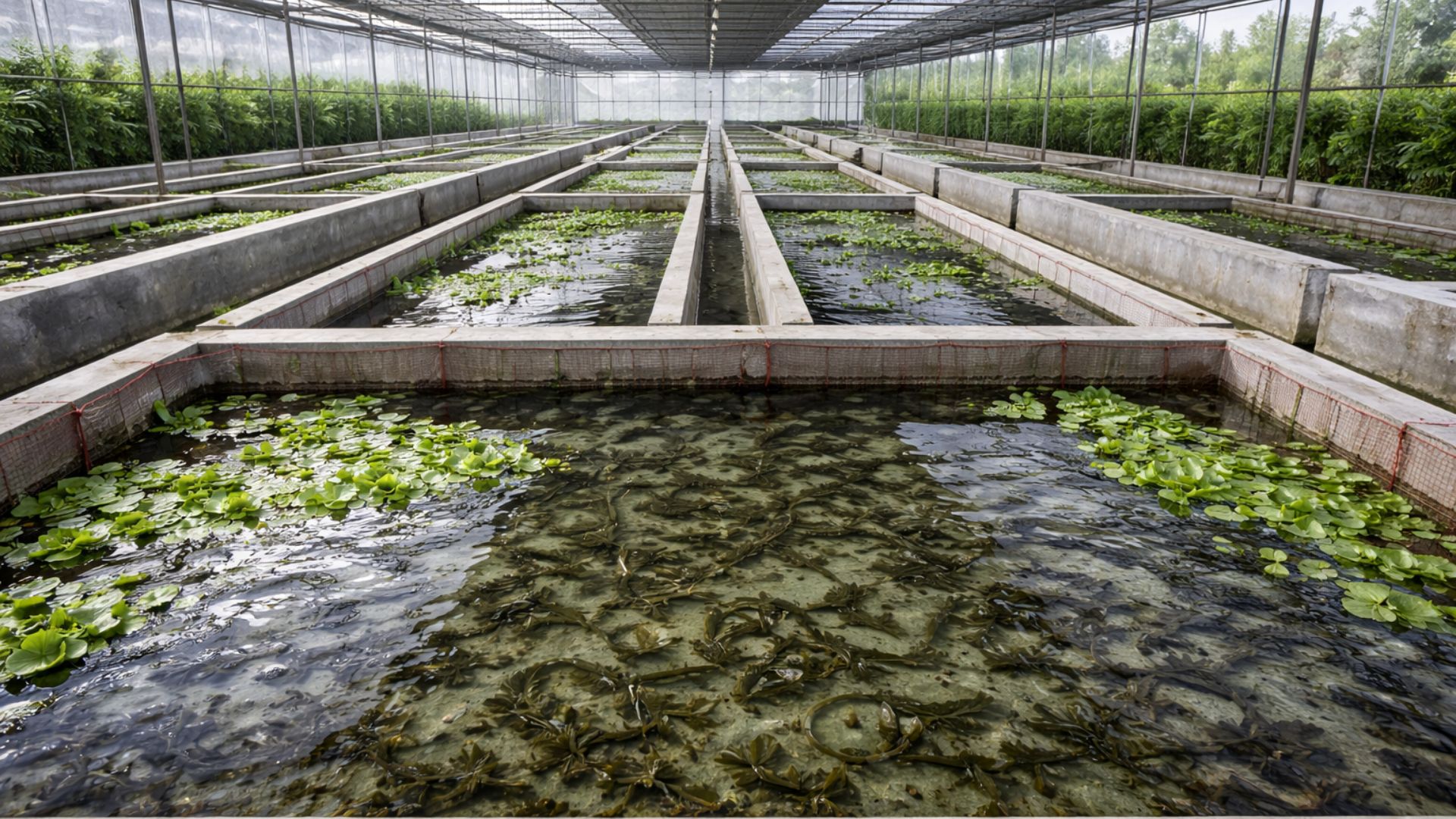


Controlled Breeding of Medicinal Leeches Advances in China with Shallow Tanks, Cocoon Monitoring, and Regulatory Requirements, Revealing a Little-Known Production Chain Outside of Asia and Linked to the Official Pharmacopeia.
The breeding of medicinal leeches in specialized farms integrates the supply chain of inputs used in traditional Chinese medicine, according to scientific studies and technical documents that describe management systems, controlled reproduction, and processing aimed at meeting regulatory and identification requirements.
The demand for this type of input is directly related to the current regulatory framework in the country.
The Pharmacopeia of the People’s Republic of China serves as a central reference for medicines and therapeutic inputs, and recent editions recognize specific species of leeches as legal materials for products known as “Shuizhi,” obtained from dried leeches.
-
15-Year-Old Entrepreneur Malu Lira Publishes 20 Children’s Books on Financial Education, Earns $500,000, and Expands Her Project to the Amazon Rainforest

-
Entrepreneur Turns Rio Cemetery Canteen into a Successful Snack Chain Generating $4.9 Million Annually and Expanding to Metro Stations

-
Rare fox feared “extinct” found alive on Caribbean island after over two decades without official sightings

-
21-Year-Old Brazilian Student Turns Homemade Popsicle Hobby into $100,000-a-Month Business





Scientific publications indicate that three species repeatedly appear in this context: Hirudo nipponia, Whitmania pigra, and Whitmania acranulata.
The inclusion of these species in official documents supports a market that involves both the trade of dried products and the use of leeches in traditional preparations, which contributes to the adoption of captive breeding models as a form of regular supply.
Shallow Tanks and Management in Aquaculture Systems
Academic research and technical reports indicate that this production chain operates with characteristics similar to aquaculture systems.

There are records of leeches kept in shallow, elongated tanks, with fresh water, aquatic plants, and environmental control.
One study describes the collection of Whitmania pigra in a commercial farm located in the city of Qianjiang, in Hubei province, in a tank about 25 meters long, 4 meters wide, and approximately 0.4 meters deep.
According to the work, the tank was covered with aquatic vegetation, and the water temperature varied between 27 °C and 32 °C during the analyzed period.
This data helps contextualize why shallow tanks are frequently cited in the technical literature on captive leech breeding.
Controlled Reproduction and Cocoon Monitoring
Reproduction emerges as one of the central points of the production system.
Studies on the embryonic development of Whitmania pigra report that adult specimens were obtained in breeding bases associated with Lake Weishan, in Shandong province.
For the collection of cocoons with embryos in early stages, pregnant leeches were kept in artificial breeding tubes made of ceramic.
According to the researchers, humidity was maintained through covering and periodic spraying, and the cocoons were collected at defined intervals for monitoring and analysis.
These procedures are described as ways to organize the reproductive cycle and reduce losses during incubation.
Production Standardization and Methods Described in Patents
Chinese intellectual property documents also address methods for breeding leeches.
These records describe the positioning of cocoons in specific areas of the tanks, maintenance of environmental stability, and hatching timelines.
Although patents do not necessarily indicate widespread adoption, they signal formal efforts to systematize production practices.
Species Identification and Quality Control
In addition to reproduction, standardization reappears in the stage of identifying the species used.
A study published in 2025 in a journal of the Nature group analyzed commercial products derived from leeches and highlighted the importance of correct species identification, as different species have distinct properties.
According to the authors, genetic analyses showed cases where the material declared on the label did not correspond to the species identified in laboratory tests.
The results are presented as indicative of the need for quality control and traceability in a market that deals with processed biological inputs.
Diseases and Limitations of Captive Breeding

Captive breeding also faces limitations associated with the health of the stocks.
Research reports that production systems at higher densities may increase the incidence of diseases.
In the case of Whitmania pigra, noted in studies as one of the most available species in the traditional Chinese medicine market, the dependence on artificial breeding is highlighted.
The scientific literature records the occurrence of diseases described as edema, “white spot,” and “wilt.”
According to these works, such conditions have been associated with significant reductions in production during certain periods.
These records have helped to drive research focused on the microbiome, environmental stress, and water quality in breeding systems.
Medicinal Uses and Scientific Interest
Scientific interest in leeches is widely documented in academic literature.
Articles describe that these animals are studied for their medicinal capabilities and for being a source of bioactive substances investigated in areas such as pharmacology, developmental biology, and neurophysiology.
One study published in 2023 points out that dried leech products appear in hundreds of traditional prescriptions in East Asian countries.
The same study cites the identification of over a hundred bioactive compounds in different species.
This set of applications contributes to the maintenance of demand for material obtained under controlled conditions.